


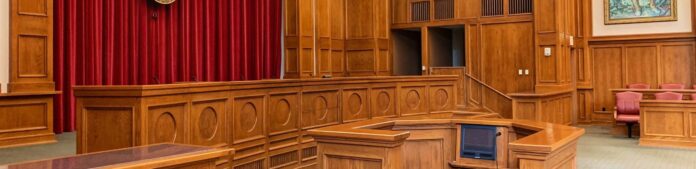

New Jersey’s court system has reached its strongest staffing position in more than twenty years, following the confirmation of 16 new Superior Court judges by the state Senate earlier this month. The approvals reduced the statewide judicial vacancy count to 11, a dramatic improvement after years of shortages that strained court operations and delayed trials across the state.
The confirmations, finalized on January 12, mark a significant milestone as Governor Phil Murphy prepares to leave office at the conclusion of his second term. According to the New Jersey Supreme Court, 17 of the state’s 21 counties now have no judicial vacancies at all, a benchmark that had not been reached in decades. The remaining openings are limited to Bergen, Camden, Passaic, and Union counties.
Judges confirmed in the latest round span seven counties, including Burlington, Essex, Middlesex, Monmouth, Ocean, Passaic, and Union. Their appointments are expected to immediately ease caseload pressures, improve trial scheduling, and restore consistency to court calendars that were heavily disrupted in recent years.
At its peak in the spring of 2022, New Jersey’s judicial vacancy crisis reached 78 open seats, a situation worsened by pandemic-era delays and retirements. The prolonged shortfall forced the suspension of civil and divorce trials in multiple vicinages, including parts of Passaic, Somerset, Warren, Cumberland, Gloucester, and Salem counties. Those suspensions were gradually lifted between 2023 and 2024 as judicial staffing slowly improved.
Chief Justice Stuart Rabner has previously stated that the judiciary can operate sustainably with 25 to 30 vacancies. For much of the past four years, however, the state averaged more than 60, creating backlogs that rippled throughout the legal system. With vacancies now well below that threshold, court officials say the system is positioned to function more efficiently and predictably.
Governor Murphy credited a sustained focus on judicial appointments throughout his administration, noting that more than half of the state’s 463 Superior Court seats were initially filled by him. Including reappointments, Murphy has made 458 judicial appointments during his tenure, surpassing the total of the prior administration. He emphasized that a nearly fully staffed judiciary is essential to ensuring timely access to justice for New Jersey residents.
Legislative leaders from both parties also acknowledged the progress. Senate President Nicholas Scutari described the effort as a bipartisan commitment to maintaining high standards while filling an unprecedented number of vacancies. Senate Republican Leader Anthony Bucco called the reduction an important step forward but cautioned that future administrations must continue prioritizing timely nominations to prevent shortages from returning.
Members of the Senate Judiciary Committee echoed that sentiment, stressing that while the progress is substantial, maintaining momentum is critical. Lawmakers across party lines agreed that vacancies should be the exception, not the norm, to preserve the integrity and efficiency of the courts.
The near-elimination of judicial vacancies represents a major development in New Jersey’s justice system and carries broad implications for public confidence, courtroom efficiency, and access to timely legal resolution. As the state transitions to a new administration, attention will now turn to sustaining these gains and ensuring that the remaining openings are filled without delay, reinforcing stability across the judiciary and the broader law and order landscape.