



Harborside 4 Breaks Ground While Sales Slump and Custom Builders Pivot to High-End Demand
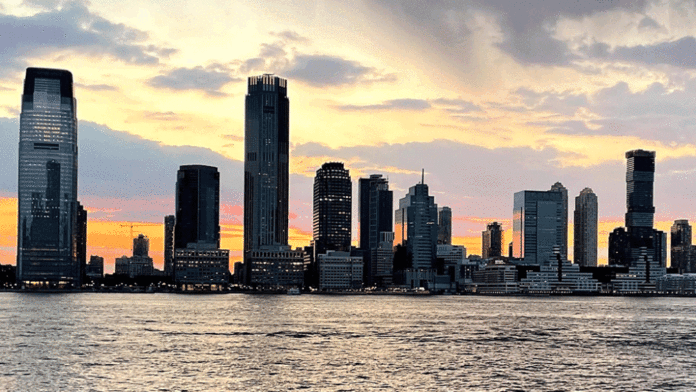
Jersey City’s relentless transformation took another visible step forward this month as heavy construction equipment moved onto a long-dormant site at 20 Columbus Drive, signaling the start of excavation for Harborside 4, a massive mixed-use tower that will soon reshape the city’s Downtown waterfront corridor. Once a surface parking lot just blocks from the Hudson River, the property is now the foundation for one of the most ambitious residential developments currently underway in New Jersey, even as broader housing market indicators paint a far more uncertain picture statewide and nationwide.
Approved by Jersey City officials in May 2024, Harborside 4 represents a major investment by The Related Companies, the national developer best known for Manhattan’s Hudson Yards megaproject. Related acquired the site for approximately $58 million and is partnering with Panepinto Properties on the development, pivoting away from earlier plans that envisioned the parcel as an office tower. Instead, the project will mark Related’s first high-rise residential rental building in New Jersey, underscoring a continued bet on urban living in transit-rich waterfront communities.
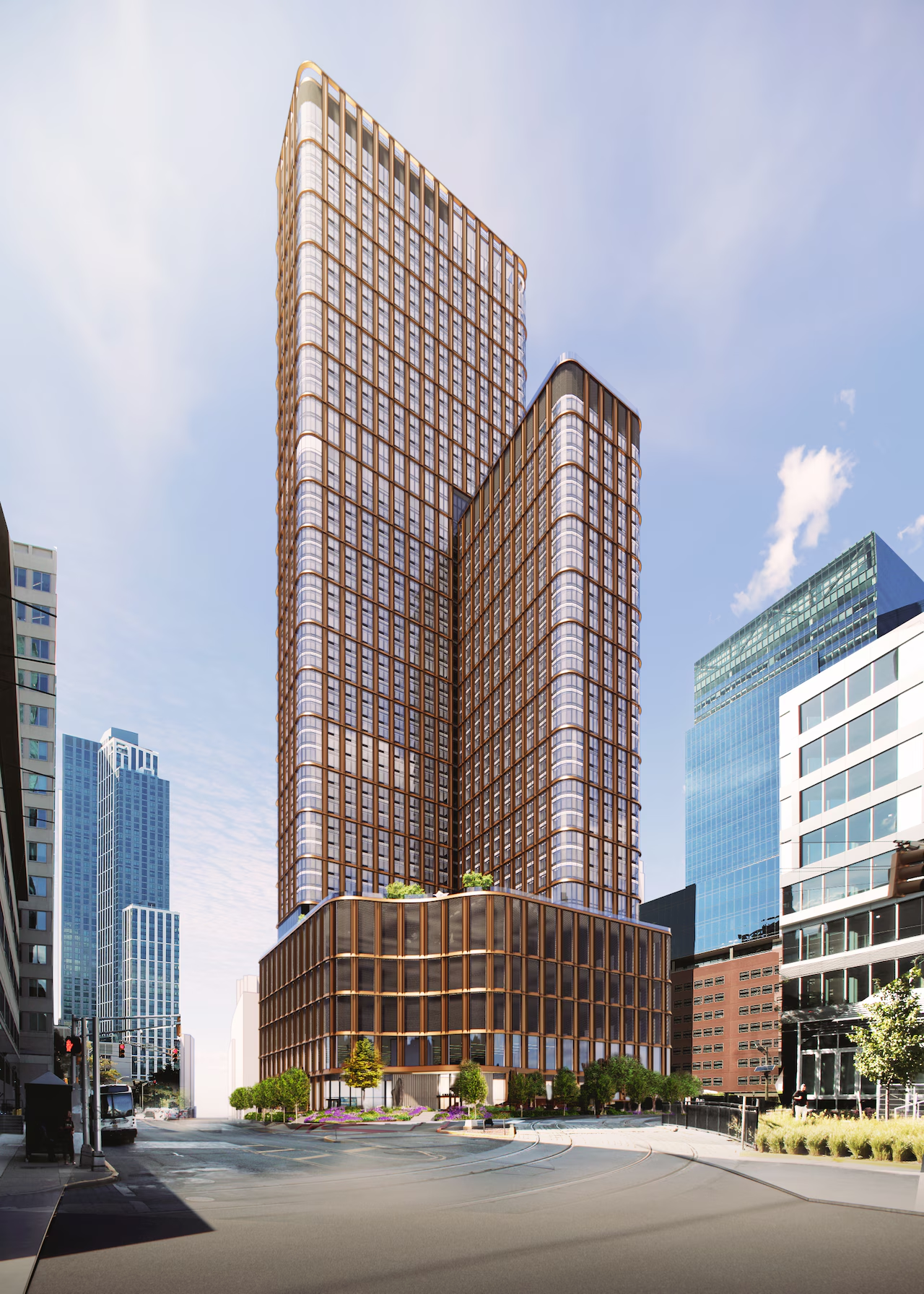
Designed by Handel Architects, the tower will rise from an eight-story podium and take on an L-shaped form that wraps the block’s northern and western edges. The northern portion of the structure will climb 38 stories, while the eastern section will reach a full 50 stories and exceed 680 feet in height, placing it among the tallest residential buildings in the state. A newly designed public plaza and landscaped open space are planned along the southeast corner of the property, anchoring the main lobby and adding pedestrian activity to a stretch of Downtown that has long lacked street-level energy.
Retail will play a visible role in that effort. More than 12,000 square feet of ground-floor commercial space is slated for three storefronts along Columbus Drive, replacing what had been a dead zone with shops and services intended to activate the sidewalk throughout the day. The building’s exterior will feature a mix of bronze-toned aluminum panels and expansive glass, a contemporary aesthetic that mirrors the rapid modernization of the surrounding Harborside district.
Inside, Harborside 4 will deliver 800 rental apartments, including a substantial mix of studios, one-bedroom, and two-bedroom units aimed at a broad range of renters. While the development does not include an affordable housing component under the city’s inclusionary zoning rules, it will offer an extensive suite of amenities designed to compete at the top of Jersey City’s luxury rental market. Plans call for a second-floor health club, a landscaped rooftop deck atop the podium, and a dramatic amenities floor near the top of the tower, complete with indoor and outdoor spaces and an elevated pool overlooking the Hudson.
Parking and mobility were also central considerations in the project’s design. A 399-space garage will be integrated into the building, along with more than 400 bicycle parking spots spread across multiple floors. Vehicle access will be routed through Pearl Street to reduce congestion along Columbus Drive, reflecting ongoing efforts to balance density with livability in one of New Jersey’s fastest-growing urban cores.
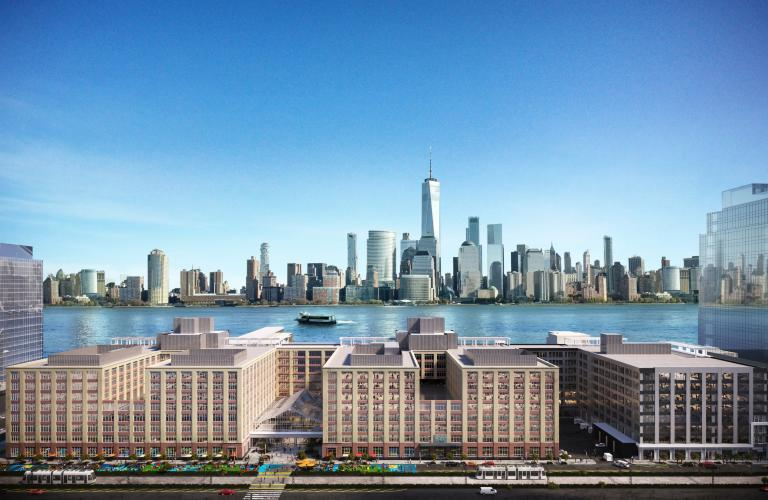
Harborside 4 is far from an isolated project. The surrounding neighborhood has become a dense cluster of cranes and construction fencing, with the 68-story Harborside 8 already rising nearby and work progressing on the next phase of the Urby residential complex. Just to the south, major developments by Tishman Speyer are expected to add roughly 2,000 additional apartments, while even larger proposals remain on the drawing board, including a potential 90-story tower at 100 Bay Street. Together, these projects are cementing Downtown Jersey City’s role as one of the most aggressive growth zones on the East Coast.
Yet this surge in high-profile construction stands in stark contrast to the broader housing market, where warning signs are growing louder. Pending home sales across the United States have fallen sharply, with contract signings dropping to their lowest December level since records began more than a decade ago. The Northeast has been hit particularly hard, posting one of the steepest monthly declines in the country and continuing a multi-year slide that has yet to show signs of stabilization.
In New Jersey, the disconnect between large-scale urban development and sluggish transaction activity is becoming increasingly pronounced. While luxury rentals and mixed-use towers continue to attract institutional capital, traditional homebuyers remain sidelined by high interest rates, affordability pressures, and limited inventory. The result is a bifurcated market where new construction dominates headlines even as sales data suggests ongoing strain beneath the surface of the residential economy.
Some builders are responding by shifting focus rather than pulling back. In Moorestown, Gold Leaf Designs is expanding its footprint in the custom home and major renovation space, targeting homeowners who are choosing to invest in bespoke construction instead of entering a volatile resale market. By emphasizing craftsmanship, tailored design, and long-term value, boutique firms like Gold Leaf are finding opportunity in a period when conventional transactions are slowing but demand for high-quality, personalized living spaces remains resilient.
Together, these trends illustrate the complexity of New Jersey’s current real estate landscape. Tower cranes rising along the Hudson coexist with sobering sales statistics and a growing emphasis on niche development strategies. For policymakers, developers, and homeowners alike, the months ahead will test whether the state’s real estate momentum can adapt to economic headwinds or whether the widening gap between new construction and market activity will deepen further. Ongoing coverage of New Jersey real estate developments continues to track how these forces are reshaping communities from the waterfront to the suburbs, offering a clearer view of where the market may head next.



