



Primary battle over Sherrill’s former House seat intensifies as sanctuary proposals head to the Assembly and business leaders welcome a more collaborative tone from Trenton
The political temperature in New Jersey is rising sharply as immigration policy, public safety legislation and early signals from Governor Mikie Sherrill’s new administration collide in a fast-moving special Democratic primary and a newly energized State House agenda.
At the center of the latest political storm is the race to fill Governor Sherrill’s former 11th Congressional District seat, where immigration enforcement and New Jersey’s relationship with federal authorities have quickly become defining issues for Democratic voters.
Progressive organizer Analilia Mejia has emerged as an early front-runner in the crowded primary field, fueled by vocal opposition to Immigration and Customs Enforcement operations and a broader call for expanding state-level protections for undocumented residents. Her campaign has gained traction among grassroots activists who are pressing state leaders to take a harder stance against federal immigration enforcement practices.
Facing her is former congressman Tom Malinowski, who is attempting a political comeback in a district that has shifted leftward in recent cycles but still contains a sizable bloc of moderate Democratic and independent voters. The race has rapidly evolved into a referendum on how far New Jersey should go in positioning itself as a national leader on sanctuary policies and immigration resistance.
The growing influence of immigration activism in the primary is now spilling directly into the legislative arena.
Several bills tied to New Jersey’s long-running sanctuary state debate are scheduled to receive hearings in the State Assembly, drawing intense attention from both advocates and law enforcement organizations. Among the proposals are measures that would formally codify New Jersey’s sanctuary status into state law and restrict cooperation between local law enforcement agencies and federal immigration authorities.
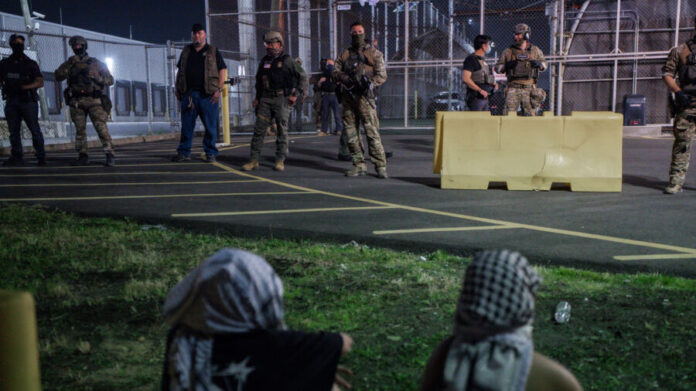
One proposal drawing particular scrutiny would make it a criminal offense for law enforcement officers to conceal their identities by wearing masks while engaged in official duties, a provision supporters argue is necessary to ensure transparency and accountability during enforcement actions. Critics counter that the measure could place officers at risk during sensitive operations and protests, while supporters say the policy would help restore public trust.
Another bill expected to be discussed during the upcoming hearing would dramatically expand legal protections for immigrants by embedding sanctuary protections directly into state statute rather than relying on executive guidance or administrative directives. Lawmakers supporting the legislation argue that codifying the state’s position would prevent future administrations from reversing course without legislative approval.
Perhaps the most controversial proposal slated for consideration would create criminal penalties in circumstances involving certain actions by federal immigration officers operating within the state. Supporters frame the measure as a safeguard against what they describe as unconstitutional or abusive practices, while opponents warn it could ignite a serious legal conflict between state and federal authorities.
The upcoming hearings are expected to draw significant turnout from advocacy groups, labor organizations, public safety officials and municipal leaders, and will likely become a defining moment in the broader immigration and public safety debate playing out in Trenton.
The legislation now moving forward reflects how rapidly immigration policy has become one of the most powerful political mobilizers inside the Democratic Party’s base, particularly in urban and suburban districts that make up much of northern and central New Jersey. For voters in the 11th District special primary, the issue has already overtaken traditional campaign themes such as infrastructure and healthcare, reshaping candidate messaging in real time.
While immigration policy dominates the political headlines, a very different conversation is unfolding simultaneously inside New Jersey’s business community.
Less than a month into Governor Mikie Sherrill’s administration, executives, trade associations and regional business groups are expressing cautious optimism about the tone and accessibility of the new leadership team. Early outreach efforts led by Governor Sherrill, Lieutenant Governor Dale Caldwell and senior members of the administration have been described by business leaders as unusually open, proactive and responsive.
Industry representatives say the administration’s willingness to meet quickly with employers across manufacturing, logistics, technology, healthcare and professional services has helped restore a sense of dialogue that many felt had weakened in recent years. Several business organizations have noted that early conversations have focused not only on economic development incentives, but also on workforce training pipelines, permitting reform and regional infrastructure priorities.
For employers navigating rising operating costs, persistent labor shortages and an evolving regulatory environment, the initial signals from the new administration have been interpreted as an effort to reposition state government as a collaborative partner rather than a distant regulator.
That outreach, however, is unfolding alongside a rapidly expanding legislative agenda that could significantly impact business operations, especially in sectors tied to transportation, construction, healthcare and public contracting. The sanctuary and law-enforcement-related bills now advancing through the Assembly have raised new concerns among some employers about potential operational disruptions and legal uncertainty if state-level immigration policy collides with federal enforcement activity.
Business leaders have begun privately urging lawmakers to ensure that any changes to public safety and immigration frameworks are carefully structured to avoid placing private employers in the middle of conflicting compliance obligations.
The convergence of these two political currents — a progressive surge in immigration activism and a renewed push by the administration to rebuild trust with the employer community — illustrates the complex balancing act now facing Trenton.
On one side is a highly energized voter base demanding bold legislative action on immigration, law enforcement accountability and civil rights. On the other is a business sector looking for regulatory clarity, economic stability and predictable policy implementation as New Jersey competes with neighboring states for investment and talent.
As the Assembly prepares to open hearings on these proposals, the outcome will not only shape the trajectory of the special primary in the 11th District, but also help define the early identity of Governor Sherrill’s administration at the intersection of politics, public safety and economic growth.
Readers can follow ongoing developments surrounding state policy debates and Assembly activity through Sunset Daily’s dedicated coverage of New Jersey legislation and public policy in our embedded reporting on state legislation.
With high-profile primaries underway, controversial immigration measures advancing, and business leaders watching closely from the sidelines, New Jersey’s political landscape is entering a consequential period that could set the tone for the remainder of the new administration’s first year in office.



