



New Jersey’s legislative and political landscape entered a defining new phase this week as Governor Mikie Sherrill signed a sweeping executive order barring federal immigration agents from conducting enforcement operations on state-owned property, a move that arrives amid escalating public demonstrations, local resistance efforts, and growing concerns over federal immigration actions near schools and communities across the Garden State.
The executive order, which immediately positions New Jersey at the center of a national debate over immigration enforcement authority, reflects mounting tensions between state governance and federal policy while underscoring the rapidly evolving role of local activism in shaping public discourse. The decision follows widespread reports that federal immigration officers questioned children near school grounds, sparking alarm among educators, parents, and advocacy groups and fueling a wave of public protest.
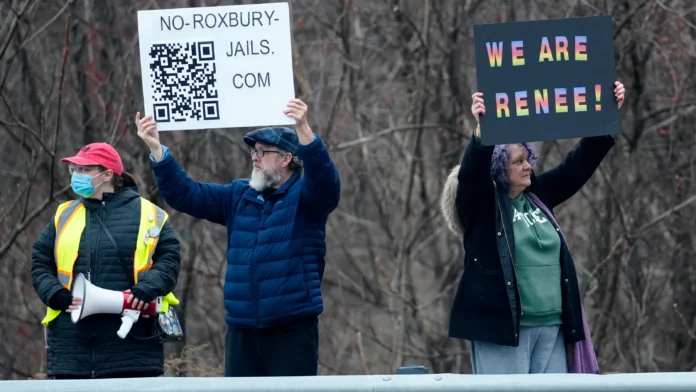
At the same time, a separate but related controversy has intensified in western Morris County, where hundreds of demonstrators gathered in Roxbury to oppose the potential development of a federal immigration detention facility, illustrating how immigration enforcement has emerged as one of the most consequential policy issues confronting New Jersey in early 2026.
Governor Sherrill’s Executive Order Establishes New Boundaries
Governor Sherrill’s executive order represents one of the most assertive state-level actions on immigration enforcement in New Jersey’s recent history. By prohibiting federal immigration agents from conducting operations on state property, the order establishes new operational boundaries that could affect enforcement activity in state-run facilities, government offices, public institutions, and other properties under state jurisdiction.
The policy reflects growing concern among state leaders about the presence of federal immigration enforcement near sensitive environments such as schools, healthcare facilities, and community service locations. State officials argue the measure is designed to protect residents, preserve access to public services, and prevent fear-driven disengagement from educational and healthcare systems.
The order also signals a broader policy trajectory within New Jersey’s legislative framework, one that increasingly emphasizes state autonomy, public safety priorities, and community trust in government institutions. Supporters contend the move reinforces New Jersey’s commitment to civil rights protections and public welfare, while critics argue it raises complex constitutional questions regarding federal authority and jurisdiction.
As the legal and political implications of the order continue to unfold, the measure has already reshaped the state’s policy conversation and amplified public engagement across multiple regions.
Roxbury Protest Demonstrates Expanding Grassroots Mobilization
The impact of immigration enforcement policy is not confined to Trenton or legislative chambers. On Monday, approximately 500 demonstrators lined Route 10 in Roxbury for more than an hour, delivering a clear public response to reports that Immigration and Customs Enforcement (ICE) may establish a detention facility just miles away.
The gathering, which took place despite winter weather conditions in western Morris County, reflected a sustained and growing grassroots movement. Protesters held signs reading “Melt ICE,” “Catholic Bishops say Defund ICE,” and messages expressing solidarity with immigrant communities. Many passing motorists honked in support, creating an atmosphere that combined urgency with visible public engagement.
The proposed detention site — identified as a warehouse property at 1879 Route 46 — first drew attention in late December following national reporting that federal officials were exploring conversion of the facility into a detention center. Since then, the issue has evolved into a flashpoint for regional political organizing and community debate.
Participants came not only from Roxbury but from surrounding municipalities and distant communities, illustrating the statewide reach of the issue. Residents from Phillipsburg, Bedminster, and other towns joined local organizers, reinforcing the protest’s message that immigration enforcement policy affects communities well beyond any single municipality.
The presence of demonstrators from Bedminster — home to prominent political and institutional interests — highlighted the symbolic dimension of the protest and underscored the broader national context in which New Jersey’s local actions are unfolding.
Community Leaders Voice Concerns About Impact on Students
Among those attending the demonstration was Paul Breda, a Wharton school board member who emphasized concerns about how immigration enforcement actions affect educational environments and student well-being.
Wharton’s diverse population, he noted, makes immigration policy a direct community issue rather than an abstract political debate. Education leaders worry that aggressive enforcement activity near schools may create fear among students and families, disrupt learning environments, and discourage participation in public education systems.
These concerns align with broader national conversations about the role of schools as safe spaces and the potential consequences of enforcement activities that intersect with educational settings. For many advocates, the issue is framed as one of child welfare, public trust, and community stability.
Local Government Response Reflects Limits of Municipal Authority
In response to the proposed detention facility, the Roxbury Township Council adopted a resolution opposing the establishment of an ICE site within the municipality. While the measure signals local government resistance, officials acknowledge that municipal authority may be limited when confronting federal initiatives.
The situation highlights a structural tension within the American governance framework. Federal agencies generally retain authority that can supersede local regulations, creating what many observers describe as a policy “Catch-22.” Municipal leaders can express opposition and adopt resolutions, but their ability to block federal actions may be constrained by constitutional law.
This dynamic has generated skepticism among some protesters, particularly those who have regularly attended council meetings seeking stronger intervention. Demonstrators argue that symbolic measures alone are insufficient, calling for more assertive strategies to prevent federal facility development.
The debate illustrates a broader question facing communities across the country: how local governments can respond when federal policy decisions conflict with community priorities.
Public Demonstrations Frame Immigration as Defining Historical Moment
Several speakers at the Roxbury event framed the current moment as a turning point in American civic history. Sparta Councilman Neill Clark described the issue in generational terms, suggesting that future generations may judge how communities responded to immigration enforcement policies during this period.
This framing reflects the growing intensity of the public conversation, in which immigration enforcement is increasingly discussed not merely as a policy issue but as a moral and historical question. Activists argue that public demonstration serves as a critical mechanism for shaping political outcomes, particularly when legislative pathways appear limited.
The scale of participation, organizers emphasized, represents a measure of public sentiment and a signal to policymakers at both state and federal levels.
Legal and Political Implications for New Jersey’s Future
The convergence of Governor Sherrill’s executive order and expanding public protest activity positions New Jersey as a key battleground in the ongoing national dialogue surrounding immigration enforcement.
Legal analysts anticipate potential challenges regarding the balance of power between state and federal authorities. The order’s long-term impact may depend on judicial interpretation, federal response, and subsequent legislative developments.
Meanwhile, the proposed detention facility controversy continues to evolve, with community groups pledging sustained advocacy efforts and local officials navigating complex jurisdictional realities.
Together, these developments represent a significant shift in New Jersey’s policy environment, reflecting broader societal tensions around immigration, governance, and community identity.
A State at the Center of a National Conversation
New Jersey now stands at the intersection of federal authority, state governance, and grassroots activism. The executive order restricting federal enforcement operations on state property, combined with large-scale public demonstrations and local government resistance, signals an era of intensified engagement around immigration policy.
As protests continue, policy frameworks evolve, and legal questions emerge, the state’s actions may influence national strategies and shape future approaches to immigration enforcement across the country.
What remains clear is that immigration policy in New Jersey has entered a new phase — one defined by legislative action, public mobilization, and a rapidly expanding conversation about the relationship between federal power, state authority, and community priorities.