


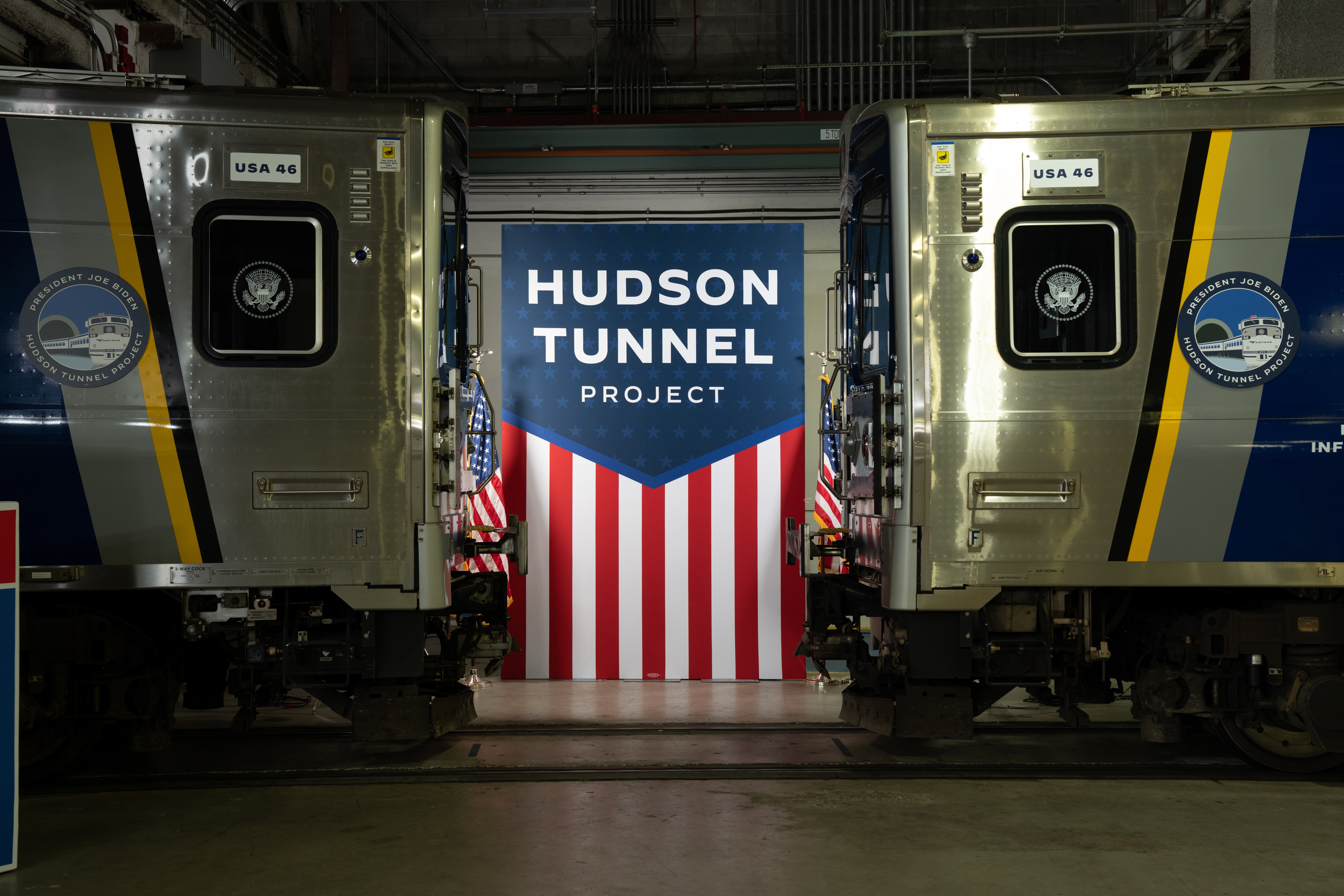

A project designed to safeguard the Northeast’s transportation backbone is now facing a sudden and potentially catastrophic halt. Construction on the $16 billion Gateway Tunnel — the long-awaited Hudson River rail link connecting New Jersey and Manhattan — is scheduled to shut down on February 6, 2026, after federal funding that underpins the majority of the project was abruptly frozen. The decision has sent shockwaves through New Jersey’s construction industry, commuter networks, and political landscape, raising fears of job losses, stalled infrastructure, and renewed vulnerability along the nation’s busiest rail corridor.
The Gateway Development Commission has formally warned contractors that without immediate restoration of federal disbursements, all work will cease within days. For months, construction crews continued forward using emergency credit lines to keep progress alive. That financial bridge has now run dry. The result is an impending standstill at one of the most critical infrastructure projects in modern American transit history.
At stake is more than a tunnel. The Gateway Program is the essential replacement for the aging North River rail tunnels, a pair of century-old passageways beneath the Hudson that were severely damaged during Superstorm Sandy. Those tunnels carry hundreds of thousands of daily passengers and represent a linchpin in the Northeast Corridor — the rail artery that binds together the economic engines of Washington, Philadelphia, New York, and Boston. Transportation officials have repeatedly warned that failure to complete the new tunnel before the existing ones deteriorate beyond repair would cause cascading disruptions across the national economy.
Construction sites on both sides of the river are already deep into excavation. Massive tunnel-boring machines are staged for assembly. Crews have been working around the clock. A sudden stoppage would leave open dig sites idle, machinery stranded, and partially completed infrastructure exposed to weather and deterioration. Restarting the project later would carry a steep financial penalty, with estimates suggesting at least $1 billion in additional costs to re-mobilize labor and equipment.
The immediate human toll is equally stark. Nearly 1,000 construction workers face instant layoffs if the shutdown proceeds. Industry analysts warn that a prolonged freeze could ultimately threaten tens of thousands of additional jobs tied to future phases of the project and its surrounding economic activity. For New Jersey, where organized labor and infrastructure development remain central pillars of the state’s economy, the disruption represents a serious blow.
The funding crisis traces back to an October 2025 decision by the U.S. Department of Transportation to pause federal contributions pending a review of contracting compliance standards. That review later broadened into a full suspension of federal grant and loan distributions for the project. Since federal funding covers roughly seventy percent of Gateway’s total cost, the freeze effectively starves the project of oxygen.
The White House has framed the decision as part of a broader policy review, while regional leaders see it as a political standoff with devastating real-world consequences. New Jersey Governor Mikie Sherrill has publicly condemned the freeze as an unlawful assault on the region’s economic stability. Congressional representatives have pressed for immediate intervention, arguing that holding critical infrastructure hostage to federal bargaining tactics endangers the entire Northeast transportation grid.
Adding to the uncertainty, President Trump has publicly claimed the project has been “terminated,” injecting further instability into already tense negotiations. Federal officials, meanwhile, have tied the potential release of funding to unrelated national policy discussions, transforming a regional transportation necessity into a national political bargaining chip.
For commuters, the stakes could not be clearer. The existing Hudson rail tunnels are more than a century old and operate under constant strain. Engineers have repeatedly cautioned that without timely replacement, the tunnels could suffer a major failure event, crippling daily rail traffic into Manhattan. Such a scenario would ripple far beyond New Jersey, disrupting interstate commerce, business travel, and regional supply chains.
Economists estimate that a complete shutdown of the Northeast Corridor’s Hudson crossing would cost the U.S. economy tens of millions of dollars per day. That figure does not account for the long-term damage to business confidence, property values, and development plans across the region.
New Jersey’s construction sector has also built extensive planning around the Gateway timeline. Contractors, suppliers, and trade unions invested heavily in workforce training and equipment procurement. An extended stoppage risks not only layoffs, but the dispersal of specialized labor that may not return when funding is eventually restored.
Despite the mounting pressure, project leaders maintain that all technical planning remains ready to proceed the moment funding resumes. Engineering schedules have been built with contingency allowances, but every week of delay narrows the margin of safety before the aging tunnels require major rehabilitation work — rehabilitation that itself depends on the completion of the new tunnel to reroute traffic.
The Gateway Tunnel was never just another public works project. It is a generational infrastructure investment meant to secure the Northeast’s transit future, reduce chronic rail delays, and fortify the region against climate-driven storm threats. Its interruption now places New Jersey at the center of a national debate over infrastructure reliability, federal governance, and economic risk.
As February 6 approaches, the question is no longer whether the Gateway Tunnel matters. It is whether the political machinery governing its funding can move faster than the physical decay of the tunnels it was designed to replace.
For ongoing coverage of major infrastructure developments shaping the state, visit Sunset Daily News New Jersey’s [construction] section.