


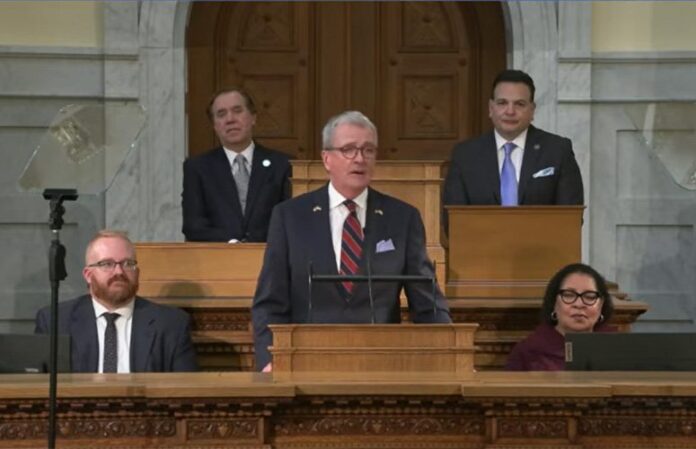

Outgoing governor looks back on a turbulent era defined by crisis management, policy shifts, and long-term investments in New Jersey’s future
As Governor Phil Murphy prepares to step away from Drumthwacket, he did so with a final State of the State address that was less about political bravado and more about summation. After eight years leading New Jersey through some of its most complex modern challenges, Murphy used his closing remarks to reflect on a tenure shaped by economic recalibration, public health emergencies, and a redefinition of state priorities.
Murphy entered office during a period of fiscal strain and growing public distrust in government, promising a reset grounded in equity, transparency, and opportunity. Over the course of two terms, his administration leaned heavily into those themes, framing policy through the lens of fairness for working families, expanded access to health care, and sustained economic development designed to position New Jersey as competitive in a rapidly changing national landscape.
Much of Murphy’s legacy is inseparable from crisis leadership. The COVID-19 pandemic tested the limits of state government, forcing rapid decision-making on public health, education, and economic survival. Murphy acknowledged the weight of those years, highlighting efforts to stabilize hospitals, protect vulnerable populations, and guide the state through an unprecedented shutdown while attempting to balance public safety with economic necessity.
Beyond the pandemic, Murphy emphasized structural changes his administration pursued to strengthen New Jersey’s long-term outlook. Investments in infrastructure, clean energy initiatives, and workforce development were framed as deliberate attempts to modernize the state’s economy while addressing climate and sustainability concerns. He also pointed to expanded health coverage and social programs as evidence of a broader commitment to quality of life, particularly for communities historically left on the margins.
The address also carried a notable tone of institutional continuity. Rather than positioning his departure as an endpoint, Murphy presented it as a handoff, stressing that progress depends on future leadership maintaining momentum. In doing so, he subtly reinforced the policy framework his administration leaves behind, particularly in areas tied to taxation, education funding, and regulatory reform.
As Murphy exits the national spotlight of gubernatorial politics, his farewell address serves as both a personal reflection and a political ledger. Supporters see an administration that prioritized inclusivity and long-term planning, while critics continue to debate the costs and trade-offs of those choices. What is clear is that Murphy’s eight years reshaped the contours of New Jersey’s policy landscape, leaving a record that will be dissected well beyond his final day in office.
With the next chapter of state leadership approaching, Murphy’s closing message underscored a familiar refrain from his time in office: that New Jersey’s strength lies in deliberate governance, resilience in the face of disruption, and an ongoing conversation about the role of government in everyday life. For readers tracking the evolving direction of the state’s public life and policy debates, the implications of his tenure will remain a central part of New Jersey’s broader political story.