


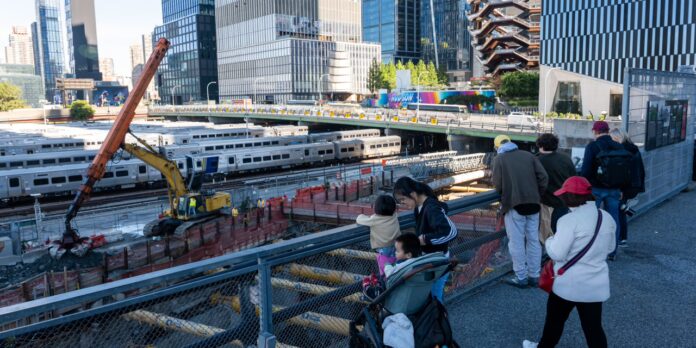

Court fight threatens construction halt, nearly 1,000 immediate job losses, and mounting regional economic fallout for New Jersey and New York
The Gateway Development Commission has warned that construction on the Hudson Tunnel Project may pause by February 6, 2026, if federal funding disbursements do not resume. This could impact nearly 1,000 jobs immediately.
The future of the most critical transportation project in the Northeast Corridor—and one of the most consequential infrastructure investments in the nation—was thrown into legal and political turmoil this week as the Gateway Development Commission filed a breach of contract lawsuit against the federal government in the U.S. Court of Federal Claims, seeking the immediate release of long-promised funding for the Hudson Tunnel Project.
The lawsuit places New Jersey at the center of a rapidly escalating infrastructure standoff that could halt construction by February 6, 2026, trigger the loss of nearly 1,000 union construction jobs, and jeopardize the long-term reliability of the busiest passenger rail link in the United States.
The Hudson Tunnel Project is designed to transform and safeguard the rail lifeline between New Jersey and New York by constructing a new two-track tunnel beneath the Hudson River and rehabilitating the existing North River Tunnel, which first entered service in 1910 and has become a chronic source of systemwide delays. Hundreds of thousands of daily riders depend on the aging tunnel, which connects New Jersey commuters directly into Midtown Manhattan and supports a rail corridor that underpins roughly one-fifth of the nation’s economic activity.
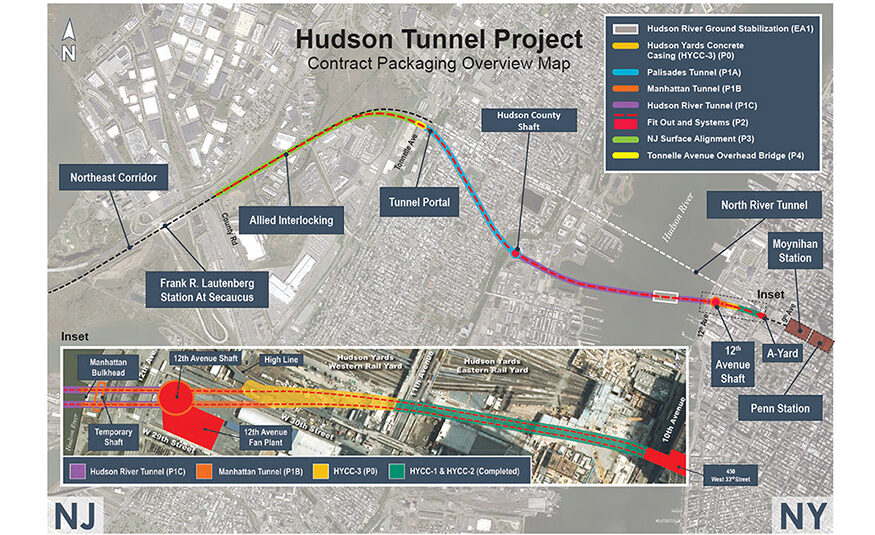
At issue in the lawsuit is more than just timing. Gateway officials say the federal government is in direct violation of binding grant and loan agreements that were finalized in July 2024, when full federal participation in the Hudson Tunnel Project was formally secured. Those agreements include multiple federal funding programs and federally backed financing instruments that together represent the majority share of the project’s total construction budget.
According to the complaint, federal agencies stopped releasing contractually obligated funds on October 1, 2025, despite the project remaining fully active and compliant with the requirements set out in the signed agreements. The Gateway Development Commission argues that the funding freeze constitutes a clear breach of federal contracts and that shifting justifications offered for withholding the money have no lawful basis.
More than $1 billion has already been invested in active construction and project development. Work is underway on multiple components tied to tunnel construction, staging facilities, engineering systems, and site preparation on both sides of the Hudson. The sudden disruption of federal disbursements, project leaders warn, has pushed the commission to the brink of financial exhaustion.
Gateway officials disclosed at their January 27, 2026 board meeting that all remaining contingency funding and credit mechanisms have now been fully utilized to keep construction moving while federal payments remain suspended. Without an immediate resumption of disbursements, work will be forced to stop on February 6.
A construction shutdown would produce immediate and cascading consequences across New Jersey’s construction workforce and transportation economy. Nearly 1,000 workers would be laid off at once. If the stoppage extends beyond a short interruption, approximately 11,000 jobs tied to current project contracts would be placed at risk. Over the life of the project, the Hudson Tunnel initiative is projected to generate roughly 95,000 jobs and nearly $20 billion in total economic activity across the region.
Beyond the labor impacts, the commission warns that a prolonged pause substantially increases the likelihood of an operational failure in the existing North River Tunnel—already a major choke point for Amtrak and New Jersey Transit service. Any forced closure or extended outage in the 116-year-old tunnel would effectively sever the single most heavily traveled passenger rail segment in the country, triggering billions of dollars in lost productivity, missed work hours, and business disruption for the New York–New Jersey metropolitan region.
New York Governor Kathy Hochul framed the funding freeze as a direct threat to both regional stability and national economic output, emphasizing that more than 200,000 daily commuters rely on safe, dependable rail service under the Hudson River to sustain a regional economy that accounts for approximately 20 percent of U.S. economic activity. She accused the federal administration of unlawfully withholding funding that had already been approved and contractually committed.
New Jersey Governor Mikie Sherrill said the state is pursuing legal action to protect jobs and economic growth in New Jersey, warning that the disruption of a project of this scale would reverberate through the state’s construction industry, supply chains, and regional transportation network.
U.S. Senate Majority Leader Chuck Schumer echoed those concerns, calling the Hudson Tunnel Project the single most important infrastructure project in the country and stressing that tens of thousands of union jobs depend on its uninterrupted progress.
Gateway Development Commission Chief Executive Officer Tom Prendergast said the commission had worked for months with federal partners to resolve concerns raised by federal agencies, including extensive documentation and compliance reviews related to the federally mandated Disadvantaged Business Enterprise program. Project leaders maintain that the Hudson Tunnel Project is fully aligned with the most recent federal regulatory standards.
The lawsuit asks the court to declare that the federal government is obligated to release the funds already committed under the signed grant and loan agreements. In addition to approximately $205 million in immediate disbursements currently due, the complaint also seeks damages that would result from a construction pause, including termination costs, contractual penalties, and project restart expenses.
The broader implications for New Jersey extend far beyond the tunnel itself.
The Hudson Tunnel Project is foundational to the future capacity and reliability of New Jersey Transit and Amtrak service into New York City. It is also central to the state’s long-term strategy to sustain economic growth while managing one of the nation’s most intense commuter flows. Without new tunnel capacity, the region remains dependent on infrastructure that predates World War I and has already suffered long-term damage from Superstorm Sandy and decades of heavy use.
Transportation planners have repeatedly warned that the existing two-track configuration under the Hudson leaves no operational redundancy. Any major outage instantly cripples service across the Northeast Corridor, disrupting travel from Washington, D.C. to Boston and creating ripple effects throughout New Jersey’s rail network.
The legal challenge now unfolding also injects a volatile new dimension into the national infrastructure debate and is rapidly becoming a defining flashpoint in federal-state relations. As the case moves forward, the dispute is expected to dominate transportation and infrastructure discussions in Washington and Trenton alike, further intensifying the political spotlight on federal infrastructure commitments. Readers following the evolving state and federal politics surrounding transportation funding and regional investment can track continuing coverage through Sunset Daily News.
For New Jersey, the stakes are uniquely high. The Hudson Tunnel Project is not merely a transit upgrade. It is a cornerstone of regional mobility, labor market access, climate resilience planning, and long-term economic competitiveness. A prolonged funding interruption would not only delay a long-awaited infrastructure fix—it would deepen the vulnerability of the very transportation backbone that enables New Jersey’s commuter economy to function.
With a hard February deadline approaching, Gateway officials say time is no longer a negotiable variable. Unless federal funds begin flowing again immediately, construction will stop, workers will be sent home, and the most critical rail project in the country will enter an uncertain and legally contested future.



