


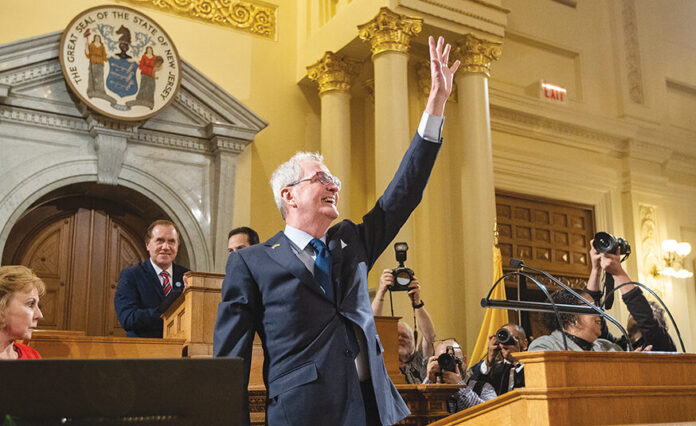

Trenton Sets the Stage for a Busy Legislative Winter as Dozens of Measures Move Forward. Governor Phil Murphy is set to step onto the rostrum at the State House on Tuesday, January 13, to deliver what will be the final State of the State address of his administration, a moment that is expected to reflect both on eight years of sweeping policy changes and the direction New Jersey will take as it approaches a new chapter in state leadership.
The annual address traditionally serves as the governor’s most comprehensive public accounting of where the state stands economically, socially, and politically. This year’s speech carries additional weight. It is Murphy’s last opportunity to outline his administration’s legacy, spotlight unfinished priorities, and frame the policy conversations that will define the remainder of his term and shape the next administration’s agenda.
Murphy’s tenure has been marked by aggressive investment in public education, expanded access to healthcare, a strong emphasis on clean energy initiatives, and the steady expansion of worker protections. Observers expect the governor to revisit these themes while also addressing current economic pressures, including workforce participation, housing affordability, and the state’s competitiveness in attracting new businesses.
The speech is also anticipated to focus on New Jersey’s fiscal outlook. With residents closely watching tax policy, transportation funding, and infrastructure investment, Murphy is likely to outline strategies aimed at maintaining fiscal stability while continuing to support large-scale projects designed to modernize roads, bridges, transit systems, and public facilities across the state.
Public safety and community wellbeing are also expected to feature prominently. Over the past several years, Murphy’s administration has pursued reforms in criminal justice, expanded mental health resources, and strengthened programs aimed at addressing substance use disorders. His final address offers a platform to reinforce these initiatives while signaling potential legislative priorities for the months ahead.
Political analysts note that this year’s address may also serve as a call to action for lawmakers, particularly as the Legislature considers major policy packages in the early part of the session. From housing development incentives to workforce training and environmental protections, the governor’s remarks are likely to set the tone for debates that will unfold in Trenton through the spring and summer.
As New Jersey prepares for a transition in leadership, the January 13 address is poised to become a defining moment, blending reflection with forward-looking proposals that could influence state policy well beyond Murphy’s term. Residents and stakeholders can follow ongoing coverage, reactions, and policy breakdowns in Sunset Daily News’ politics section, where developments from the State House continue to be tracked in detail.
New Jersey lawmakers returned to the State House on Monday, January 5, signaling the start of what is shaping up to be a highly active legislative season. While the Senate did not convene that day and scheduled its next quorum session for January 6, the General Assembly advanced a wide-ranging slate of proposals that touch nearly every aspect of public life, from public safety and infrastructure to veterans’ services, healthcare oversight, consumer protections, and environmental policy.
The Assembly introduced new legislation aimed at strengthening hospital operations, including a pilot initiative that would provide targeted support for certain healthcare services when hospitals relocate. Lawmakers also revisited measures governing data center construction, recommitting a bill that addresses wage standards tied to large-scale technology facilities, underscoring the growing role of data infrastructure in New Jersey’s economy.
Committee activity dominated the session, with dozens of bills reported forward for second reading. Among the measures gaining momentum were proposals that would require limited liability companies to disclose ownership information when recording deeds, expand protections under the Law Against Discrimination for military members and veterans, modernize grid infrastructure planning, and revise parole and rehabilitative release standards for certain incarcerated individuals. Additional bills would bolster funding for the State Police Internet Crimes Against Children Unit, establish new protections for veterans and military spouses, and enhance consumer safeguards in vehicle sales and contractor licensing.
Education, health, and environmental issues were also prominent. Lawmakers moved measures to update statutory references related to immunization practices, revise waterfront labor definitions, and encourage the use of recycled materials in construction projects. Several proposals tied to parks, public lands, and environmental stewardship advanced, including a major funding measure to support construction projects within the Palisades Interstate Park system.
A significant portion of the session focused on proposals referred to the Assembly Appropriations Committee, signaling upcoming fiscal debate. These included legislation to establish a statewide Parkinson’s disease registry, update mail-in ballot curing procedures, create new public safety standards for on-demand microtransit services, authorize new specialty license plates, reform payroll tax administration, and adjust cannabis regulatory commission membership rules. Bills aimed at enhancing privacy protections, strengthening trust between law enforcement and immigrant communities, and providing new tax incentives for historic diners and community redevelopment projects were also forwarded for further fiscal review.
In addition, a sweeping bill to modernize the process for filling vacancies in the U.S. House of Representatives moved to the appropriations phase, reflecting lawmakers’ continued focus on avoiding representation gaps following past congressional vacancies.
The Assembly also reassigned dozens of measures among committees, an administrative but critical step that allows legislation to be evaluated by subject-matter experts before advancing to floor votes. These transfers included bills related to environmental licensing, public safety funding, contractor regulations, and large-scale infrastructure investments.
Although no bills were formally passed by both chambers on Monday, lawmakers did enact one new statute since the prior session, officially establishing the New Jersey Innovation Authority, a move designed to strengthen the state’s research, development, and technology commercialization pipeline.
With the Assembly scheduled to reconvene later this week and the Senate returning to quorum sessions, Trenton is clearly shifting into high gear. Residents can expect continued movement on a broad spectrum of policy initiatives, with ongoing coverage available through Sunset Daily News’ dedicated politics section, where readers can track how proposed laws advance through the legislative process and what they may mean for communities across New Jersey.