


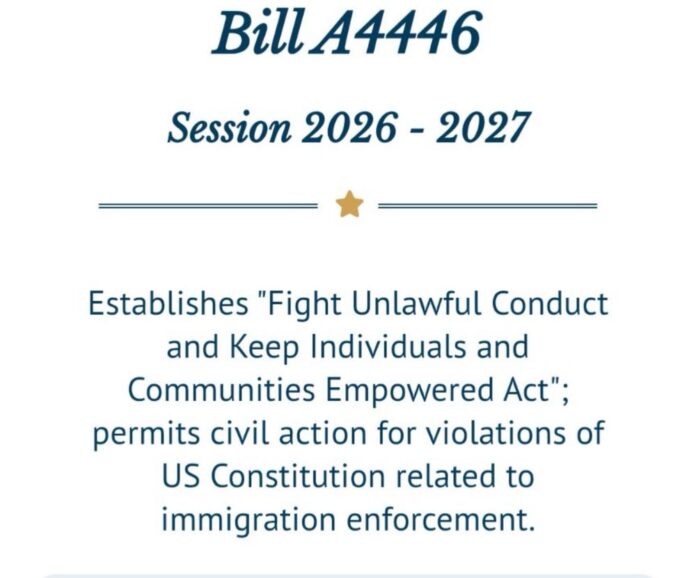

A newly introduced piece of legislation in New Jersey has ignited one of the most intense political debates of 2026, drawing national attention, partisan criticism, and widespread public reaction. Democratic lawmakers have unveiled a bill with an acronym that has quickly become a lightning rod in state and national politics — the Fight Unlawful Conduct and Keep Individuals and Communities Empowered Act, formally known as the F.U.C.K. I.C.E. Act.
The proposal represents a significant policy initiative aimed at expanding legal protections for residents and strengthening oversight of federal immigration enforcement activity within New Jersey. At the same time, its provocative title, sweeping legal implications, and political symbolism have transformed the legislation into a defining flashpoint in the state’s broader conversation about immigration policy, federal authority, and civil liberties.
This Sunset Daily News New Jersey long-form feature examines the origins of the bill, its legal framework, the political forces shaping its reception, and what the proposal could mean for governance, public policy, and New Jersey’s evolving identity as a leader in immigrant protections.
A New Legislative Flashpoint Emerges in New Jersey Politics
Introduced in February 2026, Assembly Bill A4446 seeks to expand the rights of New Jersey residents to pursue legal action against federal immigration officials accused of unconstitutional conduct. The legislation is sponsored by Assembly members Katie Brennan and Ravi Bhalla, a prominent political figure and former mayor of Hoboken.
The bill is positioned as part of a broader legislative push designed to strengthen protections for immigrant communities, increase accountability for federal enforcement actions, and reinforce state-level legal remedies when constitutional violations are alleged.
Supporters describe the measure as a civil rights initiative focused on due process, transparency, and protection from unlawful enforcement practices. Critics, however, view the legislation as a direct political challenge to federal immigration authority and an example of escalating partisan rhetoric.
The debate reflects larger national tensions over immigration enforcement, state sovereignty, and the limits of federal power — issues that increasingly shape legislative agendas across the country.
What the F.U.C.K. I.C.E. Act Would Do
At its core, the proposed legislation would expand legal pathways for individuals in New Jersey to file lawsuits in state courts against federal immigration officials accused of violating constitutional protections.
Key elements of the proposal include:
• Expanding residents’ ability to seek damages for alleged unconstitutional conduct by federal agents
• Strengthening legal protections for individuals targeted by enforcement actions
• Increasing accountability mechanisms related to immigration operations within New Jersey
• Providing broader access to state judicial review of enforcement activity
Supporters argue the measure ensures that individuals have meaningful legal recourse if their rights are violated during enforcement actions. They emphasize that constitutional protections apply regardless of immigration status and that state courts should serve as accessible venues for civil rights claims.
The bill reflects an ongoing trend among certain states seeking to assert greater authority over how federal policies are implemented within their jurisdictions.
The Origin of the Legislation: A Response to Enforcement Operations
Lawmakers introduced the proposal following growing concern over recent immigration enforcement activity in northern New Jersey. One high-profile incident involved federal agents detaining multiple individuals near a light rail station along the border of Hoboken and Jersey City.
The operation sparked community concern, public demonstrations, and renewed calls for stronger oversight of federal enforcement actions. Legislators described the bill as a direct response to those events, framing it as a mechanism to prevent potential constitutional violations and protect vulnerable populations.
For supporters, the legislation represents a proactive step toward ensuring transparency and accountability. For critics, it signals a confrontational stance toward federal law enforcement agencies.
The Controversial Name and Political Messaging
While the policy substance of the bill is significant, much of the public attention has focused on its acronym. The title — which spells out a blunt phrase targeting Immigration and Customs Enforcement — has generated strong reactions across the political spectrum.
Sponsors have defended the name as an intentional statement reflecting public frustration and political urgency. They argue that the title captures the bill’s purpose and communicates a clear message about the need for reform.
Republican lawmakers and critics, however, have sharply condemned the naming choice, describing it as inflammatory, inappropriate for formal legislation, and indicative of ideological extremism. The controversy surrounding the acronym has intensified media coverage and amplified partisan divisions.
The dispute highlights how political language itself has become a central battleground in contemporary policymaking.
A Broader Legislative Strategy
The proposal does not exist in isolation. It forms part of a wider policy initiative aimed at expanding New Jersey’s protections for immigrant communities and clarifying the boundaries of federal enforcement authority within the state.
Over recent years, New Jersey has positioned itself at the forefront of state-level immigration policy debates, often pursuing measures focused on civil rights protections, community trust, and local oversight.
The F.U.C.K. I.C.E. Act reflects this broader trajectory, signaling an ongoing effort by state lawmakers to redefine how federal enforcement operates within state boundaries.
Legal and Constitutional Implications
If enacted, the legislation could trigger significant legal challenges concerning federal supremacy and state jurisdiction. Questions surrounding the balance of power between state courts and federal agencies would likely become central to any litigation.
Legal analysts note several potential issues:
• Whether state courts can adjudicate claims against federal officers performing federal duties
• The extent of federal immunity protections
• Constitutional limits on state regulation of federal enforcement activity
• Preemption challenges under federal law
The bill could therefore shape not only New Jersey policy but also national legal precedents regarding state authority and federal enforcement oversight.
Public Safety, Civil Rights, and Policy Priorities
The debate surrounding the legislation reflects broader tensions between public safety policy and civil liberties concerns. Supporters argue that strong legal protections enhance community trust and ensure that enforcement practices remain consistent with constitutional standards.
Opponents contend that restricting federal enforcement could undermine public safety or complicate coordination between state and federal agencies.
These competing perspectives illustrate the complex policy considerations driving immigration debates in New Jersey and across the nation.
New Jersey’s Role in the National Immigration Conversation
The introduction of the F.U.C.K. I.C.E. Act places New Jersey at the center of a national discussion about immigration enforcement, civil rights protections, and the evolving relationship between states and the federal government.
As one of the country’s most diverse states, New Jersey frequently serves as a testing ground for policy innovation and legal challenges. Legislative initiatives emerging from the Garden State often influence broader national debates and shape future governance models.
This proposal continues that tradition, positioning New Jersey as a focal point in the ongoing conversation about immigration policy and constitutional protections.
The Political Landscape Ahead
The bill’s future remains uncertain as lawmakers prepare for committee review, debate, and potential amendments. Public hearings and legislative negotiations are expected to further shape the proposal and clarify its scope.
Regardless of its ultimate outcome, the legislation has already transformed the political conversation in New Jersey, highlighting ideological divisions, policy priorities, and the power of symbolic political messaging.
As the debate unfolds, the measure will continue to test the boundaries of state authority, legal accountability, and political expression in modern governance.
A Defining Moment in New Jersey Policy and Politics
The introduction of the Fight Unlawful Conduct and Keep Individuals and Communities Empowered Act marks a pivotal moment in New Jersey’s legislative landscape. It represents a convergence of policy innovation, political strategy, and constitutional debate that extends far beyond a single bill.
Through its legal ambitions, controversial messaging, and potential national impact, the proposal reflects the evolving priorities shaping governance in the Garden State. As lawmakers, communities, and political leaders engage in the debate, the outcome will help define New Jersey’s role in the future of immigration policy, civil rights protections, and state-federal relations.
For continued coverage of major policy developments shaping the region, readers can explore ongoing reporting and analysis at Sunset Daily, where New Jersey’s most consequential stories continue to unfold.