


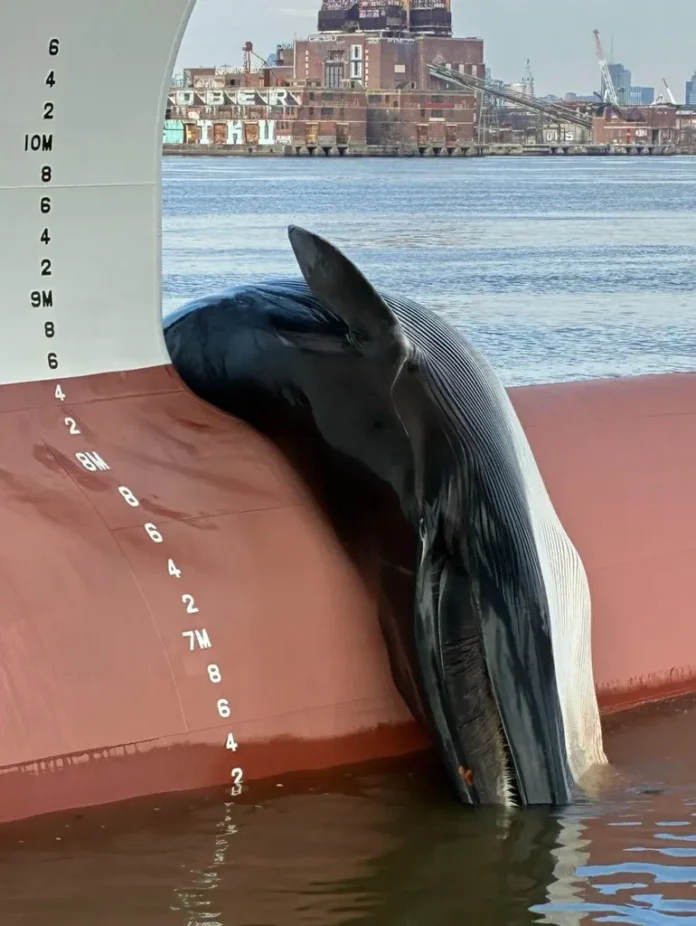

Authorities in New Jersey are investigating the unusual discovery of a deceased fin whale found atop the bow of a container ship docked at the Gloucester Marine Terminal over the weekend. The 25- to 30-foot-long whale, an endangered species, was first reported Sunday by the U.S. Coast Guard. Officials are now working to safely remove the carcass and conduct a necropsy to determine the cause of death.
The Gloucester Marine Terminal, situated at the base of the Walt Whitman Bridge connecting New Jersey and Pennsylvania, became the focus of the investigation after the whale was spotted on the ship’s bow. The Marine Mammal Stranding Center, a state-based rescue and rehabilitation organization, confirmed that its team is coordinating with authorities to tow the whale for examination. Their goal is to collect evidence that could shed light on whether the whale’s death resulted from a collision, illness, or other circumstances.
The National Oceanic and Atmospheric Administration (NOAA) confirmed Tuesday that its enforcement office has officially opened an inquiry into the incident. While officials declined to release additional details, the agency urged anyone with information regarding the whale to contact its hotline.
Fin whales, the second-largest animals on Earth behind blue whales, can reach lengths of up to 85 feet and weigh between 40 and 80 tons. These massive mammals are known to frequent the Atlantic waters from southern New Jersey to the New York City area, and their populations have slowly rebounded following decades of near extinction due to commercial whaling. Despite this recovery, fin whales remain vulnerable to ship strikes, fishing gear entanglements, and the broader impacts of climate change.
Under federal law, all whales, dolphins, and porpoises are protected by the Marine Mammal Protection Act, making it illegal to harass, feed, or harm them in any way. Experts emphasize that incidents such as this highlight the ongoing challenges these marine giants face in heavily trafficked shipping corridors along the East Coast.
The Marine Mammal Stranding Center is overseeing the careful removal of the whale, ensuring proper documentation and examination. Investigators hope the necropsy will provide insight into the health of Atlantic fin whale populations and clarify whether human activity contributed to this tragic event. Conservationists note that data gathered from cases like this is crucial for improving maritime safety and protecting endangered marine species.
Updates on the investigation and additional developments regarding marine wildlife incidents in New Jersey can be followed through <a href=”https://sunset-daily.com/category/sunset-daily-news/”>Sunset Daily News</a>. This incident underscores the intersection of maritime commerce and environmental stewardship, reminding the public of the delicate balance required to protect endangered species while maintaining port operations.



