



Meteorologists are closely tracking a developing coastal storm that could deliver the heaviest snowfall of the season to parts of New Jersey, with South Jersey increasingly in the crosshairs. While forecast models continue to shift with each new data run, real-time atmospheric observations are beginning to reveal clearer steering patterns. The result is a complex and evolving weather setup that could bring everything from light flurries in the northwest to disruptive snow and coastal impacts along the southeastern corridor.
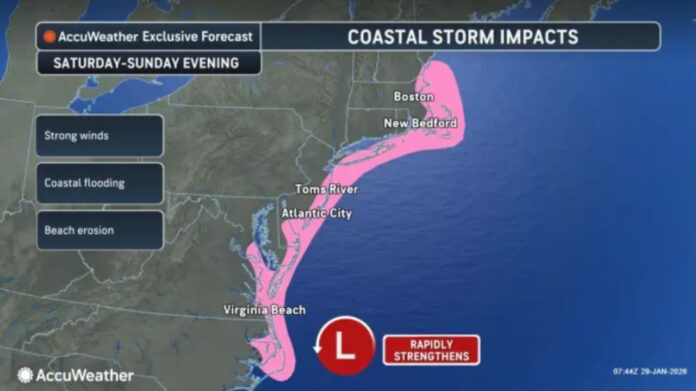
At the heart of the forecast is a developing low-pressure system expected to form offshore of the Carolinas before curving northward into the Atlantic. The exact placement and timing of this system remain critical. A subtle shift in upper-level energy will determine how quickly the storm intensifies, where it locks into position, and how far inland precipitation can extend. Current indicators suggest the storm’s core will remain offshore, placing New Jersey on the western fringe of the precipitation shield, where sharp cutoff zones often make the difference between heavy snow and dry conditions.
Northwestern New Jersey is trending toward the least impact scenario. Higher elevations and inland communities may see little to no snow if dry air holds firm on the storm’s backside. Central portions of the state remain in a transition zone, where modest changes in storm strength or track could dramatically alter outcomes. Meanwhile, southeastern New Jersey, particularly coastal communities from Monmouth through Atlantic and Cape May counties, is increasingly favored for the most consistent snowfall potential should the storm maintain its current projected path.
One complicating factor is storm intensity. Some forecast solutions depict a rapidly deepening low comparable in strength to historic Atlantic winter storms. When systems intensify to that degree, precipitation shields often expand farther inland than early model projections suggest. This introduces last-minute volatility in snow maps, especially along major travel corridors including the New Jersey Turnpike and Interstate 95. It’s a scenario forecasters have seen before — quiet forecasts turning into widespread impacts in the final 24-hour window.
Timing remains another key piece of the puzzle. Current projections point to storm arrival late Saturday night into Sunday. If the storm verifies as a true nor’easter, strong winds, coastal flooding, and rough surf could accompany snowfall, creating hazardous conditions along shore communities even if inland totals remain modest.
Forecasters are emphasizing patience as additional atmospheric data arrives over the next day. Upper-air sampling and overnight model cycles will refine expectations, allowing more confident regional impact mapping to be released soon. Until then, probabilities favor measurable snow in southeastern New Jersey, diminishing northward with rapidly increasing uncertainty.
Residents are encouraged to monitor updates as this system develops. Continuous local coverage, storm tracking, and forecast refinements can be found in Sunset Daily’s dedicated weather report section, where evolving conditions across New Jersey are followed in real time.
Weekly Forecast Summary
| Day | High / Low | Conditions |
|---|---|---|
| Thursday (Jan 29) | 21° / 2° | Frigid; sunny with evening clouds |
| Friday (Jan 30) | 17° / 1° | Extremly cold; mostly clear |
| Saturday (Jan 31) | 22° / 14° | Clouds increasing; snow possible late |
| Sunday (Feb 1) | 24° / 19° | Chance of snow and blustery winds |
| Monday (Feb 2) | 32° / 17° | Sunny; staying below freezing |
Arctic Lockdown Grips New Jersey as Deep Freeze Bites and Coastal Storm Looms, New Jersey has entered a rare and punishing stretch of winter weather, with Arctic air settling over the region and driving temperatures to levels more typical of the northern plains than the Mid-Atlantic. A Cold Weather Advisory remains in effect across much of the state as residents brace for bitter wind chills, record-setting overnight lows, and the added uncertainty of a potential coastal storm approaching this weekend.
Daytime temperatures have struggled to climb out of the teens and low twenties, even under sunshine. After sunset, readings are tumbling into the single digits and near-zero territory, creating dangerous conditions for anyone outdoors for extended periods. Wind chills have been even more severe, plunging well below zero across northern and central counties. In some locations, exposed skin could develop frostbite in less than half an hour, making layered clothing and limited outdoor exposure essential through the end of the week.
Forecasters say Friday morning is shaping up to be the coldest point of this Arctic episode. Several inland communities could challenge or break longstanding temperature records as the air mass fully settles over the region. Infrastructure strain, frozen pipes, and increased heating demand are all possible side effects of this historic cold, prompting utility providers and emergency management teams to remain on heightened alert.
While the frigid temperatures alone would make this a headline weather event, attention is now turning toward a developing coastal system that could impact New Jersey late Saturday into Sunday. Atmospheric conditions offshore are being monitored closely as a low-pressure system organizes along the coastline. Current projections indicate that the core of the storm may track just far enough east to spare most inland areas from heavy snow, but shoreline communities remain in the zone of potential accumulation.
If the system strengthens as expected, coastal counties could receive several inches of snow, accompanied by powerful winds gusting to near 50 miles per hour. Even if snowfall totals stay modest, the combination of high winds and already elevated tides could lead to moderate coastal flooding and beach erosion. Travel along Shore corridors may become hazardous, especially late Saturday night into Sunday morning when visibility and road conditions could deteriorate quickly.
Forecast confidence remains fluid, as small shifts in storm track or intensity could expand or reduce impacts across the state. Meteorologists emphasize that even a near-miss scenario can still produce significant shoreline hazards, rough surf, and scattered power disruptions. Inland communities should also remain aware that minor shifts westward could introduce light to moderate snowfall along major commuting routes.
Looking ahead, the weekly outlook shows temperatures remaining below freezing into early next week, even after the Arctic core begins to loosen its grip. Skies will stay mostly clear through Friday, clouds will thicken Saturday, and blustery conditions will continue into Sunday behind the departing system. Early next week brings sunshine but continued cold, keeping frozen ground and icy patches in play.
Residents are encouraged to stay prepared, limit unnecessary travel during peak storm windows, and protect pets, pipes, and vulnerable neighbors through the deep freeze. Continuous updates and evolving forecasts can be followed through Sunset Daily’s dedicated weather report coverage as New Jersey navigates one of its coldest and most dynamic winter stretches in recent years.
For now, the message is simple: South Jersey should prepare for potential winter disruption, central regions should remain alert to changing forecasts, and northwest areas may escape with little more than cold winds. This is a storm with moving parts, narrow margins, and late-stage surprises — and New Jersey sits right on the edge of its outcome. Layer up, stay informed, and keep a close eye on the coast as the state endures a true mid-winter test of endurance.