


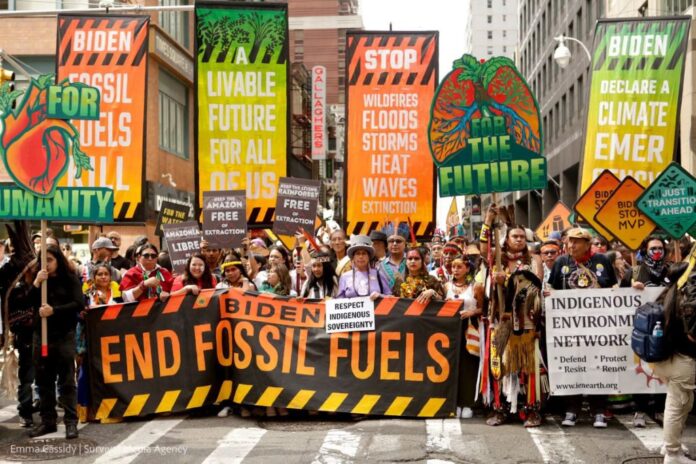

A sweeping proposal designed to make major fossil fuel companies pay for New Jersey’s mounting climate-related costs has returned to the State House, setting the stage for one of the most consequential and closely watched policy battles of the new legislative session.
The New Jersey Climate Superfund Act has been formally reintroduced for the 2026–2027 legislative cycle as Senate Bill S2338 and Assembly Bill A3735, after an earlier version stalled during the final days of the previous session. Lawmakers filed the new version on January 13, restarting a debate that now sits at the center of the state’s evolving climate and infrastructure agenda.
As of this week, the proposal remains under active and intense discussion in Trenton, with environmental organizations pressing lawmakers to advance the bill quickly, while business and industry groups warn that the measure could trigger higher energy costs, legal uncertainty, and long-term economic consequences for the state.
The reintroduced bill follows the collapse of its predecessor, S3545, which advanced in the Senate but failed to gain sufficient momentum in the Assembly during the January 2026 lame-duck period. Supporters say the new legislation has been sharpened and repositioned to reflect growing public concern over climate resilience, flooding, and the rising costs of protecting communities and infrastructure.
At its core, the Climate Superfund Act would require certain large fossil fuel companies to help finance New Jersey’s response to climate-driven damage and adaptation needs. The measure targets corporate entities involved in the extraction and refining of fossil fuels that, according to the bill’s framework, are responsible for more than one billion metric tons of greenhouse gas emissions worldwide since 1995.
If enacted, the law would establish a new Climate Superfund Cost Recovery Program Fund within the New Jersey Department of Environmental Protection. The fund would serve as a dedicated revenue stream for climate resilience and mitigation projects across the state, rather than relying solely on general taxpayer funding or traditional bond programs.
Supporters project that the program could generate between $1 billion and $2 billion each year, with total collections estimated to reach roughly $40 billion to $50 billion over a 25-year period. Those figures would represent one of the largest long-term climate financing efforts undertaken by any state in the country.
The legislation outlines a broad menu of projects eligible for funding, reflecting the growing scale of climate-related challenges facing New Jersey’s coastal, riverfront, and urban communities. Planned investments include major stormwater and wastewater infrastructure upgrades designed to prevent sewer overflows and neighborhood flooding, new and reinforced flood barriers and seawalls in vulnerable shoreline areas, and improvements to the electrical grid to reduce outages during extreme weather.
Public buildings, including schools, community centers, and emergency facilities, would be eligible for energy efficiency upgrades and resilient cooling systems aimed at protecting residents during increasingly frequent and severe heat events. The bill also places strong emphasis on directing resources to communities that have historically borne disproportionate environmental and economic burdens.
Under the proposal, at least 51 percent of all program funds must be allocated to overburdened communities, ensuring that frontline neighborhoods receive the majority of climate resilience investments rather than competing with wealthier municipalities for limited capital.
Backers of the bill argue that New Jersey residents are already paying the price for climate change—through repeated flood repairs, rising insurance premiums, and escalating infrastructure costs—and that the state must shift more of that financial responsibility to companies that profited from decades of fossil fuel production.
Advocates say the approach is rooted in a “polluter pays” principle, contending that state and local taxpayers should not continue to shoulder the primary burden for rebuilding roads, utilities, and public facilities damaged by climate-driven storms and sea-level rise.
However, opposition has grown just as quickly.
Business organizations, including major statewide trade and employer groups, have labeled the proposal an unconstitutional revenue mechanism disguised as environmental policy. They argue that imposing large financial assessments on fossil fuel producers will inevitably be passed along to consumers, resulting in higher electricity, heating, and transportation costs for New Jersey households.
Industry leaders have warned that the average household could face hundreds of dollars in additional annual energy expenses if companies recover their compliance costs through fuel and utility pricing. They also caution that higher operating costs could discourage future private investment in New Jersey, particularly in energy infrastructure and logistics sectors that depend on affordable fuel and electricity.
Beyond economic concerns, legal questions are rapidly becoming one of the most contentious aspects of the debate.
Opponents assert that the bill could be preempted by the federal Clean Air Act, arguing that emissions regulation and liability for climate impacts fall primarily under federal authority. They point to similar climate accountability laws adopted in other states, which have already attracted aggressive legal challenges from industry groups and are expected to remain tied up in court for years.
New Jersey lawmakers drafting the proposal maintain that the measure is structured not as an emissions regulation, but as a cost recovery mechanism tied to environmental harm and infrastructure impacts within the state. That distinction, they argue, is designed to withstand federal preemption challenges and give New Jersey greater authority to recover climate-related damages.
Still, both sides acknowledge that litigation is likely if the bill becomes law, potentially delaying collections and leaving the future of the Climate Superfund fund uncertain in the near term.
The renewed fight places New Jersey at the forefront of a national policy movement that seeks to extend financial accountability for climate impacts beyond public budgets and onto private industry. With billions of dollars in projected infrastructure needs tied to coastal protection, flood mitigation, and heat resilience, state leaders are under growing pressure to identify long-term funding solutions that do not rely exclusively on new taxes or debt.
The Climate Superfund proposal now joins a broader package of climate-focused and infrastructure measures moving through the State House this session, making it a defining test for the state’s environmental and fiscal priorities. Lawmakers weighing the bill are also balancing concerns over affordability, competitiveness, and the legal durability of aggressive climate policy.
Additional coverage of state-level environmental policy and major infrastructure legislation can be found through Sunset Daily News.
With climate impacts intensifying across New Jersey’s coastline, river basins, and urban centers, the fate of the Climate Superfund Act will shape how the state finances its response to rising seas, stronger storms, and extreme heat for decades to come—and whether corporate accountability becomes a central pillar of New Jersey’s long-term climate strategy.