



One resident lost, a firefighter injured, and a new headquarters signals a generational shift in emergency response across the state
A deadly house fire in Cherry Hill and the long-awaited opening of a new, state-of-the-art fire headquarters in Asbury Park underscored both the risks and the rapid modernization facing New Jersey’s fire service during a pivotal week for public safety across the state.
Authorities in Camden County confirmed that a man died after a fast-moving residential fire tore through a Cherry Hill home, sending emergency crews racing to a scene that was already heavily involved by the time the first units arrived. The victim has not yet been publicly identified.
Firefighters attempted a rescue under extremely challenging conditions, but the intensity of the fire prevented them from reaching the occupant in time. During the operation, one firefighter was injured and transported for medical treatment. The extent of those injuries has not been publicly released.
Officials said the incident remains under investigation, including a review of potential ignition sources and contributing building conditions. The fire adds to a growing number of winter residential blazes across South Jersey, where heating systems, electrical loads and enclosed structures can accelerate fire spread before occupants are able to escape.
The Cherry Hill tragedy arrives as fire departments across New Jersey continue to emphasize early detection and community-based prevention as critical tools for reducing fatal outcomes. Fire officials repeatedly point to the presence of working smoke alarms, accessible exit routes and rapid notification as the most effective defenses against fast-developing residential fires.
While one community mourns a loss, another is entering a new era of emergency response.
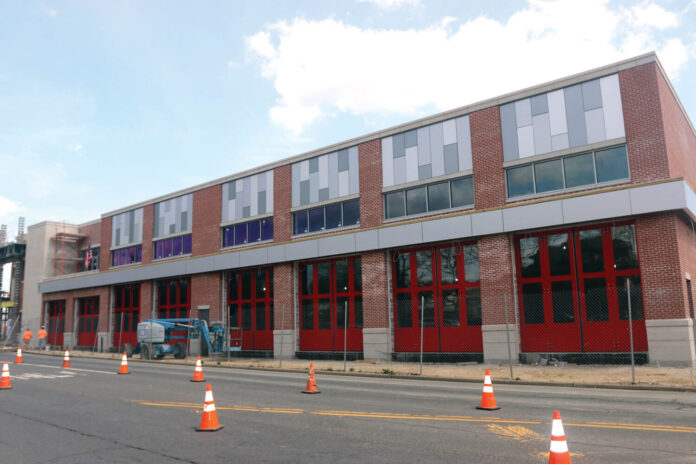
In Asbury Park, the Fire Department reached a landmark moment in January 2026 with the soft opening of its new headquarters, a modern public safety facility designed to dramatically expand operational capacity and training capabilities for the city and surrounding region.
The new firehouse, located at 200 Memorial Drive, is now partially occupied, with full operational status projected by mid-March. The 32,000-square-foot complex replaces the department’s original headquarters on Main Street, a building that dated back to 1904 and no longer met the functional demands of a modern, multi-discipline fire service.
For the first time in decades, Asbury Park’s entire frontline fleet will be housed indoors under one roof. The new facility includes eight full-size apparatus bays, allowing fire engines, ladder trucks and specialty units to be protected from weather exposure and staged for faster deployment during emergencies.
One of the most significant additions is a four-story training tower built directly into the site. The structure allows firefighters to conduct high-angle rescue, search operations, and multi-level fire suppression drills without leaving the city. Department leadership has described the tower as a long-term investment in operational readiness and firefighter safety, giving crews realistic training environments that mirror the challenges they face in multi-story residential and commercial buildings throughout Monmouth County.
Sustainability and energy efficiency were also built into the design. The headquarters incorporates rooftop solar panels, high-efficiency mechanical systems and LED lighting throughout the facility, lowering long-term operating costs while supporting the city’s broader environmental goals.
Inside the building, firefighters now have modern residential quarters, a full kitchen, updated locker rooms and administrative offices designed to support around-the-clock staffing. Officials say the improved layout also enhances coordination during major incidents by bringing command staff, dispatch liaisons and operations teams into one centralized environment.
Even as the department steps forward technologically, it has taken deliberate steps to preserve its heritage.
The iconic neon “Asbury Park Fire HDQT’S” signs that once marked the entrance to the historic Main Street firehouse were carefully removed, restored and are scheduled to be reinstalled at the new Memorial Drive headquarters. Department leaders say the display will serve as a visible link between more than a century of service and the future of firefighting in the city.
The new headquarters comes as Asbury Park continues to expand its role in community-based fire safety and outreach.
On January 17, the department partnered with the American Red Cross for a Martin Luther King Jr. Day of Service initiative that provided free smoke alarm installations to residents throughout the city. Crews and volunteers moved door-to-door installing alarms and reviewing basic escape planning with families, focusing on neighborhoods with older housing stock and higher call volumes.
Earlier in the month, on January 13, the department was formally recognized for its long-standing partnerships and public safety programs, highlighting collaborative efforts aimed at reducing fire risk and improving emergency preparedness across the community.
Asbury Park firefighters were also among candidates participating in statewide civil service oral assessments held throughout January for fire supervisor positions, part of a broader effort by the New Jersey Civil Service Commission to strengthen leadership pipelines in local departments.
The department has also continued to expand its operational capacity with new personnel and equipment.
In late December, John Fox joined the department as a probationary firefighter and officially began active duty in January following the completion of orientation and initial assignments. Department officials say new hires are essential as call volumes rise and training standards continue to expand alongside increasingly complex emergency responses.
The fleet has also been upgraded with the arrival of a new Seagrave custom tower ladder, designated Tower Ladder 83-90, now housed at the new Memorial Drive facility. The apparatus enhances elevated rescue and master stream firefighting capabilities, particularly in densely developed areas and along the city’s growing mixed-use corridors.
Together, the events in Cherry Hill and Asbury Park illustrate two realities facing New Jersey fire departments in 2026: the ever-present danger of residential fires and the urgent need to modernize infrastructure, training and equipment to meet evolving risks.
Readers following public safety developments and emergency response across the state can find continuing coverage through Sunset Daily’s statewide news reporting.
For communities across New Jersey, the message remains clear. Investment in prevention, modern facilities and firefighter readiness saves lives. But as the Cherry Hill fire tragically demonstrates, the stakes remain high every time a call comes in—and every second still matters.