


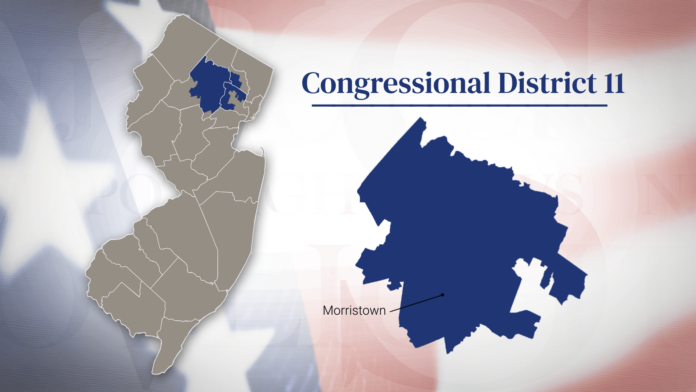

Candidates clash over controversial television spot, dark money spending, and the future of campaign accountability in pivotal congressional contest
A fiercely competitive Democratic primary in New Jersey’s 11th Congressional District has taken a dramatic turn as candidates confront the growing influence of outside-funded attack advertising, sparking a broader debate about truth in political messaging, campaign transparency, and the expanding role of independent spending in modern elections.
The controversy centers on a recently launched television ad funded by a national political action committee that accuses former Congressman Tom Malinowski of supporting federal immigration enforcement policies through a 2019 House vote. The claim has been widely challenged as misleading, linking Malinowski’s support for a bipartisan bill containing humanitarian aid and enhanced border management provisions to present-day enforcement actions. Every Democratic member of New Jersey’s congressional delegation supported that legislation at the time, including the representative whose seat Malinowski now seeks to fill.
The ad’s release has roiled an already crowded field of eleven Democratic contenders vying to represent one of the state’s most closely watched districts. During a virtual candidate forum hosted by a Morris County Jewish Democratic group, contenders were given the opportunity to weigh in on the ad and the role of external spending in shaping the race. What followed revealed sharp ideological differences on campaign ethics, political influence, and party unity.
Malinowski addressed the issue directly, calling the ad a deliberate distortion designed to inflame voters rather than inform them. He argued that misrepresenting legislative records to score political points undermines democratic discourse and urged his opponents to publicly denounce deceptive campaign tactics regardless of who benefits from them.
Several candidates took firm positions. Progressive voices in the field condemned the ad and criticized national political organizations for injecting massive sums of money into local races. Others described the spot as harmful to voter trust, arguing that relentless negative advertising risks disengaging the electorate at a moment when participation is essential.
Not all contenders issued direct denunciations. Some instead pivoted toward broader concerns about unlimited independent expenditures, referencing the lasting impact of federal court rulings that opened the door to unrestricted third-party political spending. Their comments reflected growing unease among voters across the political spectrum about the role of so-called dark money in elections.
Meanwhile, additional dynamics are shaping the contest. Several candidates are positioning themselves as strong advocates for community engagement, civil rights protection, and bipartisan cooperation, while others are emphasizing experience in government operations and economic development. The open seat—created by a recent gubernatorial transition—has attracted heightened national attention, increasing fundraising pressure and intensifying media scrutiny.
Political observers note that the controversy surrounding the ad has become a flashpoint for a much larger question: how future campaigns in New Jersey will balance aggressive messaging with factual integrity. The answer may influence not only this primary, but statewide approaches to campaign regulation, disclosure requirements, and public confidence in election processes.
As candidates continue to campaign across suburban communities in Morris and Essex counties, voters are now assessing more than policy positions. They are evaluating character, transparency, and commitment to ethical governance. The outcome of the CD-11 primary will help determine the district’s direction in Washington, but it may also send a message about how New Jersey voters expect campaigns to be conducted in an era of escalating political advertising and complex Legislation surrounding campaign finance.
With Election Day approaching, one thing is certain: this race has evolved beyond a standard primary. It has become a referendum on the future of political accountability in New Jersey—and how far candidates and their supporters are willing to go to win.



