


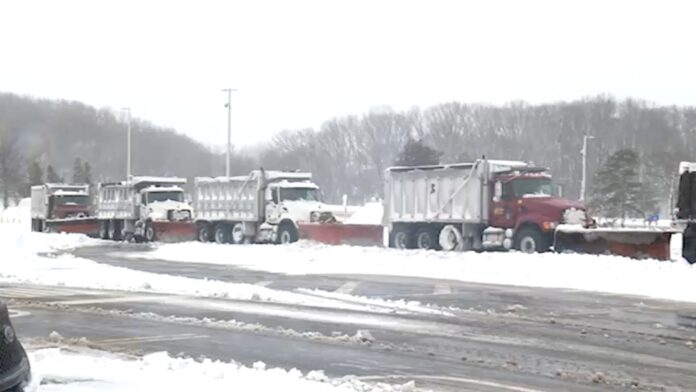

New Jersey is emerging from one of the most disruptive winter storms in recent memory, and while the snow has stopped falling, the real story is now unfolding in its aftermath. Across North and Central Jersey, residents are navigating icy roadways, modified transit schedules, school closures, flight delays, and widespread power outages as the state transitions from emergency response to full-scale recovery.
This is not simply a weather event recap. This is a comprehensive look at what happens after a historic blizzard grips the Garden State — and how New Jersey is restoring mobility, infrastructure, and public safety in real time.
Statewide Travel Ban Lifted — But Caution Still Reigns
Governor Mikie Sherrill officially lifted the statewide travel ban as of February 23, signaling a critical shift from crisis containment to phased reopening. However, state officials continue to strongly urge residents to limit non-essential travel.
During the height of the storm, snowfall rates reportedly reached up to three inches per hour in some regions, overwhelming plow operations and forcing emergency declarations across multiple counties. Even with the ban lifted, secondary and residential roads remain snow-packed, and refreezing overnight has created hazardous black ice conditions.
The lifting of a travel ban is not a declaration of “all clear.” It is a transition point. Municipal public works departments continue round-the-clock snow removal operations, clearing intersections, widening lanes, and addressing blocked drainage systems to prevent localized flooding as temperatures fluctuate.
Motorists are being reminded:
- Assume untreated side streets remain hazardous
- Allow extended braking distance
- Watch for plows and utility vehicles
- Avoid unnecessary nighttime travel
In North Jersey especially, compacted snow and ice remain persistent obstacles, particularly in densely populated urban corridors.
NJ Transit Resumes Service — With Modified Schedules
Public transportation is the backbone of New Jersey’s daily economy, and its restoration marks a major milestone in post-blizzard recovery.
NJ Transit resumed most rail and bus services as of Tuesday, February 24. However, many routes are operating under modified or weekend schedules as crews continue clearing rail switches, bus depots, and station platforms.
Commuters should anticipate:
- Delays due to equipment repositioning
- Platform accessibility issues at smaller stations
- Reduced bus frequency on select regional routes
- Temporary schedule adjustments through midweek
Transit authorities have emphasized that safety inspections remain ongoing. Rail switches, signal systems, and overhead lines underwent heavy ice accumulation during the storm’s peak, requiring methodical clearing and testing before full operational capacity can resume.
The restoration of NJ Transit service is not just about transportation. It is about economic continuity. Thousands of essential workers rely on these lines daily — healthcare staff, utility crews, public safety personnel, and municipal employees who form the core of recovery operations.
Schools Closed and Delayed Across North and Central Jersey
Even as state-level restrictions ease, local districts are proceeding cautiously. Numerous school systems across North and Central Jersey remain closed or have announced delayed openings for Tuesday, February 24.
The reasons extend beyond snow accumulation:
- Parking lots and sidewalks remain unplowed
- Roof snow load inspections are ongoing
- Bus routes remain partially obstructed
- Refreezing conditions pose slip hazards
Superintendents are balancing academic continuity with student safety. In several districts, administrators cited concerns about children waiting at bus stops in below-freezing temperatures amid icy conditions.
Remote learning options are being utilized in select municipalities, though not universally. For many communities, the logistical challenge of safely reopening outweighs the urgency of immediate classroom return.
Power Outages Continue — Tens of Thousands Affected
The most critical ongoing issue remains widespread power loss. Tens of thousands of New Jersey residents are still without electricity following heavy, wet snowfall that toppled trees and downed power lines.
Utility companies have deployed additional crews from neighboring states to assist with restoration efforts. However, accessibility remains a limiting factor in certain areas where fallen trees continue to obstruct roadways.
Residents are advised to:
- Avoid downed power lines
- Use generators outdoors only
- Report outages through official utility channels
- Check on elderly neighbors and vulnerable populations
Cold-weather exposure remains a serious concern. Warming centers have opened in several municipalities, particularly in counties hit hardest by outages.
The restoration timeline varies regionally. Urban corridors are seeing faster service returns, while rural and wooded communities may experience extended outages due to infrastructure accessibility challenges.
Newark Liberty International Airport Reports Significant Delays
Air travel continues to experience ripple effects from the storm. Newark Liberty International Airport is reporting significant flight delays as de-icing operations, aircraft repositioning, and runway clearing continue.
Although the airport remained operational throughout portions of the storm, cancellation backlogs are now impacting inbound and outbound schedules. Travelers are advised to:
- Confirm flight status before departure
- Allow additional time for security and baggage processing
- Monitor airline notifications for gate changes
The aviation sector typically lags ground recovery by 24–48 hours after major winter events due to cascading delays nationwide.
The Broader Weather Pattern and Ongoing Risk
According to the evolving updates on the Weather Report section at Sunset Daily, the blizzard represents one of the most significant late-February systems in recent New Jersey history.
Meteorologists continue monitoring:
- Overnight refreeze risks
- Secondary coastal wind impacts
- Residual flooding concerns
- Potential minor snow showers midweek
Late-season blizzards often carry compound risk factors: heavy moisture content, tree damage, infrastructure strain, and prolonged recovery windows. This storm has demonstrated all four.
Economic Impact and Community Resilience
While snowfall totals dominate headlines, the economic implications are substantial.
Temporary closures impacted:
- Retail centers
- Logistics hubs
- Office campuses
- Healthcare appointment schedules
- Small businesses dependent on weekend traffic
At the same time, the storm has highlighted New Jersey’s resilience. First responders, sanitation workers, transit crews, and utility personnel operated continuously under extreme conditions.
Community-level responses have included:
- Volunteer snow clearing for elderly residents
- Food bank mobilizations
- Neighborhood generator sharing
- Municipal coordination hubs
New Jersey’s recovery model is not simply state-driven; it is community-powered.
What Residents Should Expect Over the Next 72 Hours
The next three days are critical for full normalization.
Expect:
- Gradual return to standard transit schedules
- Continued localized power restoration
- Expanded road clearing into residential zones
- Reopening announcements from additional school districts
- Improved airport on-time performance
However, cold nighttime temperatures could prolong ice hazards. Officials stress that the danger phase of a winter storm often extends beyond visible snowfall.
Why This Blizzard Will Be Remembered
This was not just another winter system. It was a high-impact, statewide disruption that tested transportation networks, energy infrastructure, aviation capacity, and municipal coordination simultaneously.
The lifting of the travel ban marks progress. The resumption of transit services signals momentum. But full recovery depends on sustained operational focus across every sector.
For continuous updates, regional alerts, and in-depth storm coverage, monitor the Weather Report category at Sunset Daily as New Jersey completes its transition from emergency response to statewide recovery.
The snow may have stopped falling, but the story of this blizzard — and New Jersey’s response — is still being written.



