


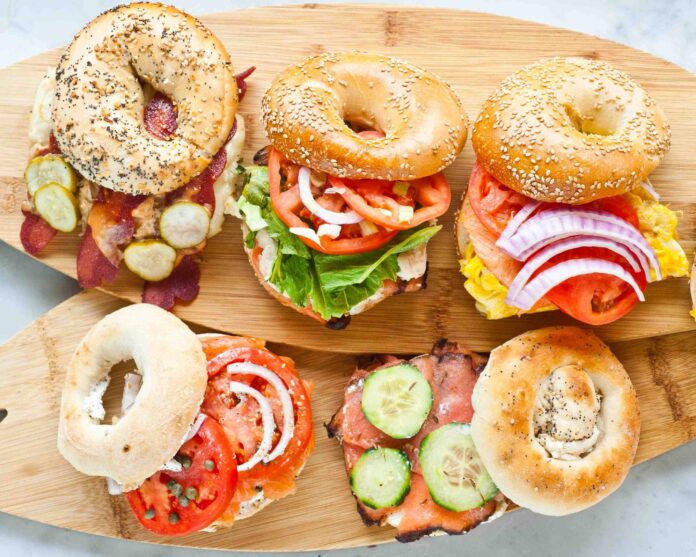

In a state where bagels are not simply a breakfast choice but a cultural standard, a longtime New Jersey institution is positioning itself for its most ambitious chapter yet.
Bagel Bazaar, a brand that began nearly four decades ago with a single store in Edison, has officially launched a full-scale franchising model designed to transform a well-known regional name into a multi-state, nationally distributed operation—without losing the handcrafted, community-centered identity that built its reputation across New Jersey.
The shift marks a strategic turning point for the company, which for years expanded through licensing agreements that allowed independent operators to run locations under the Bagel Bazaar name. Now, under a newly structured franchise system, the company is placing tighter controls on training, operations, sourcing, design, and customer experience in order to create a consistent brand standard across every store.
Chief executive officer Paul Salas, who has spent more than 30 years inside the business and rose through the ranks from teenage counter worker to company leader, says the move is about building long-term stability—for the brand, its partners, and its customers.
Bagel Bazaar’s growth targets are deliberately aggressive. The company is aiming to establish 50 franchise locations by 2030, with a long-range goal of reaching 250 locations by 2040. The initial geographic focus will remain close to home, concentrating on New Jersey and Pennsylvania before expanding into additional regional and national markets.
According to Salas, franchising gives the company the operational authority it previously lacked, while creating a clearer pathway for entrepreneurs who want to invest in a proven food concept supported by centralized systems and training.
For a food brand built on precision and repetition, control matters.
Under the former licensing structure, individual operators maintained wide discretion over daily decisions, from ingredient brands to layout choices and service procedures. While that flexibility helped the company grow quickly in its early years, Salas believes it eventually limited Bagel Bazaar’s ability to protect what truly defines the brand.
Franchising now allows the company to standardize everything from store design and equipment specifications to ingredient sourcing and workflow systems. That includes decisions as granular as which condiments are used, how stations are laid out, and how products are presented to customers.
For Salas, those details are not cosmetic—they are central to customer trust.
He points to consistency as the single most critical factor in modern food franchising. Customers should receive the same quality, the same flavors, and the same experience whether they walk into a Bagel Bazaar in central New Jersey or eventually in another region of the country.
That operational philosophy now extends to every aspect of the company’s infrastructure.
Bagel Bazaar, which is currently headquartered in Hamilton, also operates a major production and distribution facility that began shipping bagels nationwide in 2024. The facility supports the brand’s growing direct-to-consumer business, allowing customers across the United States and Canada to receive its products through e-commerce channels while also providing centralized supply support for retail locations.
The numbers behind the brand underscore the scale of the operation.
Across its ten current New Jersey locations, Bagel Bazaar produces roughly 10 million bagels each year, prepares more than 200,000 pounds of cream cheese, cracks approximately 2 million eggs, grills more than 50,000 pounds of pork roll, and cooks over one million slices of bacon annually. Those figures reflect not only demand, but also the operational systems now being formalized for franchise replication.
The company’s menu remains anchored in traditional methods—stone-baked, water-boiled bagels prepared fresh daily—but has evolved into a broad breakfast platform that includes about 30 bagel varieties, more than two dozen cream cheese spreads, specialty breakfast sandwiches, and fair-trade coffee.
Salas’s own story is tightly interwoven with the brand’s evolution.
Raised in New Brunswick, he began working at the Franklin Park location in 1994 at just 15 years old. By the time he was 20, he had invested in his first store and committed fully to a career inside the company. Today, after more than three decades in operations, training, management, and product development, Salas is leading Bagel Bazaar through its first fully structured national expansion strategy.
He often describes the bagel itself as a uniquely powerful product—simple, familiar, and endlessly adaptable—and credits his multicultural family background, with roots in Puerto Rico and Peru, for shaping his people-first leadership style.
That emphasis on people extends beyond customers.
Bagel Bazaar operates as a minority-owned business and employs approximately 200 people across its locations and production operations. Nearly half of its workforce is made up of women, many of whom serve in leadership and decision-making roles throughout the company. Salas describes the organization as “people-driven,” placing equal focus on career development, workplace culture, and leadership training.
The company actively promotes internal growth, creating career paths that can accommodate high school students seeking part-time work, college graduates pursuing restaurant management careers, and older workers looking to remain professionally engaged.
Environmental responsibility is also becoming a more visible component of the brand’s operating strategy. Bagel Bazaar eliminated foam packaging in 2020 and continues to transition toward more sustainable materials and reduced reliance on non-renewable resources. While packaging may not define the customer experience, Salas believes environmental stewardship is increasingly part of how modern brands are judged.
Community engagement remains a cornerstone as well.
Bagel Bazaar routinely supports local schools, nonprofit organizations, churches, and community groups, and offers discounts to first responders and civic organizations. Leadership views those efforts not as marketing tactics, but as an extension of the company’s identity as a neighborhood-based business.
As part of preparing for franchising, the company has spent the past two years comprehensively reengineering its menu and production formulas.
Every core bagel recipe was reformulated with the goal of achieving what Salas calls a “perfectly balanced bite.” While the foundational ingredients remain traditional—high-gluten flour, malt syrup, yeast, salt, and water—the proportions, fermentation timing, and baking methods were refined to enhance texture, flavor consistency, and production efficiency.
At the same time, leadership has taken a disciplined approach to menu expansion, carefully balancing innovation with operational simplicity. Salas notes that overly complex menus can strain training programs, slow production lines, and complicate franchise execution.
That restraint, however, has not dampened creativity.
Product innovation has become one of the brand’s most visible growth drivers, particularly through limited-edition flavors and seasonal offerings. Salas personally leads flavor development and oversees new product formulation before handing concepts to the marketing and production teams.
Bagel Bazaar now introduces one to two new bagel varieties each month. Recent launches have included a protein-focused bagel and a cranberry maple oat variety, with sourdough bagels scheduled to join the lineup. The company also continues to release themed products, such as its red heart-shaped Valentine’s bagels.
Social media has amplified the impact of those creations.
The brand’s Halloween “Monster Mash” bagel—a five-color rainbow bagel—has repeatedly sold out after being highlighted by national food media and online influencers. The product became one of Bagel Bazaar’s most successful e-commerce offerings, with shipments reaching customers across the country. Salas credits both the distinctive color profile and the company’s digital marketing strategy for the bagel’s unexpected breakout success.
Customer participation plays a growing role in innovation as well. Bagel Bazaar actively invites followers on social platforms to suggest new flavors and cream cheese concepts. Many menu additions now originate directly from customer feedback and online polls.
The cream cheese lineup alone ranges from classic plain to jalapeño, blueberry, walnut raisin, sun-dried tomato and basil, and even dessert-inspired flavors such as Oreo cookie.
The franchising initiative has also coincided with a broader brand refresh.
Bagel Bazaar recently unveiled a redesigned logo, launched a national direct-to-consumer website, and introduced branded merchandise. E-commerce has become an increasingly important revenue channel, with Texas and Florida emerging as two of the company’s strongest out-of-state markets.
Industry challenges remain.
Rising food costs, labor availability, and competitive saturation—particularly in New Jersey’s dense bagel market—continue to pressure operators across the quick-service restaurant sector. Salas believes that a well-supported franchise system offers a meaningful competitive advantage, providing training infrastructure, purchasing power, and standardized processes that independent operators struggle to replicate.
Rather than focusing on competitors, leadership is concentrating on operational excellence, employee development, and continuous learning as the primary levers of growth.
Salas often points to his early years on the production line as the foundation of his leadership philosophy. He understands firsthand the pace, pressure, and complexity of a bagel shop environment—from managing multiple stations during peak morning rush to maintaining cleanliness, presentation, and product consistency under constant demand.
Those realities now inform the company’s franchise training programs, workflow design, and staffing models.
Looking ahead, Bagel Bazaar’s expansion strategy is built not only on unit growth, but on partnership. The company is actively seeking franchisees who align with its mission of community engagement, quality-first operations, and employee development.
Franchising, Salas says, allows the brand to share its operational blueprint with entrepreneurs who want to build successful businesses while strengthening their own local communities.
For prospective operators and industry observers following how established New Jersey brands are scaling into national platforms, Bagel Bazaar’s transition reflects a broader trend shaping the regional restaurant economy—one that continues to redefine small business growth across the state’s evolving food and retail landscape, a topic closely tracked within Sunset Daily’s ongoing business coverage.
With nearly 40 years of history behind it and a rapidly expanding infrastructure ahead, Bagel Bazaar is positioning itself to move far beyond its original footprint—one bagel, one community, and one franchise partner at a time.



