



New Jersey leaders accelerate cost-of-living proposals for seniors and families as national budget turmoil spills into state political debate
As New Jersey residents continue to wrestle with rising housing costs, taxes, and everyday expenses, lawmakers in Trenton are moving forward on a sweeping package of affordability initiatives aimed at keeping longtime residents in their homes—while also confronting the growing political consequences of federal dysfunction.
At the center of the current legislative push is the long-anticipated “Stay NJ” program, a major new property tax relief initiative designed to help senior homeowners remain in New Jersey as living costs climb. State officials say the program’s application framework is now advancing through the legislative process, bringing the state closer to launching one of the most ambitious senior tax relief efforts in decades.
At the same time, lawmakers are actively exploring the possibility of a statewide sales tax reduction, a proposal that would extend relief beyond homeowners and reach nearly every household in the state.
Together, the two initiatives reflect a strategic shift by legislative leaders to address affordability through both targeted and broad-based mechanisms, an issue that has quickly become one of the defining themes of New Jersey’s current political climate. Ongoing coverage of state policy and legislative developments is available through Sunset Daily’s New Jersey politics reporting.
The “Stay NJ” program is specifically structured to benefit older residents who have spent much of their lives contributing to local communities and now face the growing risk of being priced out. While New Jersey already offers several property tax relief programs for seniors and disabled residents, lawmakers have acknowledged that the existing system remains fragmented, confusing for applicants, and often insufficient to offset rising assessments and municipal tax growth.
Under the developing framework, “Stay NJ” would serve as a centralized, streamlined benefit designed to supplement current programs and provide more predictable and meaningful relief. Lawmakers say the goal is to reduce application barriers, improve outreach, and ensure that eligible seniors are not forced to navigate multiple overlapping systems to access assistance.
Legislative leaders have also signaled that the program is intended to stabilize communities by allowing aging residents to remain in their neighborhoods, helping preserve local civic engagement, school support networks, and small business activity.
Beyond the senior-focused initiative, lawmakers are now openly discussing a potential sales tax cut as part of a broader affordability strategy. While still in the exploratory stage, the proposal has gained attention among both legislative chambers as consumer spending remains strained by higher prices for groceries, utilities, and transportation.
Supporters of a sales tax reduction argue that it offers immediate relief to families who may not qualify for property-based assistance but are still facing significant financial pressure. They also point to the potential for increased consumer activity to support small businesses and regional retail corridors, particularly in communities still recovering from the economic shocks of the pandemic and inflationary spikes.
Critics, however, have raised concerns about the long-term impact on state revenues and the potential strain on funding for public services if the tax cut is not paired with a clear and sustainable fiscal strategy. Legislative budget analysts have begun modeling several scenarios to assess how a reduced rate could affect state coffers over multiple fiscal years.
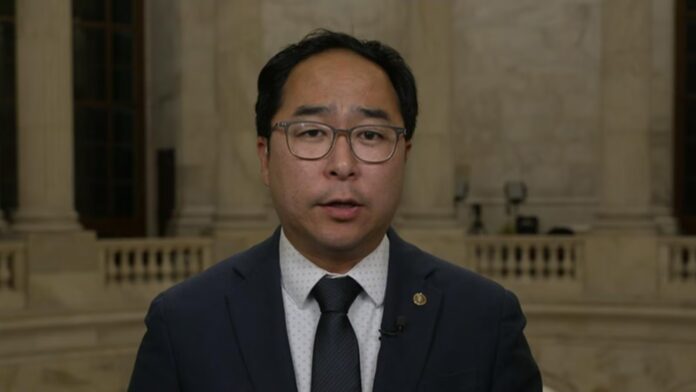
The renewed focus on affordability in Trenton arrives against the backdrop of rising political frustration nationwide, a dynamic that New Jersey’s junior U.S. senator, Andy Kim, addressed this week while weighing in on a stopgap federal spending measure tied to the Department of Homeland Security.
Kim said the short-term funding package reflects a deeper level of public anger and anxiety over the conduct of federal law enforcement and immigration agencies, particularly among communities unsettled by reports of aggressive enforcement activity and shifting federal priorities.
According to Kim, Americans are demonstrating “how worried they are” about federal agents and the broader direction of national security and immigration policy. He said those concerns are increasingly being conveyed directly to lawmakers and, in turn, to Republican leadership and the White House.
Kim described the stopgap Homeland Security funding measure not as a sign of legislative stability, but as a symptom of escalating public pressure and political volatility in Washington. He warned that continued reliance on temporary funding extensions leaves both agencies and communities operating under uncertainty, undermining confidence in federal governance and long-term planning.
For New Jersey, the national debate carries particular resonance. The state’s diverse immigrant communities, dense transportation networks, and proximity to major federal hubs make it especially sensitive to policy shifts within Homeland Security and related agencies. Local leaders and advocacy groups have repeatedly called for clearer federal direction and more predictable funding frameworks that allow state and municipal partners to plan effectively.
Kim’s comments also reflect a growing recognition among New Jersey Democrats that federal turbulence is shaping voter expectations at home. Lawmakers in Trenton increasingly view affordability policy as inseparable from broader political stability, especially as voters express frustration with gridlock in Washington and demand more tangible, day-to-day improvements at the state level.
The convergence of state and federal issues has sharpened the political stakes for New Jersey’s legislative leadership. With housing costs continuing to rise and property tax burdens remaining among the highest in the nation, lawmakers face mounting pressure to demonstrate progress before the next election cycle accelerates.
Senior advocates say the timing of the “Stay NJ” program could prove pivotal. Many older residents live on fixed incomes that have not kept pace with inflation or local tax increases, and housing insecurity among seniors is becoming a more visible concern across suburban and urban communities alike.
Meanwhile, consumer groups and business organizations are closely watching the sales tax discussion, viewing it as a potential catalyst for economic activity but also as a test of the state’s willingness to balance relief with long-term fiscal responsibility.
State leaders have made clear that both proposals remain subject to further negotiation and fiscal review, but momentum is building around the idea that affordability must be addressed across multiple fronts—not solely through housing policy or tax credits, but through a coordinated legislative agenda that recognizes how cost pressures intersect.
As lawmakers push forward on senior property tax relief and weigh a broader sales tax cut, Kim’s warning from Washington underscores a parallel reality: voter frustration is no longer confined to one level of government. From Trenton to Capitol Hill, political leaders are now operating in an environment shaped by deep public anxiety, skepticism toward institutions, and a demand for practical results.
In New Jersey, the coming months will reveal whether the promise of “Stay NJ,” potential sales tax relief, and a renewed focus on economic stability can translate into durable policy—and whether state leaders can leverage that progress to restore confidence at a time when national politics remains increasingly unsettled.



