


Corporations Are People, My Friend: Democrats Should Smell Blood—If They’re Willing to Do the Work
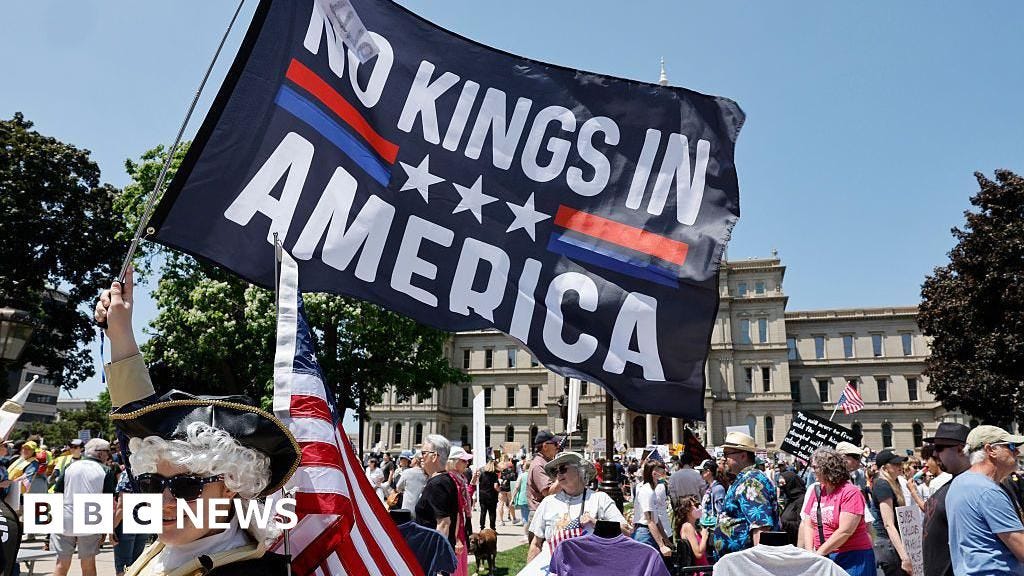
You know that saying in sports—and even at work—that you’re only as strong as your weakest player or person? To paraphrase, the same applies in politics. Right now, Democrats should be paying close attention to regions that are not Democratic strongholds, because the story isn’t how many people showed up in Minnesota, Washington, D.C., or New York—places where the majority already vote Democratic. The real story is the emergence of the protests in red and rural towns, especially in areas that voted heavily for Trump.
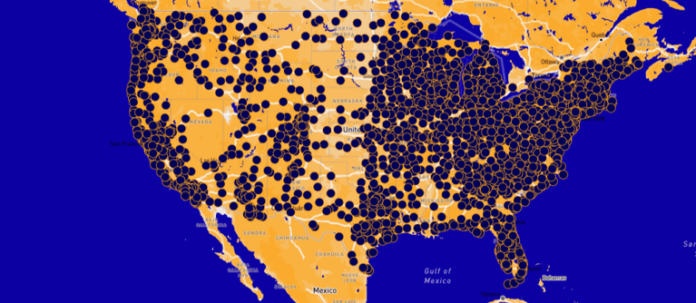
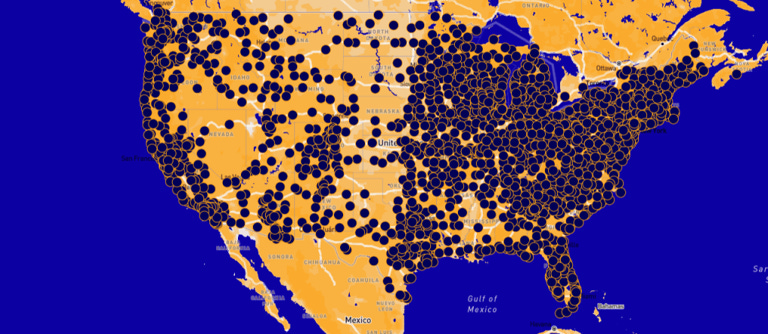
The defining characteristic of the March 28, 2026 “No Kings” rallies is not found in the largest gatherings or the most visible cities. It is found in the map, specifically, in the places where these rallies appeared that historically do not produce public protest at all. The real shift is not about size. It is about location.
On Saturday, rallies were documented across all 50 states. What stands out is how deeply those events penetrated into counties and towns that have consistently voted for Donald Trump and, in many cases, delivered overwhelming margins. These are not competitive regions. These are areas where Republican vote share regularly reaches 65, 70, even 75 percent or more. In those environments, public protest has traditionally been rare to nonexistent.
New Jersey provides one of the clearest localized examples because of how widely distributed the rallies were across counties that are not typically associated with visible opposition. In Hunterdon County, one of the most reliably Republican counties in the state, rallies took place in Flemington, Frenchtown, and Milford. Hunterdon has a long history of GOP dominance, yet multiple towns within the county produced organized turnout on the same day. In Warren County, another strongly Republican region, a rally was held in Phillipsburg. Ocean County is arguably one of the most significant Republican strongholds in New Jersey, saw events in Toms River, Lacey Township, and Lakewood. Sussex County added Newton to the list, and Morris County, long anchored by Republican strength outside its more competitive pockets, saw hundreds gather in Morristown.
These are not places that typically generate protest activity. They are suburban and semi-rural environments where political identity is relatively stable and public dissent is not part of the civic routine. The presence of rallies across multiple towns in these counties on the same day represents a measurable shift in behavior, not just opinion.
That same pattern extended well beyond New Jersey.
In Tennessee, rallies connected to the “No Kings” movement appeared in and around Nashville, but the more telling element was the participation extending outward into surrounding conservative areas where Trump’s margins have been dominant. Tennessee remains a state where Republican presidential candidates consistently win by large margins, yet protest activity reached into regions where public demonstrations are uncommon.
In Kansas, Johnson County, historically a Republican stronghold, even as it has trended more competitive in recent cycles, hosted one of the most physically expansive demonstrations tied to the movement, stretching across miles of suburban space. While not every part of the county exceeds the 70 percent threshold, it sits within a broader regional context of Republican dominance, making the scale and visibility of the demonstration notable.
Florida provided another clear example. In West Palm Beach, demonstrators moved toward Mar-a-Lago, directly within a county that delivered a significant margin for Trump in the 2024 election. Palm Beach County itself contains political variation, but the surrounding region and broader electoral context remain heavily Republican. The proximity of organized protest activity to one of the most symbolically important locations tied to Trump adds a layer of geographic significance that goes beyond turnout.
In Nebraska, rallies took place in both Omaha and Lincoln, but the more important detail is that these cities exist within a state that remains deeply Republican overall. Nebraska routinely delivers strong Republican margins statewide, and the presence of visible protest activity within its major population centers, and extending outward, indicates that opposition is not geographically isolated.
Idaho offers one of the clearest examples of protest activity inside a consistently Republican state. In Boise, demonstrators gathered at the state capitol, but reports also pointed to participation in surrounding communities where Republican margins are strong and protest activity is historically limited. Idaho is one of the most reliably Republican states in the country, which makes any level of organized protest noteworthy in itself.
In Alabama, protest activity was visible in Birmingham and Huntsville—two cities that sit within a state that has consistently delivered strong Republican margins at the presidential level. Birmingham saw repeated demonstrations tied to voting rights and broader national issues, while Huntsville—despite its conservative voting patterns—produced notable turnout during recent protest cycles. These events took place in environments where sustained public protest is not typical, making their presence in both cities noteworthy within the broader state context.
In Mississippi, activity centered in Jackson but extended into smaller surrounding towns where organized demonstrations are far less common. While Jackson itself has a different political profile than much of the state, Mississippi as a whole remains one of the most reliably Republican states nationally. The spread of protest activity beyond the capital into smaller municipalities reflects participation in areas where public gatherings of this kind are not part of the usual civic landscape.
In Ohio, demonstrations were not limited to major cities like Cleveland or Columbus. Smaller towns and county-seat communities across the state—many of which have trended strongly Republican—saw protest activity, often with fewer than 200 participants. These locations typically do not have an established protest culture, and the scale of the gatherings reflects both the size of the communities and the rarity of organized demonstrations in those settings.
In Iowa, activity extended beyond Des Moines into suburban and rural towns that have shifted decisively toward Trump in recent election cycles. These areas are not typically associated with visible protest turnout, yet demonstrations appeared in multiple smaller communities. The presence of organized gatherings in these towns highlights participation in places where political alignment has remained consistently Republican in recent years.
In Wyoming, protests took place in Cheyenne and Laramie—two cities within a state that delivers some of the highest Republican vote margins in the nation. Laramie, influenced by the University of Wyoming, has seen periodic demonstrations, while Cheyenne serves as the state’s political center. Given Wyoming’s population size and political consistency, even modest gatherings in these cities carry weight within the state’s broader context.
In Texas, protest activity appeared in cities such as Lubbock and Amarillo, both located in regions that consistently vote Republican. These cities are not typically associated with frequent demonstrations, particularly compared to larger metro areas like Austin or Houston. The presence of organized gatherings in West Texas reflects participation in locations where protest activity is less common and where political alignment has remained strongly conservative.
In West Virginia, demonstrations were visible in Charleston and Morgantown, with participation extending into surrounding communities tied to coal-region economies. West Virginia is one of the strongest Republican states electorally, and while Morgantown has a university presence, the broader region has limited tradition of organized protest. Activity in Charleston and nearby areas reflects turnout in locations where public demonstrations are not a regular occurrence.
In Montana, turnout was documented in smaller towns where organized demonstrations are uncommon. In Alaska, similar patterns emerged, with participation in areas that are geographically isolated and politically consistent in their Republican alignment. These are environments where organizing even a modest gathering requires overcoming logistical and cultural barriers that do not exist in urban centers.
What ties all of these locations together is not scale, messaging, or coordination. It is the baseline from which these events emerged. In counties and towns where public protest is not part of the political landscape, the appearance of organized rallies—even at smaller sizes, represents a departure from established norms.
That departure is the story.
The March 28 rallies demonstrates that protest activity is no longer confined to predictable geographic zones. It is appearing in counties and towns that have long been treated as politically settled. These are areas where Republican support has been consistent, where margins have been strong, and where public opposition has historically remained limited or private.
A coalition’s strength is not measured by where it performs best. It is measured by where its internal consistency begins to change, where it finds avenues and opportunities to gain new votes or shift support from the GOP to Democrats. The significance of March 28 is that those changes are now visible in places that, until recently, showed little to no outward sign of political divergence.
Not in the cities everyone expects, but in the towns and counties where it was never expected at all.
Whether Democrats ultimately recognize what is happening in these regions remains an open question. Political movements are often shaped by where they choose to focus their attention, and for years, that attention has remained fixed on familiar battlegrounds and high-visibility strongholds. Let’s be honest, the Democratic Party has not always shown a willingness to do the hard work required in these areas. Too often, the focus remains on media platforms and audiences that already lean heavily Democratic, while little attention is paid to regions where it could matter most.
The emergence of protest activity in places that have consistently voted Republican suggests that the political landscape is not as fixed as it once appeared. These are not traditional swing areas, yet they are producing signals, however small, that something beneath the surface is shifting.
The real test going forward is not about rhetoric, but about whether either party is willing to engage with these communities in a meaningful way. Regions that have long voted one way are not necessarily immune to change, but they are often overlooked until that change becomes impossible to ignore. What happened on March 28 indicates that even in the most reliably red areas, there are moments where frustration becomes visible. The question now is whether that visibility fades, or whether it marks the beginning of a deeper realignment that few have been paying attention to.
The challenge the GOP faces right now is that media influence has limits. Networks like Fox News and Sinclair Broadcast Group cannot shield the realities of a war in Iran, nor can they insulate people from rising gas prices or the cost of everyday necessities at the grocery store. When those pressures are felt consistently across households, the gap between messaging and lived experience becomes harder to ignore, and harder to misrepresent.
If voters begin to connect those daily realities with broader political narratives, it creates an opening that cannot be dismissed. The key question is whether that connection is made clearly and consistently. When people are dealing with higher costs and economic strain, the focus shifts away from ideology and toward outcomes. That shift, if it takes hold, can reshape how issues are understood, especially in places where political alignment has long been assumed rather than questioned.
Today at the Sunset Entertainment & Media Companies
The Rams’ Draft Crossroads at No. 13 and the Decision That Will Define Their Super Bowl Window
Adolescence Is the Defining Series of the Moment—And Why Everything Else in Streaming Is Orbiting Around It: Sunset’s Top Picks This Week, Streaming Now on Sunset
Live Jam Friday Night Lights Presents Foo Fighters Live At Wembley Stadium
William Shatner, Lighthiser v. Trump, Courtney Stodden, SeaWorld, Samba, National Park Service, Economic Security Act (S. 3971) & More at Sustsainable Action Now!
Sunset Daily NewsExplore New Jersey
New Jersey Erupts in Statewide “No Kings! III” Protests as Tens of Thousands Mobilize Across 65+ Communities in Defining Political Moment
The Vending Lot Reinvents the Denim Jacket: A Modern Essential for Men and Women Built on Timeless Design and Everyday Versatility
MLB 2026 Opening Weekend Ignites a New Era—and Pro Merch Delivers the Definitive Fan Collection to Match
Nature’s Sunset Expands Its Wellness Vision with Sleep Well Gummies, Redefining the Modern Approach to Rest, Recovery, and Daily Balance
The Rams’ Draft Crossroads at No. 13 and the Decision That Will Define Their Super Bowl Window
Sunset Special Markets (SSM) Presents Closet Classics — Boy George Curates a Defining Collection of Club Culture, Identity, and Underground Sound
Sunset Music Advocacy Presents Music in Our Schools Month 2026 Ignites a National Movement as Policy Wins, Artist Advocacy, and Industry Reckoning Converge
Calculated Chaos and Cultural Timing: Federal Moguls’ “Vicarious” Takes Center Stage at Sunset
JamFest Festival Season Ignites: Tomorrowland Winter 2026 Sets the Alpine Standard as Ultra Miami Takes the Global Stage Next
The Final Curtain Call and the Next Great Revival: How Swing’s Global Resurgence Is Redefining Live Big Band Music in 2026 – Swing With The Big Bands Tonight on The Improv Cafe’
MetalMania Live Presents Metallica Live: Death Magnetic Tour Dominance Captured Live in Rosemont – Friday Night Metallica Live Showcase
Singer-Songwriter of Cape May 2026 Returns Unplugged and Unstoppable: Inside New Jersey’s Most Influential Live Music Revival
John Mayer’s Next Chapter: Inside His Expanding Role in the Grateful Dead Universe, New Music, and Global Momentum in 2026 – The Fare Thee Well Radio Show is Tonight on The Grateful Dead LiveTomorrowland Live
Tomorrowland Live
Tomorrowland Winter 2026 Live is Ending Today – A Global Alpine Broadcast Redefining Electronic Music’s Most Immersive Festival Experience – Tomorrowland Live
Electric Daisy Carnival 2026 will begin a New Era: The 30-Year Milestone That Redefines Global Festival Culture and Transforms Las Vegas Into the Center of the Electronic Music Universe – Electric Daisy Carnival Live
Ultra Music Festival Live 2026 Goes Global – Watch Every Stage Live All Weekend Across Five Exclusive Streams
Sunset Hacker News at SunsetHost: Inside the New Era of Cyber Deception, Identity Security, and the Quiet Threats Redefining the Digital Battlefield
Corporations Are People, My Friend: Democrats Should Smell Blood—If They’re Willing to Do the Work.