



New Jersey enters the final days of March with a convergence of political pressure points, policy recalibration, and public accountability debates that are rapidly defining the state’s trajectory for 2026 and beyond. The latest statewide broadcast from NJ Spotlight News, released Friday, March 27, delivers a comprehensive snapshot of a government ecosystem navigating fiscal tension, infrastructure urgency, and a fast-moving legislative agenda shaped by both traditional governance and emerging technological realities. As of the morning of March 28, no Saturday broadcast has aired—consistent with the outlet’s weeknight schedule—but the Friday program stands as a dense and consequential briefing on the issues now dominating New Jersey’s public discourse. Viewers can access the full episode through the platform’s official coverage hub on NJ Spotlight News, where extended reporting continues to deepen the context behind each headline.
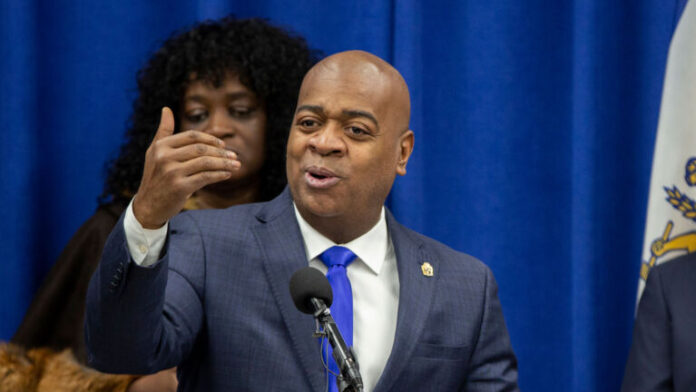
At the center of the current political landscape is a rapidly escalating controversy in Newark, where scrutiny has intensified around a proposed $500 million elementary school project. Ras Baraka has publicly denied any involvement in what has been characterized as a potential no-bid contract tied to a developer with past financial connections to his gubernatorial campaign. The optics alone have ignited a broader conversation about procurement transparency, campaign finance influence, and the structural safeguards—or lack thereof—governing large-scale public infrastructure deals in New Jersey’s urban centers. This issue is not unfolding in isolation; it is feeding into a wider voter sensitivity around ethics, accountability, and the integrity of public-private partnerships, particularly as municipalities face mounting pressure to modernize educational facilities without compromising oversight.
Simultaneously, Trenton is engaged in a consequential debate over the future of property tax relief, a perennial issue that continues to define New Jersey’s economic identity. Under the leadership of Mikie Sherrill, lawmakers are dissecting a revised framework for the Anchor and Stay NJ programs, with the administration positioning the proposal as a more equitable recalibration of relief distribution. The discussion is not merely technical; it represents a philosophical divide over how the state balances fiscal responsibility with affordability in one of the nation’s most expensive housing markets. Legislators are weighing whether the proposed adjustments truly deliver on the promise of fairness or simply redistribute existing constraints in a different configuration, leaving core affordability challenges unresolved.
Transportation infrastructure, long a defining issue for New Jersey residents, has also re-emerged as a focal point of executive action. Governor Sherrill has issued a directive imposing a June 22 deadline for NJ Transit to implement measurable improvements across safety, cleanliness, and operational reliability. The mandate specifically targets persistent issues such as malfunctioning elevators, inconsistent maintenance standards, and the need for an increased law enforcement presence across transit hubs. For commuters who rely daily on the system’s performance, this directive signals a shift toward accountability benchmarks that extend beyond rhetoric, potentially redefining how transit agencies are evaluated and managed at the state level.
In parallel, a more systemic financial concern is unfolding within the state’s public sector workforce: the sustainability of teacher health insurance. The New Jersey Treasury has issued a stark warning that the current structure is approaching what analysts describe as a “death spiral,” driven by escalating costs and diminishing participation. This scenario presents a complex policy challenge, as any corrective measures will require coordination between state officials, educators, and unions, all while maintaining the balance between fiscal solvency and the preservation of benefits that are central to workforce stability. The implications extend beyond budgetary spreadsheets; they touch on recruitment, retention, and the broader perception of public sector employment in New Jersey.
Overlaying these traditional policy arenas is a rapidly advancing legislative push into the governance of artificial intelligence, signaling New Jersey’s intent to position itself at the forefront of regulatory innovation. Lawmakers are actively developing measures aimed at curbing deceptive uses of AI in real estate advertising, where manipulated imagery and synthetic representations have the potential to mislead consumers. At the same time, the legislature is confronting the ethical and legal boundaries of AI-driven “companion chatbots” designed for children, with proposed statutes introducing criminal penalties for the generation of explicit or exploitative content involving minors. These initiatives reflect a recognition that technological acceleration is outpacing existing legal frameworks, requiring proactive intervention to safeguard both consumers and vulnerable populations.
Beyond the primary policy narratives, NJ Spotlight News continues to capture the human dimension of life across the state, reinforcing its role as both a political and cultural lens. A recent special edition titled “Painting Community” explored the role of public art as a unifying force in municipalities across New Jersey, highlighting how creative expression intersects with civic identity and local investment. Meanwhile, a deeply local story out of Deptford—centered on the loss of a beloved unofficial mascot known as “Fred the Turkey”—has resonated with residents, illustrating how even small, community-driven narratives contribute to the broader emotional fabric of the state.
What emerges from this moment is a New Jersey defined not by a single headline, but by a layered and interconnected set of challenges and opportunities. Governance is being tested simultaneously across ethics, economics, infrastructure, healthcare, and technology, with each domain influencing the others in ways that demand coordinated leadership and sustained public engagement. The reporting delivered through NJ Spotlight News provides not just a summary of events, but a structured understanding of how these issues are evolving in real time, offering residents, policymakers, and stakeholders a critical vantage point into the decisions that will shape the state’s near-term future.
For readers seeking a deeper, continuously updated perspective on these developments, ongoing coverage is available through the NJ Spotlight News platform, where each of these stories continues to unfold with additional reporting, analysis, and context.



