


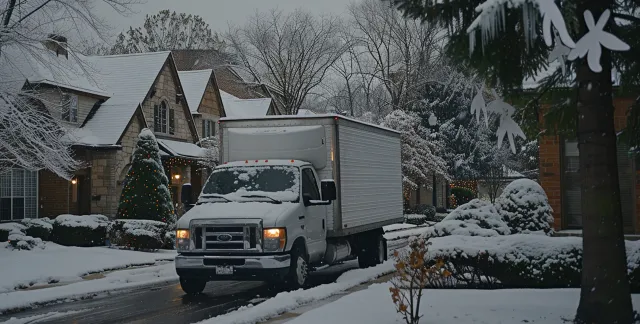

In the highly competitive and often unpredictable world of interstate moving, few sectors in New Jersey are as consequential to everyday residents as transportation and relocation services. From families transitioning between cities to businesses repositioning operations across state lines, the reliability of a moving company is not just a convenience—it is a critical component of life logistics. Within this landscape, Howard’s Van Line, also known as Howard’s Vanline LLC, has emerged as a notable, fast-scaling operator headquartered in Garfield, New Jersey, positioning itself as a full-service, licensed interstate carrier with direct operational control over its moves rather than functioning as a broker.
Operating out of its base at 141 Lanza Avenue in Garfield, the company has built a footprint that extends well beyond Bergen County. Its presence is particularly visible across Clifton, Newark, and Jersey City—urban corridors where population movement, apartment turnover, and commercial transitions generate consistent demand for moving services. By emphasizing its New Jersey roots, Howard’s Van Line has attempted to differentiate itself in a crowded field, presenting a localized, service-oriented identity while executing relocations nationwide.
This positioning aligns with broader transportation trends across the region, where demand for dependable logistics providers continues to intensify. Coverage across the transportation section of Sunset Daily underscores how critical infrastructure, mobility services, and regional transit ecosystems intersect with private-sector operators like moving companies. In New Jersey, where proximity to New York City amplifies relocation frequency, the stakes are even higher. Every move becomes part of a larger economic rhythm that includes housing markets, employment shifts, and urban development.
Howard’s Van Line has leaned into this environment with a business model centered on direct handling of interstate moves. Unlike broker-based operations that outsource jobs to third-party carriers, the company maintains that it manages logistics internally. This distinction is significant within the industry, as it implies a higher degree of accountability and operational oversight—two factors that consumers increasingly prioritize when entrusting companies with their personal belongings.
Recent company messaging and public-facing communications have highlighted a period of growth marked by positive customer feedback. Clients have cited professional crews, organized scheduling, and transparent pricing structures as key strengths. In an industry frequently criticized for inconsistency, these attributes represent meaningful differentiators. The ability to deliver predictable pricing and coordinated service execution has become a central selling point, particularly for long-distance moves where uncertainty can quickly escalate costs and stress.
However, the narrative surrounding Howard’s Van Line is not without complexity. As the company has expanded its visibility, it has also encountered increased scrutiny, reflecting a broader pattern seen across the moving and logistics sector. As of early 2026, reports have surfaced indicating significant customer complaints and legal challenges that present a more nuanced picture of the company’s operations.
A legal case filed in Bergen County, New Jersey, with proceedings scheduled for March 25, 2026, has brought additional attention to the company. While litigation in the moving industry is not uncommon, the presence of active legal action introduces questions about service consistency and dispute resolution practices. At the same time, records from the Better Business Bureau have documented complaints that include allegations of bait-and-switch pricing, delivery delays, and instances of double-charging—issues that strike at the core of consumer trust in relocation services.
Public sentiment, particularly across local social media communities in New Jersey, has further complicated the company’s profile. Some users have raised concerns about communication breakdowns, difficulty reaching management, and challenges navigating the claims process after moves are completed. These experiences stand in contrast to the company’s promotional messaging and underscore the variability that can exist within high-volume service operations.
This dual narrative—growth and positive feedback on one side, complaints and legal scrutiny on the other—places Howard’s Van Line at a pivotal moment. It reflects not only the trajectory of a single company but also the broader dynamics of the moving industry in New Jersey and beyond. As demand for relocation services continues to rise, so too does the expectation for transparency, accountability, and customer-first practices.
For consumers across the Garden State, this evolving story reinforces the importance of due diligence when selecting a moving provider. Verifying licensing status, understanding contract terms, and reviewing both positive and negative customer experiences are essential steps in navigating an industry where outcomes can vary widely. In a region as densely populated and economically active as North Jersey, the margin for error in relocation services is minimal.
At the same time, the presence of companies like Howard’s Van Line highlights the ongoing transformation of transportation-related services in New Jersey. The intersection of local identity and national reach is becoming increasingly common, with businesses striving to maintain community ties while scaling operations across state lines. This hybrid approach mirrors broader trends documented throughout Sunset Daily’s transportation coverage, where regional expertise and logistical scalability are no longer mutually exclusive—they are expected.
As 2026 unfolds, the trajectory of Howard’s Van Line will be closely watched, both by industry observers and by the communities it serves. Whether the company can reconcile its growth narrative with the challenges it currently faces will ultimately define its long-term position within New Jersey’s transportation ecosystem. In a sector where reputation is everything, the ability to deliver consistent, transparent, and reliable service will determine whether it remains a rising force—or becomes a cautionary example in one of the most competitive service industries in the region.