



The U.S. housing market is entering the spring season with a tension that’s becoming increasingly familiar: prices that refuse to fall, homes that are selling faster than expected, and a dramatic pullback in new listings that is reshaping buyer behavior nationwide. For New Jersey—where proximity to New York City, limited land availability, and sustained demand already create a uniquely competitive environment—this imbalance is not just a national headline. It is a defining market condition.
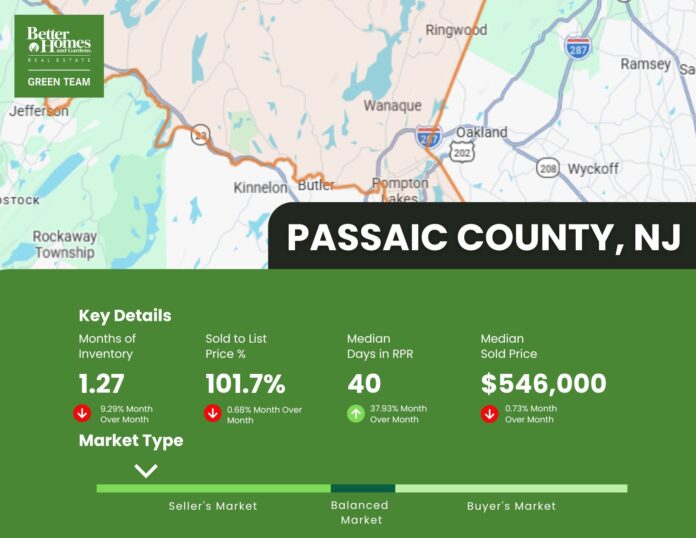
Fresh data from Property Prospect, a real estate intelligence platform tracking 20 major metro areas including New York, Phoenix, Richmond, and Tucson, paints a stark picture of where the market stands today. Median home prices have held relatively steady at $636,165, inching upward by just 0.3% in recent months. At the same time, homes are moving more quickly, with median days on market dropping to 40—a nearly 10% improvement in speed.
But the most consequential figure is not price or pace—it’s supply. New listings across the tracked markets plunged to just 18,532, representing a staggering 57.9% decline. That drop is not a fluctuation. It signals a structural tightening that is redefining how buyers and sellers engage in 2026.
The Supply Shock Reshaping Buyer Behavior
What’s happening right now is not a traditional seller’s market fueled by surging prices. Instead, it’s a constrained marketplace where scarcity—not appreciation—is driving urgency. Buyers are not chasing rapidly rising values; they are competing for fewer opportunities.
In New Jersey, this dynamic is especially pronounced. From Bergen County to Monmouth and down through South Jersey, inventory levels have remained historically tight for years. Now, with fewer homeowners willing to list—often due to locked-in low mortgage rates or uncertainty about where to move next—the pipeline of available homes is narrowing even further.
This has several immediate consequences:
Buyers are acting faster. With homes spending less time on the market, hesitation is becoming a liability. Offers are being made more quickly, often with fewer contingencies.
Competition is intensifying. Even without dramatic price increases, multiple-offer situations are becoming more common simply because there are fewer homes to choose from.
Inventory is becoming hyper-localized. The difference between neighboring towns—or even neighborhoods—can be stark, with some areas seeing near-zero turnover.
Why Sellers Are Staying Put
The sharp decline in new listings is not happening in a vacuum. It is being driven by a combination of economic psychology and structural constraints.
Many homeowners who secured historically low mortgage rates in recent years are reluctant to sell and re-enter the market at higher borrowing costs. This “rate lock-in” effect is freezing mobility across the housing ladder. Move-up buyers are staying put. Downsizers are delaying decisions. First-time buyers are left competing over a shrinking pool of entry-level inventory.
In New Jersey, where property taxes and transaction costs already factor heavily into moving decisions, this hesitation is even more pronounced. Sellers are not just asking whether they can get a good price—they’re asking whether moving makes financial sense at all.
Stable Prices, Rising Pressure
At first glance, stable prices might suggest a balanced market. But that interpretation misses the underlying pressure building beneath the surface.
When prices hold steady while inventory collapses, it indicates that demand remains strong enough to absorb limited supply without triggering price declines. In other words, the market is not cooling—it is compressing.
For buyers, this creates a paradox. There is no dramatic price spike to deter entry, but there is also no relief in competition. The result is a market where affordability challenges persist, not because homes are rapidly becoming more expensive, but because access to them is becoming more restricted.
New Jersey’s Strategic Position in the Regional Market
New Jersey’s housing market does not operate in isolation. It is deeply interconnected with New York City and the broader Northeast corridor. As remote and hybrid work models continue to evolve, New Jersey remains a prime destination for buyers seeking space, value, and connectivity.
This sustained demand is colliding with the national inventory drought, amplifying its effects locally. Towns with strong commuter access, desirable school districts, and lifestyle amenities are seeing particularly intense competition.
At the same time, emerging secondary markets within the state—areas that previously saw slower growth—are beginning to attract increased attention as buyers expand their search radius in response to limited options.
What This Means for Buyers Right Now
For buyers navigating this environment, strategy is everything. The conditions reward preparation, speed, and precision.
Pre-approval is no longer optional—it is essential. Buyers who enter the market without financing clarity are at a significant disadvantage.
Flexibility is becoming a competitive edge. Whether it’s being open to different neighborhoods, property types, or closing timelines, adaptability can make the difference in securing a home.
Local expertise matters more than ever. Understanding micro-market conditions—down to specific towns and even streets—can provide a critical advantage in a landscape where inventory is unevenly distributed.
What This Means for Sellers Considering a Move
For sellers, the current market presents a nuanced opportunity. While prices may not be surging, the lack of competition from other listings creates a powerful advantage.
Homes that are priced correctly and presented well are moving quickly. The reduced inventory means that serious buyers are actively searching—and ready to act.
However, sellers must also navigate the same constrained market when purchasing their next home. This dual role requires careful planning, timing, and often creative structuring of transactions.
The Broader Market Outlook
Looking ahead, the central question is not whether demand will remain strong—it is whether supply will recover.
Until more homeowners are willing to list, or new construction meaningfully increases available inventory, the current imbalance is likely to persist. Seasonal trends may bring incremental changes, but the underlying constraints suggest that competition will remain elevated.
For New Jersey, this means continued pressure on both buyers and the broader housing ecosystem. It also reinforces the state’s position as one of the most competitive and resilient markets in the country.
For more in-depth coverage of housing trends, market shifts, and real estate insights shaping New Jersey, explore the latest updates in Real Estate on Sunset Daily News.