



In a week shaped by seismic geopolitical developments, New Jersey finds itself squarely in the national spotlight. The joint United States and Israeli military strikes on Iran have reverberated globally and are triggering profound concern within diverse communities across the Garden State. What began as a strategic military operation overseas has quickly become a catalyst for heightened anxiety, urgent public safety responses, and vigorous political debate here at home.
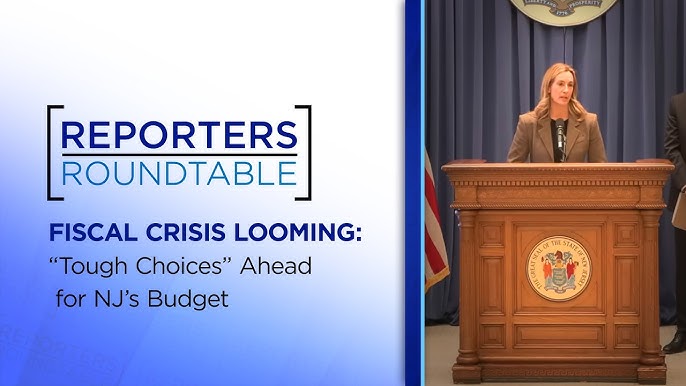
Welcome to this Sunset Daily News New Jersey Special Edition Reporters Roundtable, where seasoned local journalists unpack the latest headlines, explore community impacts, and dissect the political and social ripples of international conflict on New Jersey’s streets and institutions.
Anxiety Mounts Among Iranian and Jewish Communities Across New Jersey
Across cities and towns from Jersey City to Cherry Hill, leaders within both the Iranian and Jewish communities report a palpable sense of unease following the military strikes that erupted late last week. These sentiments stem not only from the direct implications of the overseas conflict but from fears of potential backlash — social, cultural, and physical — that could arise here at home.
Families with loved ones abroad are grappling with anxiety about safety and stability in Iran. Community events have shifted toward careful communication, prayer vigils, and gatherings aimed at solidarity, reassurance, and mutual support. At the same time, Jewish communities, historically vigilant in the face of geopolitical developments in the Middle East, are monitoring the situation with acute concern. For many, the news reinforces long-standing fears over escalation and instability that could translate into localized tensions.
Throughout New Jersey, governing officials are closely tracking these community sentiments and reinforcing that, while there are no known specific threats to the state at this time, the perception of risk is real and consequential.
State Leaders and Officials Call for Calm While Enhancing Safety Posture
In response to these global dynamics, New Jersey’s senior leadership has proactively addressed safety and security concerns. A statement from Attorney General Jennifer Davenport emphasized that the state is actively adjusting security protocols and coordinating with federal partners to ensure preparedness and community protection without inciting fear.
Governor Mikie Sherrill — drawing on her military background — underscored that “the safety and security of New Jerseyans is my number-one responsibility.” She affirmed that law enforcement agencies have been instructed to increase patrols at houses of worship and other designated sensitive locations as a precautionary measure. Sherrill’s office reiterated that these actions reflect an abundance of caution rather than a response to any credible, imminent threat.
Across the state, mayors, police chiefs, and county prosecutors have echoed this sentiment, emphasizing that heightened vigilance is intended to protect all residents and uphold the civil liberties of communities regardless of background.
Expanded Patrols at Houses of Worship and Other “Sensitive Areas”
One of the most visible responses has been the bolstering of patrols around religious, cultural, and community centers. Synagogues, mosques, and other faith-based institutions throughout New Jersey have reported increased law enforcement presence during services and community events. These moves mirror broader actions taken in neighboring states and cities, such as enhanced patrols in New York City, which have deployed additional counterterrorism officers to sensitive sites out of precaution following the conflict announcement.
Community leaders — both spiritual and civic — have expressed a mix of reassurance and concern about the optics and implications of these measures. Faith organizations are working closely with law enforcement to strike a balance between visibility, safety, and preserving an open, welcoming atmosphere.
Political Responses Reflect Complex Local Dynamics
On the political front, New Jersey’s congressional delegation and state officials have offered a range of perspectives on the strike and its broader implications. Statements from leaders like U.S. Rep. Josh Gottheimer praised the military action as decisive and necessary for national security, while others, including Sen. Andy Kim, voiced apprehension about escalating violence without clear evidence of imminent threat.
Within the Roundtable discussions, reporters noted that these divergent responses reflect long-standing bipartisan debates over foreign policy, national defense strategy, and New Jersey’s role in shaping public discourse. The strained geopolitical context has amplified those debates, pushing them into the state’s local headlines.
Community Voices: Fears, Resilience, and Leadership
Amid political rhetoric and public safety planning, residents across New Jersey are organizing community conversations, interfaith dialogues, and support networks. Leaders from both Iranian-American and Jewish organizations are urging residents to remain vigilant but calm, to support one another, and to report any suspicious activity to local authorities rather than acting on rumor or fear.
The common refrain among community organizers is clear: connection, communication, and compassion are essential as New Jersey navigates this moment. By sharing accurate information and fostering respectful dialogue, residents aim to strengthen the social fabric that binds diverse communities across the state.
Cory Booker Condemns Trump’s Iran Strikes: New Jersey Senator Demands Congressional Oversight as Middle East Tensions Escalate
In a forceful rebuke that is reverberating from Capitol Hill to communities across the Garden State, U.S. Senator Cory Booker (D-NJ), a senior member of the Senate Foreign Relations Committee, has sharply criticized President Donald Trump over what he describes as unconstitutional and strategically reckless military strikes against Iran. The statement, delivered amid intensifying geopolitical instability, positions New Jersey squarely within the national debate over war powers, executive authority, and America’s role in the Middle East.
Booker’s response reflects a defining political moment not only for Washington but for New Jersey’s political leadership landscape. As global markets react, oil prices fluctuate, and regional allies brace for retaliation, the constitutional and strategic questions raised by the senator are quickly becoming central to American foreign policy discourse.
“Strong and Smart”: Booker’s Core Message on National Security
Booker opened his remarks with a phrase that encapsulates his argument: America must be “strong and smart.” He made clear that he does not believe the president’s decision meets either standard. His criticism is not rooted in sympathy for the Iranian regime; on the contrary, Booker unequivocally labeled it one of the most destabilizing forces in the Middle East. He cited its support of terrorist proxies, its brutal suppression of domestic dissent, and its status as the world’s largest state sponsor of terrorism.
Yet for Booker, acknowledging those realities does not negate constitutional guardrails. The crux of his argument centers on Article I of the Constitution: Congress alone holds the power to declare war and authorize the use of military force. According to Booker, the president launched “massive and ongoing” strikes without congressional authorization, without meaningful consultation, and without articulating a coherent end-state strategy.
Constitutional Authority and the War Powers Debate
Booker’s remarks re-ignite one of the most enduring tensions in American governance: executive war-making authority versus congressional oversight. Over the past two decades, military interventions have often been justified under broad Authorizations for Use of Military Force (AUMFs), leaving Congress in a reactive posture. Booker argues that this pattern erodes constitutional balance and concentrates too much authority in the Oval Office.
His call for immediate congressional briefings on intelligence, legal justification, objectives, and long-term strategy signals an effort to reassert legislative oversight. For New Jersey voters, this debate is not abstract. The state is home to thousands of active-duty service members, reservists, National Guard members, and military families whose lives are directly affected by overseas deployments and escalation scenarios.
Strategic Uncertainty: “No Plan for What Comes After the Bombs”
A central pillar of Booker’s critique is strategic vacuum. In a structured list that underscored his urgency, the senator pointed to what he described as a lack of planning for:
• Managing a potential regime collapse
• Securing nuclear material
• Preventing humanitarian catastrophe
• Protecting U.S. troops and diplomats
• Coordinating with suddenly imperiled neighboring nations
• Addressing the long-term financial and human cost
The absence of a publicly articulated post-strike framework, Booker argues, risks repeating lessons from prolonged Middle East conflicts over the last twenty years. Without clearly defined objectives and exit strategies, military engagement can metastasize into protracted instability.
Impact on New Jersey’s Political Landscape
New Jersey’s political community is closely watching the fallout. As one of the most internationally connected states in the country — with major ports, global commerce hubs, and diverse immigrant communities — developments in the Middle East often resonate locally. Security postures at transportation centers, houses of worship, and public gathering spaces are influenced by geopolitical volatility.
Within the broader political discourse covered in the Sunset Daily News Politics section, debates around national security, executive authority, and constitutional governance frequently intersect with state-level leadership perspectives. Booker’s statement aligns with a pattern among New Jersey Democrats who emphasize congressional oversight and diplomatic engagement alongside military readiness.
Iran, Nuclear Risk, and Regional Stability
Booker did not minimize the threat posed by a nuclear-armed Iran, describing it as intolerable to U.S. interests and global security. However, he asserted that military action alone cannot resolve Iran’s nuclear challenge. He referenced prior claims by the administration that earlier strikes had “completely obliterated” Iran’s nuclear capabilities — assertions that subsequent intelligence assessments challenged.
The senator’s argument reflects a broader strategic debate: can precision strikes meaningfully dismantle nuclear infrastructure, or do they risk accelerating proliferation efforts underground and fragmenting regional alliances? Foreign policy analysts remain divided, but Booker’s position underscores caution against what he characterizes as impulsive escalation.
Regional Risk and Troop Safety
For Booker, the most immediate concern is the safety of American personnel. Tens of thousands of U.S. troops, contractors, and diplomats operate across a region now on heightened alert. Retaliatory threats from proxy groups, cyber operations, and asymmetric warfare tactics present complex risks.
In expressing gratitude for service members while criticizing presidential decision-making, Booker sought to draw a clear distinction: support for troops does not equate to uncritical endorsement of executive strategy. This framing is politically significant in a state with a strong veteran community and robust military presence.
Congressional Briefings and Next Steps
Booker has called for immediate classified briefings detailing the intelligence basis for the strikes, the administration’s legal rationale, and contingency plans. His demand reflects a broader congressional push for transparency and structured debate.
Whether Congress moves toward formal war powers resolutions or legislative constraints remains uncertain. What is clear is that New Jersey’s senior senator is positioning himself as a leading voice in the national argument over constitutional authority and strategic prudence.
New Jersey at the Crossroads of Global and Domestic Politics
As this story continues to unfold, New Jersey remains deeply engaged in the implications. From policy discussions in Washington to conversations in Trenton and town halls across the state, the intersection of global conflict and domestic governance is immediate and consequential.
As Headlines Evolve, New Jersey Stands Alert and Engaged
From the halls of Trenton to the streets of Newark, from cultural centers in Paterson to suburban congregations in South Jersey, New Jersey’s response to international events is both highly practical and deeply human. Officials are recalibrating safety postures, residents are seeking reassurance, and journalists are working round the clock to provide clarity in an uncertain moment.
This edition of the Sunset Daily News Reporters Roundtable underscores that national and global tensions — even when thousands of miles distant — have real resonance in our communities. New Jersey’s strength lies in its diversity, its leadership, and its ability to bring voices together to confront fear with informed action, and anxiety with community resilience.
Stay with Sunset Daily News as this developing story continues to unfold across New Jersey and beyond. Sunset Daily News will continue delivering comprehensive, in-depth coverage of this evolving situation — examining federal developments, state responses, and the broader geopolitical landscape shaping America’s next chapter.