


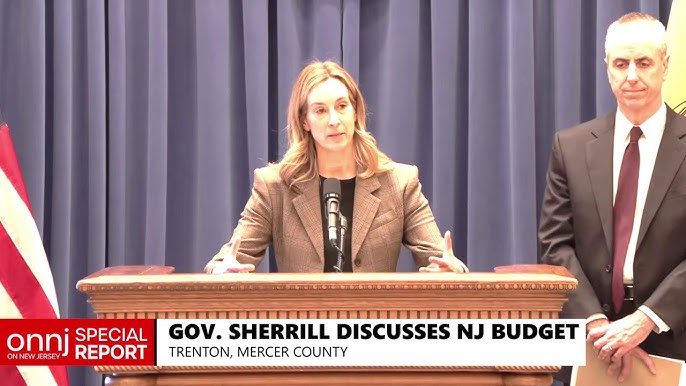

New Jersey’s fiscal picture is changing — and quickly. In a candid pre-budget briefing that set the tone for what could be one of the most consequential financial roadmaps in recent state history, Governor Mikie Sherrill, joined by State Treasurer Aaron Binder, outlined a reality that policymakers and taxpayers alike can no longer ignore: the Garden State is heading toward a structural deficit. Yet even as red ink looms on the horizon, Sherrill made one pledge unmistakably clear — taxes will not be raised.
For readers of Sunset Daily News New Jersey who follow state politics closely via our ongoing coverage in the Politics section, this moment represents more than a routine budget update. It signals the beginning of a fiscal recalibration that could define Trenton’s direction for years to come.
A Shrinking Cushion: From Surplus to Structural Deficit
The numbers displayed behind the governor told the story before she spoke. The current Fiscal Year 2026 budget, which runs through June 30, is projected to close with a surplus of approximately $6.7 billion — a comfortable buffer by historical standards. That cushion, however, is set to erode.
By the next fiscal year (July 1, 2026 – June 30, 2027), the projected surplus falls to just over $4 billion. One year later, beginning July 1, 2027, the state is projected to swing into a deficit of roughly $750 million. The red ink on the chart was intentional — a visual signal that New Jersey’s pandemic-era fiscal comfort has officially run its course.
“We’re facing a serious structural deficit,” Sherrill acknowledged.
For seasoned budget observers, the term “structural deficit” carries weight. It refers not to a temporary revenue dip or one-time imbalance, but to a recurring mismatch between ongoing revenues and recurring expenditures. In practical terms: the state is projected to spend more each year than it takes in.
However, the governor emphasized that this is not an immediate crisis. A projected shortfall two years out offers time for planning, recalibration, and reform — provided decisive action follows.
The End of Federal Cushioning
New Jersey’s recent surpluses were largely bolstered by unprecedented federal COVID relief funding. Those funds provided breathing room, allowing the state to shore up reserves, increase spending, and meet long-delayed obligations. That era is ending.
Sherrill cited the drying up of pandemic assistance and broader federal cutbacks as primary contributors to the declining surplus. Under the current political climate in Washington, she made clear, New Jersey should not anticipate additional fiscal rescue packages.
This reality underscores a broader shift in state governance nationwide: states must now operate without extraordinary federal backstops. Fiscal discipline is no longer optional; it is mandatory.
No Tax Increases: A Firm Line in the Sand
Despite the looming structural imbalance, Sherrill stated unequivocally that taxes will not increase. That declaration alone positions her administration distinctly within the evolving fiscal debate.
New Jersey residents and business owners have long cited tax burden as a primary concern. By taking tax hikes off the table — at least for now — the governor is signaling that spending adjustments, structural reforms, and operational efficiencies will carry the weight of correction.
What exactly will be cut, streamlined, or restructured remains unclear. Sherrill was deliberate in withholding specifics, repeating that detailed proposals will be unveiled during her formal budget address on March 10.
For taxpayers and municipal leaders, that date now carries significant importance.
Pension Obligations: Paying the Bill Others Deferred
One area where the governor provided clarity involves pension funding. New Jersey will contribute approximately $7 billion into its pension system this year — a substantial commitment.
Historically, both Democratic and Republican administrations deferred or underfunded pension obligations, allowing liabilities to balloon over time. The exception in recent years was former Governor Phil Murphy, who moved toward full funding after decades of partial payments.
By maintaining large pension contributions even amid tightening fiscal conditions, Sherrill appears intent on avoiding the politically easier — but financially damaging — path of deferral. That choice signals a long-term view: stabilizing pension liabilities today prevents deeper fiscal instability tomorrow.
Transparency Promised — And Scrutinized
Sherrill emphasized transparency throughout the budget process, noting that she began reviewing state finances before taking office and sought public input through an online survey that reportedly drew approximately 9,000 responses.
Transparency in Trenton has not always been the norm. In past years, final budgets were sometimes passed just hours before the June 30 constitutional deadline, with late-stage additions and limited public visibility.
Observers will watch closely to see whether this administration’s approach marks a procedural shift. A transparent, early-disclosed budget would contrast sharply with the tradition of last-minute legislative maneuvering.
The “Christmas Tree” Question
New Jersey budgets have long carried a controversial feature: so-called “Christmas Tree” items — district-specific appropriations inserted late in negotiations, often viewed as political bargaining tools.
Critics label them pork-barrel spending. Supporters call them local investment.
Will Sherrill’s inaugural budget contain such additions?
Her response: wait for March 10.
The absence — or presence — of these discretionary items will serve as a symbolic test of the administration’s commitment to structural discipline.
Is This a Crisis?
Not yet.
A projected deficit two years away does not constitute immediate insolvency. It does, however, represent a warning signal. Structural deficits, if ignored, compound. The earlier they are addressed, the less painful the corrective measures tend to be.
The real question is not whether New Jersey can manage a $750 million shortfall — it can. The question is whether the state uses the runway wisely.
What Comes Next: March 10
All eyes now turn to the governor’s March 10 budget address. That speech will provide the granular breakdown absent from Thursday’s overview:
• Specific program reductions or consolidations
• Revenue growth assumptions
• Capital investment priorities
• Education and infrastructure allocations
• Healthcare and public safety commitments
• Long-term structural reform proposals
For businesses, municipal governments, public employees, and taxpayers, those details will determine whether the administration’s no-tax pledge is sustainable without compromising essential services.
The Broader Political Context
New Jersey’s fiscal debate unfolds amid national uncertainty. Federal budget tightening, evolving economic conditions, and partisan divisions in Washington limit external assistance. That reality places greater pressure on state-level governance.
Within this environment, Sherrill’s framing of the deficit as structural — rather than cyclical — is significant. It suggests the problem cannot be solved through one-time measures or temporary revenue boosts. It demands policy design.
Sunset Daily News New Jersey Analysis
From a political standpoint, Sherrill’s early transparency move is strategic. By presenting the deficit projections upfront — well before formal budget introduction — she controls the narrative. Rather than reacting to criticism, she is preemptively defining the fiscal terrain.
Her refusal to raise taxes draws a clear boundary. Whether that boundary holds will depend entirely on the March 10 specifics.
The pension commitment reinforces fiscal credibility but narrows flexibility elsewhere. The drying up of federal funds removes margin for error. And the promise of transparency will be measured not by rhetoric but by process.
New Jersey is not in immediate fiscal collapse. But it is at an inflection point.
The era of surplus comfort is ending. Structural recalibration is beginning.
Sunset Daily News New Jersey will continue comprehensive coverage of the governor’s March 10 budget address, legislative reactions, and economic implications for residents and businesses across the state.



