



Some of New Jersey’s most critical transportation and infrastructure projects are now moving in sharply different directions, creating a moment of uncertainty—and opportunity—for commuters, contractors, and local governments across the state.
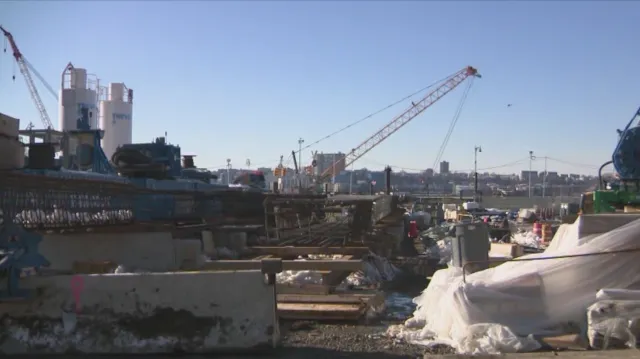
As of February 6, construction activity tied to the long-anticipated Hudson Tunnel Project has been suspended following a federal funding freeze, abruptly halting one of the most important rail infrastructure efforts in the Northeast Corridor. The pause comes despite a recent court ruling that blocked the federal administration from withholding funds, leaving project partners and regional transit leaders navigating a legal and financial gray zone while work remains on hold.
The Hudson Tunnel Project is designed to replace and expand the century-old rail tunnels that carry Amtrak and NJ Transit trains beneath the Hudson River between New Jersey and New York. The existing tunnels, heavily damaged during Superstorm Sandy and now operating well beyond their intended lifespan, represent one of the region’s most significant transportation vulnerabilities. Any prolonged disruption threatens not only daily commutes for tens of thousands of riders but also the reliability of the entire Northeast rail network, which serves as the backbone of interstate passenger and freight movement.
Construction teams and project managers have been instructed to suspend major field operations while funding questions are resolved. Industry sources indicate that the uncertainty is already rippling through subcontractor scheduling, workforce planning, and material procurement pipelines. Even a short-term suspension can generate long-term cost escalation, particularly for large-scale tunneling, utility relocation, and staging work that must be carefully sequenced.
Regional transportation planners warn that further delays could push back the long-term rehabilitation schedule for the existing tunnels—an outcome that carries elevated operational risk for both Amtrak and NJ Transit. The tunnels currently handle hundreds of trains each day, and their age and condition have been cited repeatedly in federal and state infrastructure assessments as one of the most urgent transit bottlenecks in the country.
While the tunnel work has entered an unexpected holding pattern, another signature North Jersey rail project has reached a major construction milestone.
The Portal North Bridge replacement, a cornerstone of the Gateway Program, is now entering its final phase of construction. The project will retire the 114-year-old swing bridge spanning the Hackensack River in Secaucus and replace it with a modern, high-level, fixed-span structure designed to eliminate one of the most notorious choke points on the Northeast Corridor.
The bridge is currently undergoing what engineers refer to as “cutover” operations—the highly complex process of transferring live rail traffic from the existing bridge to the newly constructed structure. This phase involves signal system integration, power and communications testing, track alignment verification, and round-the-clock coordination between construction crews and railroad operations teams.
Once fully completed, the new bridge will allow trains to pass over the river without the mechanical openings that have routinely disrupted service for decades. The aging swing bridge has been a frequent source of delays due to mechanical failures and river traffic conflicts, creating cascading impacts throughout the regional rail system.
Transportation officials describe the Portal North Bridge as one of the most operationally transformative rail upgrades in New Jersey in a generation, with long-term benefits for reliability, travel times, and on-time performance for both commuter and intercity service.
Together, the stalled tunnel work and advancing bridge replacement highlight the uneven progress now shaping the state’s transportation landscape—where legal, financial, and political factors can carry as much weight as engineering readiness.
Beyond rail, New Jersey’s highway construction program continues to move forward on multiple major corridors, reflecting the state’s parallel focus on road infrastructure as freight movement, suburban commuting, and regional growth continue to place pressure on aging roadway systems.
In Middlesex County, long-term rehabilitation work along the Route 18 corridor in East Brunswick remains active. The project includes extensive drainage upgrades, pavement reconstruction, and roadway resurfacing designed to address chronic flooding issues and deteriorating subbase conditions that have contributed to congestion and recurring maintenance needs.
Transportation officials indicate that construction activity along Route 18 is progressing on schedule, with substantial completion currently targeted for fall 2026. Once finished, the corridor is expected to deliver smoother traffic flow, improved stormwater management, and enhanced safety features for one of central New Jersey’s busiest north–south routes.
In Somerset County, widening work on Route 206 continues as part of a multi-year effort to expand capacity and modernize one of the region’s primary arterial highways. The project includes additional travel lanes, redesigned intersections, upgraded pedestrian accommodations, and drainage improvements intended to reduce long-standing bottlenecks and improve access for both residential and commercial traffic.
State transportation officials now project completion of the Route 206 improvements in 2027, positioning the corridor to better support future development and regional mobility while reducing accident-prone merge and turning zones that have historically challenged drivers.
Across all three projects, construction leaders emphasize that modern transportation infrastructure is increasingly interdependent. Rail capacity constraints can shift commuters to highways, while highway congestion can affect access to major rail stations and transit hubs. In that context, maintaining balanced progress across rail and roadway investments has become a central objective for state and regional planners.
The current funding disruption affecting the Hudson Tunnel Project has also renewed broader conversations within the construction and transportation sectors about how federal policy uncertainty can directly impact state-level delivery schedules, workforce stability, and private-sector investment decisions. Contractors working on large public projects typically rely on predictable funding flows to maintain staffing levels, long-lead equipment procurement, and subcontractor commitments.
New Jersey’s construction industry, which supports tens of thousands of skilled trade workers and professional staff, is closely watching how quickly federal funding questions can be resolved. Any prolonged pause risks creating ripple effects across supplier networks and future bid pricing as firms attempt to hedge against uncertainty.
For residents and businesses, the stakes are practical and immediate: reliable rail service into New York City, reduced highway congestion, safer bridges, and infrastructure that can support long-term economic growth.
State and regional officials have reiterated that the Hudson Tunnel Project remains a top priority despite the current suspension, and legal proceedings related to the funding freeze are expected to continue in the coming weeks. Whether construction can restart quickly will depend on how rapidly federal funding assurances can be restored and contracts reactivated.
As these projects evolve, New Jersey’s infrastructure outlook continues to be shaped by a mix of engineering progress and political reality, underscoring why major transportation investment remains one of the most closely watched areas within the state’s broader construction landscape.
Readers following the progress of large-scale transportation and public works initiatives across the state can continue tracking in-depth reporting on New Jersey construction and infrastructure projects through Sunset Daily News’ ongoing construction coverage, which monitors how shifting funding, regulatory decisions, and project delivery timelines are reshaping the region’s built environment.