


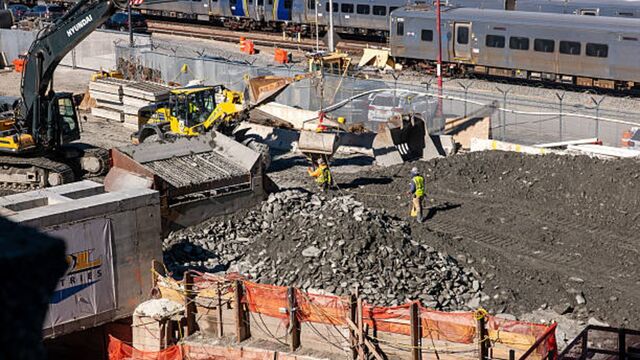

A major federal court ruling has cleared the way for construction activity to resume on the long-awaited Gateway rail tunnel project linking New Jersey and New York, restoring billions in funding and stabilizing one of the most consequential transportation investments in the region’s modern history.
The decision comes after a brief but disruptive halt in work earlier this month that sent shockwaves through the construction and transportation sectors, raised alarms among state officials, and placed hundreds of New Jersey workers in immediate uncertainty.
The multi-billion-dollar Gateway Tunnel initiative, designed to build new rail tubes beneath the Hudson River and overhaul aging infrastructure along the Northeast Corridor, had been moving toward its most technically demanding phase, including the start of tunnel boring operations on the New Jersey side.
That momentum was suddenly interrupted on February 6, when construction activity was ordered to pause amid a federal funding dispute, freezing access to a massive portion of the project’s financial support and placing active contracts in limbo.
The stoppage threatened to derail more than just timelines.
Project partners warned that roughly 1,000 construction and engineering jobs tied directly to the Gateway work in New Jersey were placed at immediate risk. Contractors were forced to suspend crews, idle heavy equipment, and delay subcontractor schedules across multiple staging locations connected to the tunnel approach and associated infrastructure.
Within days, the situation escalated into federal court.
A U.S. judge issued an emergency temporary restraining order requiring the Trump administration to restore approximately $16 billion in previously approved funding for the project. The court action effectively reversed the freeze and authorized construction operations to resume while the underlying legal challenge continues.
The ruling stabilized funding for the Gateway project at a moment when crews were preparing to transition from preparatory work into full-scale underground construction, including the long-anticipated deployment of tunnel boring machines on the New Jersey side of the Hudson.
Officials familiar with the project say early-stage boring activities in New Jersey remain on schedule to begin once final equipment positioning and site readiness checks are completed, despite the brief interruption.
The Gateway Tunnel program represents one of the largest and most complex infrastructure efforts ever undertaken in the state. It is centered on constructing two new rail tunnels beneath the Hudson River to supplement and eventually replace the existing century-old North River Tunnel, which continues to carry hundreds of daily passenger and freight movements between New Jersey and Manhattan.
The new tunnel is designed to dramatically improve reliability for NJ Transit and Amtrak passengers, reduce chronic congestion, and protect the Northeast Corridor from catastrophic service failures tied to aging infrastructure and storm vulnerability.
Transportation planners have repeatedly warned that the existing tunnels—severely damaged during Superstorm Sandy—operate at reduced capacity and remain among the most fragile choke points in the entire national rail network.
In addition to the tunnel bores themselves, the Gateway program includes major supporting construction across northern New Jersey, including approach tracks, ventilation and safety systems, power upgrades, and extensive structural work near rail yards and rights-of-way.
The temporary shutdown on February 6 immediately disrupted those supporting packages, creating a ripple effect across the regional construction economy.
Industry leaders say the court-ordered restoration of funding has prevented what could have become a cascading shutdown of suppliers, fabricators, transportation firms, and skilled trades across multiple counties.
New Jersey labor organizations had warned that even a short pause would have long-term consequences, including workforce dislocation and increased costs associated with restarting highly specialized underground construction operations.
With funding restored, project managers have begun reactivating suspended contracts and mobilizing crews back to staging and access sites along the New Jersey side of the Hudson River corridor.
The legal dispute, however, underscores the growing vulnerability of large-scale infrastructure projects to political and administrative shifts at the federal level, even after funding has been formally awarded.
State transportation officials stressed that the Gateway tunnel is not a discretionary expansion project but a core replacement and resiliency investment for a corridor that carries more than 200,000 passenger trips on a typical weekday and supports a massive share of the Northeast’s economic activity.
Beyond commuter rail reliability, the tunnel is widely viewed as essential to New Jersey’s long-term economic competitiveness, particularly for businesses that rely on predictable access to New York City’s labor market.
From an engineering standpoint, the project is now entering one of its most technically intensive periods.
Tunnel boring operations in New Jersey will require continuous, round-the-clock excavation, sophisticated ground stabilization measures, and constant monitoring to protect nearby transportation infrastructure and utilities. The machines will advance beneath a complex urban and riverbed environment, demanding precise control over alignment, pressure, and soil conditions.
Construction specialists say the resumption of work also allows long-lead manufacturing orders—such as custom tunnel segments, electrical systems, and ventilation components—to proceed without costly renegotiations or delays.
The Gateway restart is also expected to preserve training pipelines for specialized underground construction crews, a workforce segment that New Jersey officials have prioritized as part of the state’s broader infrastructure modernization strategy.
More statewide coverage on major infrastructure projects, large-scale development, and public works across New Jersey can be found in Sunset Daily’s ongoing construction and development reporting.
While the temporary restraining order restores funding and allows work to continue, the underlying court case remains active. Legal and policy experts caution that the broader funding dispute could still evolve, placing added pressure on project leadership to maintain schedule discipline and demonstrate continued progress.
For now, however, the immediate threat to the Gateway Tunnel project has been lifted.
With billions in funding reinstated, nearly a thousand New Jersey jobs protected, and tunnel boring operations in New Jersey once again moving forward, one of the region’s most vital transportation investments remains alive—and firmly back on track.