



From rising opposition to ICE practices to school funding emergencies and workforce reintegration grants, a turbulent moment is reshaping New Jersey’s political landscape
New Jersey is entering a volatile stretch in its state and local political climate, as voter anger over immigration enforcement tactics, mounting fiscal stress in public schools and city government, and a renewed focus on second-chance employment programs converge into a single, fast-moving policy moment.
The signals are emerging simultaneously from ballot boxes, classrooms, and Trenton.
Special primary election results in the district once represented by Gov. Mikie Sherrill are being widely interpreted by political observers as an unmistakable shift in voter mood—one driven largely by escalating backlash against federal immigration enforcement activity in local communities. The results followed a series of student-led protests and walkouts at multiple New Jersey high schools, where young organizers voiced opposition to immigration raids and the perceived climate of fear created by federal operations.
What is particularly notable to party leaders is not only the turnout pattern, but the demographic composition of the voters driving the outcome. Younger voters and first-time primary participants played a visible role in the race, underscoring how immigration enforcement has rapidly evolved into a mobilizing issue for a new generation of New Jersey residents who increasingly expect state and local leaders to take a public stance.
That shift is now spilling directly into legislative and municipal conversations across the state.
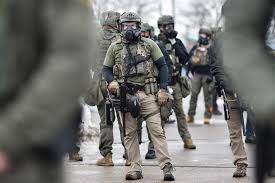
Momentum is growing inside New Jersey’s political circles for a statewide prohibition on Immigration and Customs Enforcement agents wearing masks during enforcement actions. Supporters of the proposal argue that concealed identities during raids undermine transparency and erode public trust, particularly when operations occur in residential neighborhoods, near schools, or at workplaces.
Advocates for the ban say the practice of masked agents complicates accountability, heightens fear in immigrant communities, and creates confusion for bystanders and local law enforcement. Critics, however, contend that masking can be necessary for agent safety in volatile situations. The debate has become one of the most emotionally charged policy flashpoints in New Jersey’s current immigration dialogue, signaling that federal enforcement practices are increasingly becoming a state-level political issue rather than a distant federal concern.
As lawmakers weigh the limits of state authority over federal operations, the issue is reshaping broader conversations about public safety, civil liberties, and the role of local governments in protecting residents during federal actions. For many voters, immigration enforcement is no longer viewed as an abstract national debate—it has become a daily, neighborhood-level concern.
These immigration tensions are unfolding alongside deepening financial distress in local government and public education systems, intensifying the political pressure on state leaders.
One New Jersey school district is confronting what officials describe as a dire $4.8 million budget gap that could result in sweeping reductions to student transportation and extracurricular athletics. District leaders warn that without immediate fiscal relief or structural changes, families could see busing routes eliminated and sports programs drastically reduced or suspended altogether.
Administrators say the shortfall reflects a combination of rising operational costs, contractual obligations, and limited flexibility within existing state aid formulas. For parents and educators, the looming cuts are more than line items—they represent potential losses in student engagement, academic performance, and access to opportunities that help keep students connected to school life.
The fiscal stress is not isolated.
Jersey City has confirmed an eye-opening projected budget shortfall approaching $250 million, sending shockwaves through municipal leadership and the broader North Jersey policy community. City officials are now scrambling to evaluate service reductions, revenue strategies, and long-term structural reforms to prevent widespread impacts to public safety, infrastructure, and community services.
Urban finance analysts say Jersey City’s challenge highlights the growing disconnect between fast-rising labor and benefit costs and the slower pace of sustainable local revenue growth. With multiple municipalities facing similar pressures statewide, budget stability is rapidly becoming one of the defining political issues of the coming legislative cycle.
At the same time, Trenton is advancing a parallel policy priority aimed at addressing one of New Jersey’s most persistent workforce challenges: employment access for residents returning from the justice system.
The New Jersey Department of Labor has announced $6 million in new grant funding to expand job training, placement, and supportive services for justice-impacted individuals. The program is designed to help nonprofit organizations, workforce development agencies, and community partners connect formerly incarcerated residents with stable employment pathways in high-demand sectors such as construction, logistics, healthcare support, and skilled trades.
State officials say the grants will focus not only on job placement but also on wraparound services including transportation assistance, soft-skills training, and employer partnerships that are critical to long-term employment success. Workforce specialists emphasize that sustainable reentry employment reduces recidivism, strengthens families, and alleviates long-term costs associated with repeated incarceration.
For business leaders and local governments struggling with labor shortages, the reentry workforce initiative is also being positioned as an economic strategy—one that can help stabilize local hiring pipelines while addressing deep-rooted inequities in employment access.
Together, these four developments—shifting voter sentiment on immigration enforcement, the expanding debate over ICE operational practices, escalating municipal and school funding crises, and targeted reentry workforce investments—are shaping a rapidly evolving policy environment that will define New Jersey’s legislative agenda in the months ahead.
For residents following the changing dynamics of state leadership and public policy, these developments are increasingly intersecting inside New Jersey’s broader politics, where questions of accountability, economic sustainability, and community protection are colliding in real time.
What is emerging is a clear message from voters and institutions alike: New Jersey’s leaders are being asked to respond simultaneously to civil rights concerns, financial instability, and workforce transformation—while navigating some of the most complex and emotionally charged issues facing the state in years.