


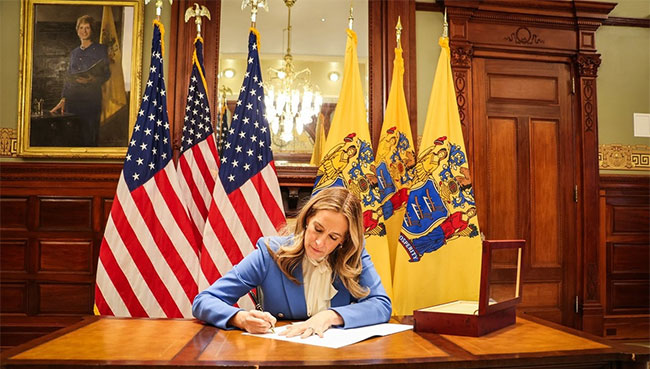

A new administration has taken the reins in New Jersey, but familiar patterns in state governance are already drawing sharp attention. Governor Mikie Sherrill opened her tenure with a flurry of executive orders, including one targeting rising utility costs. While the order has been presented as immediate relief for ratepayers, critics argue it represents a familiar Trenton maneuver — a highly visible action that projects urgency while leaving long-term solutions undefined.
The executive order, issued in the governor’s first days in office, directs state agencies to examine utility pricing structures, assess billing practices, and explore regulatory responses to increasing energy costs. On its surface, the move signals responsiveness to public frustration over monthly household expenses that have climbed steadily across New Jersey. Energy affordability remains a top concern for residents, especially during winter heating months and summer cooling seasons when demand spikes.
However, seasoned observers of state government note that executive orders of this kind often serve as political opening statements rather than concrete policy shifts. By launching reviews, commissions, and interagency discussions, administrations gain time to frame broader legislative agendas while demonstrating immediate action. Whether this particular order leads to structural reform or simply a reshuffling of oversight remains an open question.
Utility regulation in New Jersey sits at the intersection of public interest, private energy providers, and long-established regulatory frameworks. Any significant change to pricing or service standards requires coordination with the Board of Public Utilities, legislative committees, and, in many cases, negotiated agreements with service operators. That complexity means executive authority alone cannot deliver instant reductions, despite the urgency conveyed in public announcements.
Supporters of the order argue it establishes necessary momentum. They point to recent increases in supply costs, infrastructure modernization needs, and climate resilience investments as justification for a comprehensive statewide utility review. The administration has also emphasized consumer protection, transparency in billing practices, and future-proofing the energy grid as guiding priorities.
Skeptics counter that without defined benchmarks or legislative backing, the directive risks becoming another study that produces reports rather than rate relief. They warn that residents could be left with the same bills and a new set of headlines months from now. That tension between public expectation and governmental process has long characterized New Jersey’s approach to energy policy.
The broader political implications are also unfolding. As the Sherrill administration establishes its governing identity, early executive actions are being closely read as signals of governing style and strategic intent. With legislative sessions underway and budget negotiations on the horizon, how the utility order evolves could indicate how aggressively the new governor plans to challenge entrenched systems.
For readers tracking how policy decisions shape household costs and state direction, continuing coverage of New Jersey’s politics landscape remains essential as this story develops and the administration’s next moves take form.
For now, the utility order has done what first executive actions are designed to do: command attention, frame priorities, and set the tone of a new administration. Whether it becomes a turning point for ratepayers or another chapter in Trenton’s long tradition of political maneuvering will be determined in the weeks ahead.