



New Jersey’s most consequential infrastructure undertaking has reached a moment of high-stakes uncertainty. Construction on the Hudson Tunnel Project, a centerpiece of the broader Gateway rail initiative, is now facing a potential halt as early as February 6 if federal funding is not restored. The pause would not simply slow progress; it could trigger widespread job losses, stall delivery of massive tunnel-boring machines recently shipped from Germany, and place billions of dollars in completed work at risk.
The Gateway Development Commission has confirmed that credit reserves used to keep construction moving during the federal funding freeze are nearly depleted. Without immediate release of congressionally approved funds, crews will be forced to stop work on a project that has already reshaped job sites on both sides of the Hudson River. The timing is especially precarious, with assembly preparations underway for equipment designed to carve the new rail tunnel that will eventually replace the aging North River Tunnel, now more than a century old and still bearing storm damage from Superstorm Sandy.
Elected officials across party lines have intensified calls to restore financing, warning that the implications extend far beyond New Jersey. U.S. Senator Andy Kim described the funding lapse as a threat not only to state employment but to national economic momentum, stressing that the Hudson Tunnel is not a partisan issue but a critical American infrastructure priority. State Assembly leadership echoed those concerns, noting that stepping away from the project mid-construction would strand existing investment and inflate long-term costs for taxpayers and commuters alike.
The funding delay traces back to a federal review process initiated last fall, which froze payments while construction continued on borrowed credit. That stopgap solution has now run its course. Gateway Development Commission executives have emphasized that no infrastructure program of this scale can operate indefinitely on short-term borrowing, particularly when long-term funding agreements are already in place.
Governor Mikie Sherrill has taken a forceful stance, characterizing the threat of termination as an economic and transportation crisis in the making. With hundreds of workers active on the project daily and thousands more tied to supply chains, engineering firms, and support services, a shutdown would ripple through regional labor markets. Union leaders representing operating engineers, laborers, carpenters, and ironworkers have warned that layoffs could begin immediately if work is paused, disrupting families who expected stable employment for years to come.
Beyond direct job losses, analysts caution that halting construction now could deter future contractors from bidding on remaining phases of the project, driving up costs and delaying completion. Industry experts note that large-scale infrastructure programs depend on consistent funding cycles. Stop-and-start financing forces builders to price in risk, raising taxpayer burdens and undermining efficiency.
The long-term stakes are even larger. Regional planning experts estimate that the full Gateway Program could generate hundreds of billions in economic benefits over coming decades, sustaining tens of thousands of jobs annually while protecting the Northeast Corridor from catastrophic rail capacity reductions. Without the new tunnel, repairing the existing North River Tunnel would require extended shutdowns, slashing trans-Hudson rail traffic and creating cascading disruptions across the national transportation network.
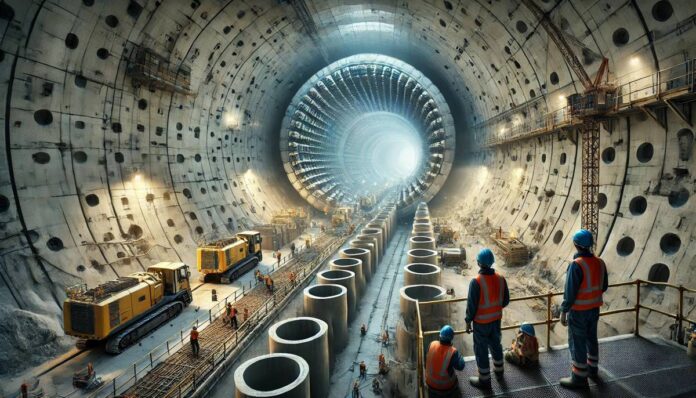
On the ground, construction has already advanced into complex excavation phases, with concrete tunnel sections taking shape and live site operations continuing daily. Engineers caution that leaving partially completed structures idle could introduce new safety and maintenance challenges, compounding the cost of restarting later.
For New Jersey, the Hudson Tunnel Project represents more than a transportation upgrade. It stands as a generational investment in mobility, commerce, and regional resilience. As funding negotiations continue in Washington, pressure is mounting from business leaders, labor unions, and state officials to resolve the standoff before the February deadline arrives.
Readers following major infrastructure and development projects shaping the state can explore continuing coverage of New Jersey’s evolving construction landscape through Sunset Daily News’ ongoing reporting on projects driving economic transformation across the region.
With the clock ticking and crews still at work, the next few days will determine whether the Hudson Tunnel Project moves forward at full speed or becomes a costly lesson in interrupted progress. For New Jersey commuters, workers, and businesses, the outcome could define transportation reliability and economic strength for generations to come.