



New Jersey Faces High-Impact Snow, Ice, and Dangerous Cold as Major Storm Bears Down
FROM THE GOVERNOR’S OFFICE:
Governor Mikie Sherrill declared that New Jersey will enter a State of Emergency effective at 5:00 p.m. on Saturday, January 24, 2026 in anticipation of a severe winter storm causing hazardous weather conditions across the state, including heavy and widespread snow, prolonged periods of dangerous temperatures below freezing, and wind gusts up to 30 miles per hour. Executive Order No. 8 declares a State of Emergency across all 21 counties in New Jersey. Recent estimates suggest that snow accumulations could reach at least 12 inches across all regions of the state.
“Beginning Saturday evening and continuing into Monday, New Jersey is expected to see heavy snowfall and severe conditions, and my top priority is the safety of our residents,” said Governor Sherrill. “In the days since taking office, I have convened leaders across state government to prepare for the impending hazardous conditions to ensure we have the resources necessary to weather this storm. I urge all New Jerseyans to stay home, avoid travel, and follow all safety protocols during the storm.”
The New Jersey Department of Transportation (DOT) will issue a commercial vehicle restriction for all tractor trailers, empty straight CDL-weighted trucks, passenger vehicles pulling trailers, recreational vehicles, and motorcycles at 12:01 a.m. on Sunday, January 25, effective for the following roads:
- I-76 (entire length);
- I-78 (entire length);
- I-80 (entire length);
- I-195 (entire length);
- I-280 (entire length);
- I-287 (entire length);
- I-295 (entire length);
- I-676 (entire length); and
- New Jersey Route 440, both directions from the Outerbridge Crossing to I-287.
Governor Sherrill encourages New Jerseyans to visit ready.nj.gov for important weather updates and safety information. Residents should also monitor local forecasts, warnings, and watches.
For those living in Northern New Jersey and the New York Metro area, visit the U.S. National Weather Service New York, N.Y. at http://www.weather.gov/okx/
For those living in Central and Southern New Jersey, visit the U.S. National Weather Service Philadelphia/Mount Holly at https://www.weather.gov/phi/
For a copy of Executive Order No. 8, please click here.
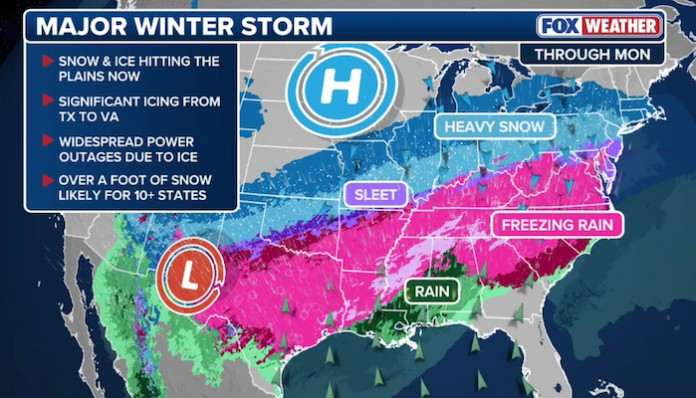
New Jersey entered a heightened state of readiness Saturday as Governor Mikie Sherrill declared a statewide State of Emergency ahead of a powerful winter storm expected to deliver some of the most disruptive weather the region has seen in years. The emergency declaration, which takes effect at 5 p.m. Saturday and covers all 21 counties, comes as forecasts call for heavy snow, ice, bitterly cold temperatures, and hazardous travel conditions stretching well into the new week.
Forecasters are projecting widespread snowfall totals ranging from 8 to 12 inches across much of South Jersey, with 12 to 18 inches likely in North Jersey. The highest accumulations are expected in the northwest portion of the state, where colder air will dominate throughout the duration of the storm. Airlines serving New Jersey airports have already begun offering flexible rebooking options, anticipating major travel disruptions as conditions deteriorate.
The storm marks the beginning of an extended period of extreme cold that meteorologists describe as unusually intense even by mid-winter standards. Overnight temperatures are expected to plunge into the single digits and teens by early Saturday morning, followed by daytime highs struggling to reach the teens and lower 20s statewide. By early next week, lows could dip to near zero or below across large portions of the state, with only immediate coastal and barrier island communities seeing slightly milder readings. Officials warn this type of prolonged cold significantly increases the risk of frozen and burst pipes, power disruptions, and dangerous exposure conditions.
Snow is forecast to arrive around or shortly after midnight, initially developing in southern parts of the state before expanding northward. The early phase of the storm is expected to produce a long window of high snow-to-liquid ratios, allowing snow to accumulate rapidly. Many areas could see moderate to heavy snowfall through Sunday morning, creating treacherous road conditions and reduced visibility during what is typically a high-travel period.
As the storm evolves, warmer air pushing in from the Atlantic may introduce a complex mix of sleet and freezing rain, particularly across central and southeastern New Jersey. This transition zone remains one of the most challenging aspects of the forecast, with even small shifts capable of dramatically altering local impacts. Areas along and southeast of the Interstate 95 corridor face the greatest risk of mixed precipitation, while inland and northern sections of the state are more likely to remain predominantly snow.
Later Sunday night into Monday, colder air is expected to reassert itself as the storm system moves offshore. This could allow precipitation to change back to snow before tapering off, potentially adding additional accumulation on top of what will already be significant totals. Regardless of the precise timing, officials expect lingering impacts into Monday, with cleanup and recovery slowed by the deep freeze gripping the region.
Governor Sherrill announced the emergency declaration during a briefing at the New Jersey Regional Operations and Intelligence Center in Ewing, joined by senior administration officials and emergency management leaders. She emphasized that the storm represents an early and serious test of the new administration, which took office just days ago, and stressed that preparations have been underway across multiple agencies.
“This is not an average winter storm,” Sherrill said, urging residents to avoid travel beginning Saturday evening and throughout Sunday. She also announced commercial vehicle restrictions on major interstate highways to prevent accidents that could block plowing operations or delay emergency responders. State transportation crews, utility companies, and local governments have been mobilizing equipment and personnel in anticipation of extended operations.
The New Jersey Department of Transportation confirmed that restrictions will apply to tractor trailers, certain commercial vehicles, recreational vehicles, and motorcycles on all major interstates statewide starting early Sunday morning. Officials stressed that these measures are designed to keep roadways clear for plows and emergency vehicles during the height of the storm.
Beyond snow totals, the combination of ice, gusty winds approaching 30 miles per hour, and extreme cold significantly elevates the risk profile. Power outages, fallen tree limbs, and impassable secondary roads are all possible, particularly in areas that experience icing or heavier, wetter snow. Residents are being advised to complete preparations by Saturday evening, including stocking food and medications, charging electronic devices, fueling vehicles, and ensuring pets and vulnerable neighbors are accounted for.
Emergency management officials continue to urge residents to stay informed as conditions evolve. Ongoing updates and detailed forecasts are available through Sunset Daily’s weather coverage, where readers can track changing conditions, accumulation expectations, and safety guidance throughout the storm.
While the exact numbers may fluctuate as the system unfolds, one message from state leaders and meteorologists remains consistent: this is a high-impact winter event unfolding within a broader pattern of dangerous Arctic cold. Whether communities experience heavy snow, a damaging mix of ice, or both, the effects are expected to be widespread and long-lasting. New Jersey residents are being urged to take the warnings seriously, limit travel, and prepare for a challenging stretch of winter weather that may linger well beyond the final snowfall.



