



New Jersey governor uses national platform to challenge federal authority and frame state as center of resistance
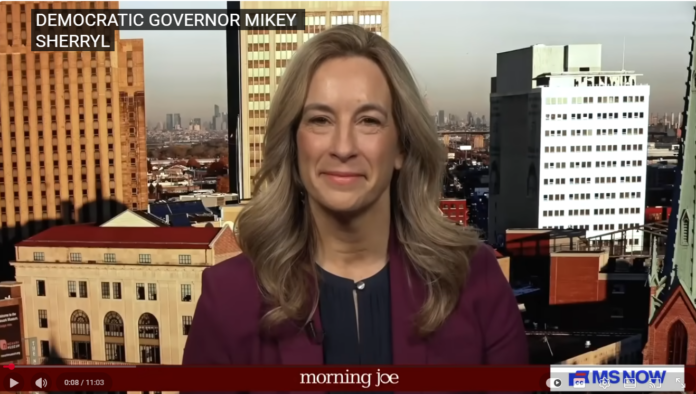
Just two days after taking the oath of office, New Jersey Governor Mikie Sherrill stepped onto the national stage with a forceful first interview, appearing on MSNBC’s Morning Joe on January 22. The appearance marked her debut as the state’s 57th governor and offered an early, unfiltered look at how she intends to govern—combative, unapologetic, and positioning New Jersey as a central counterweight to federal power under President Donald Trump.
Sherrill did not ease into her new role. Instead, she delivered some of her strongest language yet on immigration enforcement, sharply criticizing U.S. Immigration and Customs Enforcement.
She described ICE as a “proto-militia,” accusing the agency of operating outside constitutional boundaries and answering to political directives rather than the rule of law.
The remarks immediately signaled that her administration is prepared for direct confrontation with federal authorities.
At the heart of her criticism was the use of administrative warrants by federal agents, which do not require approval from a judge. Sherrill vowed that New Jersey law enforcement would “fight tooth and nail” to prevent ICE from entering homes without proper judicial warrants, framing the issue as one of fundamental civil liberties rather than partisan disagreement. She emphasized that state and local officers would not be used as instruments for what she characterized as unlawful federal actions.
Throughout the interview, Sherrill repeatedly returned to the theme of constitutional duty. She drew pointed parallels between present-day federal enforcement tactics and the grievances outlined in the Declaration of Independence, likening them to abuses once carried out under the authority of the British crown. The comparison underscored her broader argument that unchecked federal power threatens the balance between states and Washington.
Rather than portraying New Jersey as a passive target of federal policy, Sherrill cast the state as an active “bulwark” against what she views as executive overreach. “The opposition is forming,” she said, adding that it is “starting in New Jersey.” The statement appeared aimed not only at her constituents but at Democratic leaders nationwide, signaling her intention to elevate the state’s role in national political strategy.
When pressed on whether she felt powerless in the face of federal authority, Sherrill flatly rejected the premise. She outlined a three-pronged response—legislation, litigation, and mobilization—as the foundation of her administration’s approach. According to the governor, new state laws, aggressive legal challenges, and public engagement would work in tandem to push back against policies she believes undermine constitutional protections.
Political observers note that the interview reflects Sherrill’s background as a former federal prosecutor and Navy helicopter pilot, blending legal precision with disciplined messaging. Her decision to make such a bold appearance so soon after her January 20 inauguration suggests a governor eager to define her narrative early, before opponents or national figures can do it for her.
The Morning Joe appearance also places New Jersey firmly in the center of ongoing national debates over immigration, states’ rights, and executive power—topics that continue to dominate the political landscape. By using a national platform for her first post-inaugural interview, Sherrill signaled that her administration will not confine itself to Trenton but will engage directly in the broader political arena.
As her governorship begins, Sherrill’s rhetoric makes one thing clear: she intends to govern with confrontation where necessary and sees New Jersey as a proving ground for resistance to federal policies she opposes. With legislative sessions ahead and legal battles likely on the horizon, her early messaging suggests that the state’s political influence may extend far beyond its borders, shaping debates unfolding across the country and within the broader sphere of American politics.



