


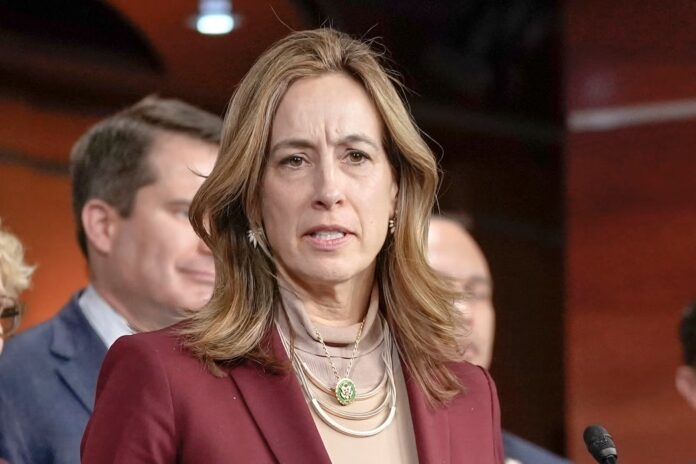

New Jersey stands at a pivotal moment as the state prepares for a significant shift in leadership and priorities, with Governor-elect Mikie Sherrill set to be sworn into office on Tuesday. The transition marks the end of one administration and the beginning of another at a time when policy decisions in Trenton continue to carry lasting implications for education, economic development, and public accountability across the Garden State.
Even before taking the oath of office, Sherrill has moved quickly to assemble a governing team designed to signal both continuity and change. Among her first appointments is Evan Weiss, named to lead the New Jersey Economic Development Authority. The selection places an experienced policy hand at the helm of one of the state’s most influential agencies, responsible for business incentives, job creation, and long-term economic planning. Weiss is expected to play a central role as the new administration balances growth with affordability, a defining issue for residents and employers alike.
Education has also emerged as an early focus. Sherrill’s choice of Lily Laux as Education Commissioner underscores an intent to address classroom standards, student outcomes, and district accountability from the outset. With debates over curriculum, testing, and local control continuing to shape statewide discussion, the new leadership at the Department of Education will be closely watched by parents, educators, and lawmakers across New Jersey.
From Long-Shot Candidate to Governor-Elect, Sherrill Reflects on an Unscripted Rise. Eight years can quietly reshape the political landscape, and in New Jersey, that reality was on full display Friday afternoon in East Rutherford. Standing beneath the echoing tracks of a roller coaster inside the American Dream complex, Governor-elect Mikie Sherrill reflected on a journey that began with uncertainty and has now placed her on the doorstep of the state’s highest office.
In January 2018, few could have predicted how rapidly events would unfold in the 11th Congressional District. That winter, longtime Republican Congressman Rodney Frelinghuysen abruptly withdrew from his reelection bid, stepping aside just months before the primary. His late exit scrambled the GOP field and removed a political fixture whose family legacy stretched back generations. The opening altered the trajectory of the race and, ultimately, Sherrill’s career.
Sherrill entered that contest as a formidable but untested challenger. The national political climate that year proved punishing for Republicans, yet the absence of an entrenched incumbent gave Democrats a clearer path. Sherrill seized the moment, winning the seat and establishing herself as a durable presence in Washington. Three reelections followed, solidifying her reputation as a steady, pragmatic voice and setting the stage for her successful run for governor.
That improbable arc was front of mind as Sherrill joined Lieutenant Governor Dale Caldwell for Military Appreciation Day at the American Dream mall. The event, held inside the Nickelodeon Universe Theme Park, offered an unconventional backdrop for a political appearance. Roller coasters rumbled overhead as Sherrill addressed veterans and their families, offering thanks to those who had given years of service to the country.
The setting was lighthearted, but her remarks carried weight. Asked afterward about the speed and scale of her political ascent, Sherrill spoke candidly. She acknowledged that the path from first-time congressional candidate to governor-elect was never part of a master plan. Even the idea of serving in Congress, she said, once seemed far-fetched. The evolution, in her telling, was driven less by ambition than by circumstance and a growing sense of responsibility.
That sense of urgency now defines her approach to governing. Sherrill used the occasion to reiterate concerns she has voiced throughout the campaign about affordability and economic pressure across New Jersey. She described what she sees as a narrowing “door to opportunity” for working families, young professionals, and retirees alike. Those concerns, she said, were central to her decision to seek the governorship.
Among her first planned actions is an executive order aimed at freezing electric rates, a move she has pledged to implement immediately upon taking office. The proposal reflects an effort to deliver an early, tangible response to rising costs that have dominated kitchen-table conversations statewide. Whether the measure proves durable remains to be seen, but it signals the priorities she intends to emphasize from day one.
The afternoon was not without moments of levity. Sherrill acknowledged being invited to experience one of the park’s signature attractions, the Slime Streak roller coaster, a towering ride that whips passengers through sharp turns at highway speeds. She declined the offer, opting instead to keep both feet firmly on the ground as she prepares for the responsibilities ahead.
As inauguration approaches, Sherrill’s reflections underscore how swiftly New Jersey politics can change and how personal narratives intersect with broader electoral shifts. Her rise mirrors a period of volatility and realignment, themes that continue to shape debates throughout the state and beyond within the broader world of state and national politics.
For now, the governor-elect appears focused less on the improbability of her ascent and more on the task ahead. The rides may keep spinning at American Dream, but the momentum in Trenton is about to shift, carrying with it expectations that eight years ago would have seemed just as unlikely.
This transition unfolds against the backdrop of Governor Phil Murphy’s final days in office. In his farewell State of the State address, Murphy reflected on eight years of what he described as building a “stronger and fairer” New Jersey. His tenure was defined by expanded social programs, significant investments in infrastructure and education, and an assertive role for state government in addressing economic inequality. Supporters credit Murphy with steady leadership during turbulent national moments, while critics argue that the state now faces lingering fiscal and policy challenges that will test his successor.
As executive leadership changes hands, the Legislature continues to move forward on its own agenda. One measure recently sent to the governor would require cursive writing instruction in New Jersey classrooms, a proposal that has sparked debate over traditional skills versus modern educational priorities. Supporters argue that cursive remains an essential component of literacy and cognitive development, while opponents question whether it belongs in an already crowded curriculum.
Other legislative actions reflect a more urgent tone. New laws aimed at improving the timely submission of sexual assault evidence seek to address long-standing concerns about justice delayed for survivors. Meanwhile, proposals allowing for potential state intervention in struggling school districts highlight ongoing tensions between local governance and state oversight, particularly in communities facing persistent academic and financial challenges.
Together, these developments illustrate a state in motion, navigating leadership change while grappling with complex policy questions that extend beyond party lines. The coming weeks will offer the first real indications of how Governor-elect Sherrill intends to assert her vision, work with a divided Legislature, and respond to the expectations set by her predecessor.
For residents following the shifting landscape in Trenton, the convergence of executive appointments, outgoing reflections, and active lawmaking provides a clear signal that New Jersey politics is entering a new chapter. Coverage and analysis of these developments continue to shape public understanding of the state’s direction, particularly within the broader conversation around state and national governance found in ongoing political reporting.
As inauguration day approaches, attention remains fixed on how campaign promises will translate into policy, and whether this moment of transition will redefine New Jersey’s priorities or reinforce familiar approaches under new leadership.