


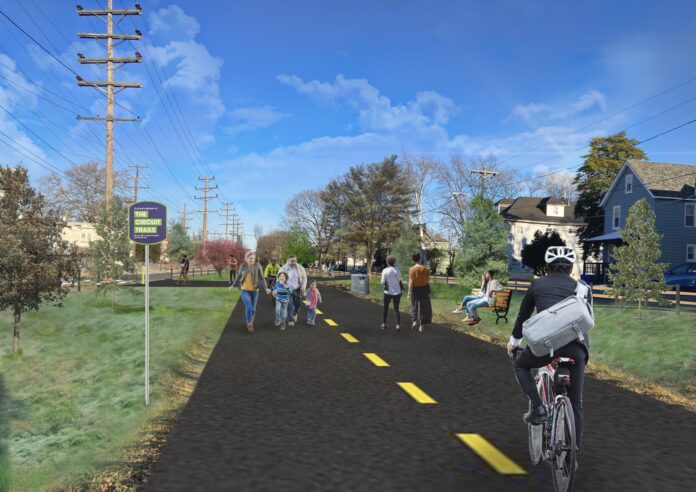

Pennsauken officials are reviewing a newly released feasibility study that explores the potential for a 2.2-mile pedestrian and bicycle corridor linking Maple Shade to Pennsauken and extending further into the region. The study, conducted by Remington Vernick Engineers, assesses the logistical, environmental, and engineering challenges associated with constructing a pathway that would traverse the Pemberton Industrial Track railroad, a corridor historically used for freight operations.
The proposed Camden-Burlington Connector aims to provide a safe, accessible route for cyclists, walkers, and other non-motorized commuters, enhancing connectivity between communities and promoting alternative transportation options. According to the report, the corridor would not only serve recreational purposes but could also function as a practical commuting option for residents seeking to travel between town centers, local schools, and regional transit hubs without relying on vehicles.
Remington Vernick Engineers’ study outlines several key considerations, including the structural modifications required to integrate the path with the existing rail infrastructure, environmental constraints such as wetlands or protected areas, and safety measures necessary to separate pedestrians and cyclists from active rail operations. The report also highlights potential challenges related to property acquisition, community impact, and construction costs, offering a preliminary analysis of phased development approaches and funding opportunities.
Local officials have expressed optimism about the project’s potential to stimulate economic activity while promoting healthy lifestyles and sustainable transportation. A successful connector could enhance tourism, increase foot traffic to local businesses, and improve access to parks, schools, and community amenities. Community feedback will play a central role in shaping the final design, with public engagement sessions planned to gather input on route alignment, design features, and safety considerations.
The feasibility study also emphasizes regional collaboration, noting that coordination with neighboring municipalities, transportation authorities, and utility providers will be essential to ensure the project’s long-term viability and integration with broader infrastructure plans. Experts suggest that successful execution of the connector could serve as a model for other cross-county pathways in New Jersey, combining active transportation, environmental stewardship, and urban planning.
Residents and stakeholders interested in the ongoing planning and development of public safety and infrastructure projects can follow updates in the Construction section, which provides coverage of local government initiatives, transportation studies, and community-focused planning efforts.
The Camden-Burlington Connector represents a forward-looking approach to regional mobility, aiming to create a safe, functional, and scenic route that links communities while addressing the complex engineering and logistical challenges of constructing infrastructure alongside active railroad tracks.