



Eight-story mixed-use building brings 99 apartments, affordable units, neighborhood retail and new momentum to one of the city’s last major redevelopment zones
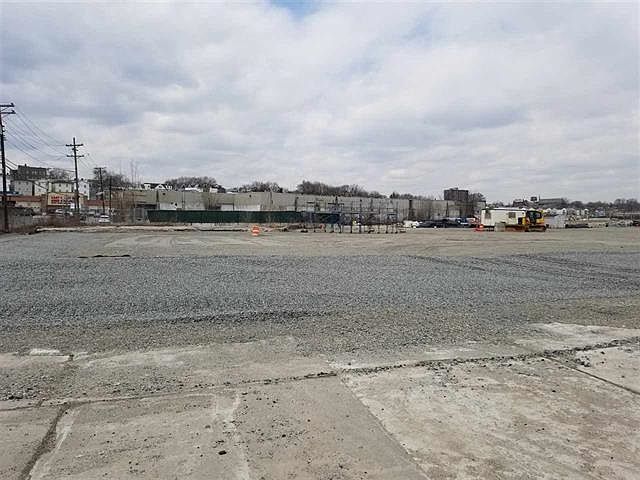
JERSEY CITY — A long-dormant industrial parcel in Bergen-Lafayette is officially poised for transformation after the Jersey City Planning Board approved a new mixed-use development at 33 Pacific Avenue, clearing a key hurdle for a project city officials and neighborhood stakeholders say could help accelerate reinvestment in one of the community’s most underutilized corridors.
The approval, granted at the board’s January 13 meeting, authorizes an eight-story, 90-foot-tall residential and commercial building designed to introduce new housing, street-level retail and affordable units to a half-acre site that has remained largely inactive for years.
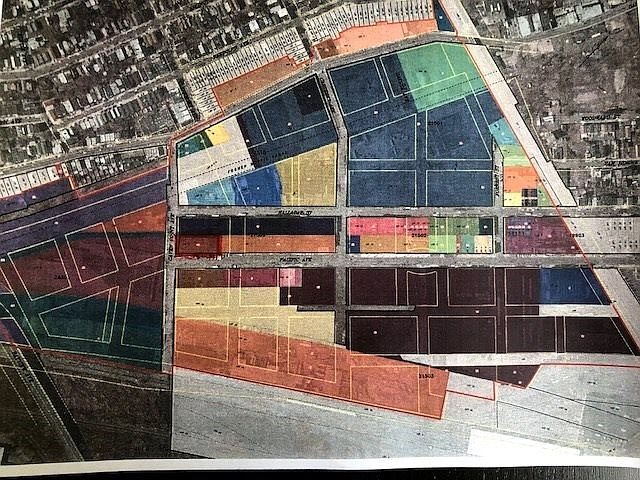
The redevelopment site, located at 33 Pacific Avenue, was acquired in 2020 for $2.315 million by GND Pacific Holdings LLC, a Morganville-based holding company. The property sits within the Canal Crossing Redevelopment Plan area, one of the last large redevelopment zones in Jersey City that has yet to experience the wave of construction reshaping other parts of Bergen-Lafayette.
City planners have long viewed the district as a critical piece of the neighborhood’s broader real estate strategy, intended to transition former industrial parcels into mixed-income, transit-accessible residential and commercial uses.
Designed by Monteforte Architectural Studio, the building will feature an industrial-inspired exterior that reflects the area’s manufacturing past while introducing modern residential amenities. Once completed, the project will deliver a total of 99 residential units above a ground-floor commercial base and an internal parking structure.
Under the approved plan, 15 of the 99 apartments will be designated as affordable housing, utilizing the Affordable Housing Overlay provisions included in the Canal Crossing Redevelopment Plan. City officials have emphasized that this mechanism is intended to encourage new construction while ensuring that long-time residents and working families have opportunities to remain in the neighborhood as investment increases.
The residential mix spans a wide range of unit types, offering four studio apartments, 39 one-bedroom units, 46 two-bedroom residences and 10 three-bedroom homes. Project planners say the diversity of unit sizes is meant to accommodate singles, couples and families seeking larger floor plans—an increasingly scarce option in new construction throughout Jersey City.
At street level, the project introduces 5,188 square feet of new retail space along Pacific Avenue, divided into three individual storefronts. The ground-floor commercial component is intended to activate the streetscape, support neighborhood-scale businesses and improve walkability in a section of Bergen-Lafayette that remains defined by vacant lots and light industrial buildings.
The building’s interior program includes 29 parking spaces located within a ground-floor garage, as well as 56 dedicated bicycle storage spaces, reflecting the city’s broader push toward multimodal transportation and reduced reliance on personal vehicles in transit-served neighborhoods.
Above the residential floors, the rooftop will be developed as a shared amenity level, featuring a covered deck, fitness center, outdoor patio and resident lounge. Developers presented the amenity program as a way to enhance livability while remaining competitive with newer projects elsewhere in the city, particularly as Bergen-Lafayette continues to position itself as an emerging residential destination.
The Planning Board granted minor variances for the project related to the number of driveways and curb-cut widths along the site frontage. Officials noted that the requested deviations were limited in scope and aligned with the redevelopment plan’s broader objectives for site circulation and pedestrian safety.
The location places the project within walking distance of the Garfield Avenue Hudson-Bergen Light Rail station, providing direct transit connections to Downtown Jersey City, Bayonne and Hoboken. City planners have repeatedly emphasized the importance of concentrating new housing near transit infrastructure as demand continues to grow across the regional housing market.
While a formal construction timeline has not yet been announced, the approval positions 33 Pacific Avenue as one of the first major residential developments to move forward inside the Canal Crossing area in recent years.
The neighborhood surrounding the site has already begun to show signs of gradual reinvestment. A large charter school is currently under construction nearby, and several destination businesses—including 902 Brewing Company—have established a foothold in the district. Even so, much of the immediate area remains characterized by vacant industrial properties and low-density commercial uses.
Local redevelopment officials view the 33 Pacific Avenue project as a potential catalyst that could help unlock additional private investment throughout the corridor, particularly as infrastructure improvements and institutional development continue to take shape.
For Bergen-Lafayette, the approval represents more than a single building. It marks a shift toward realizing a long-stalled redevelopment vision that seeks to balance new residential density with affordability, neighborhood-serving retail and transit-oriented growth—while preserving the industrial character that defines the area’s identity.
As Jersey City continues to confront housing supply constraints and rising rents, projects such as 33 Pacific Avenue are increasingly viewed as essential components of the city’s long-term growth strategy, offering a blend of market-rate and affordable homes in neighborhoods that have historically been left behind during earlier development cycles.



